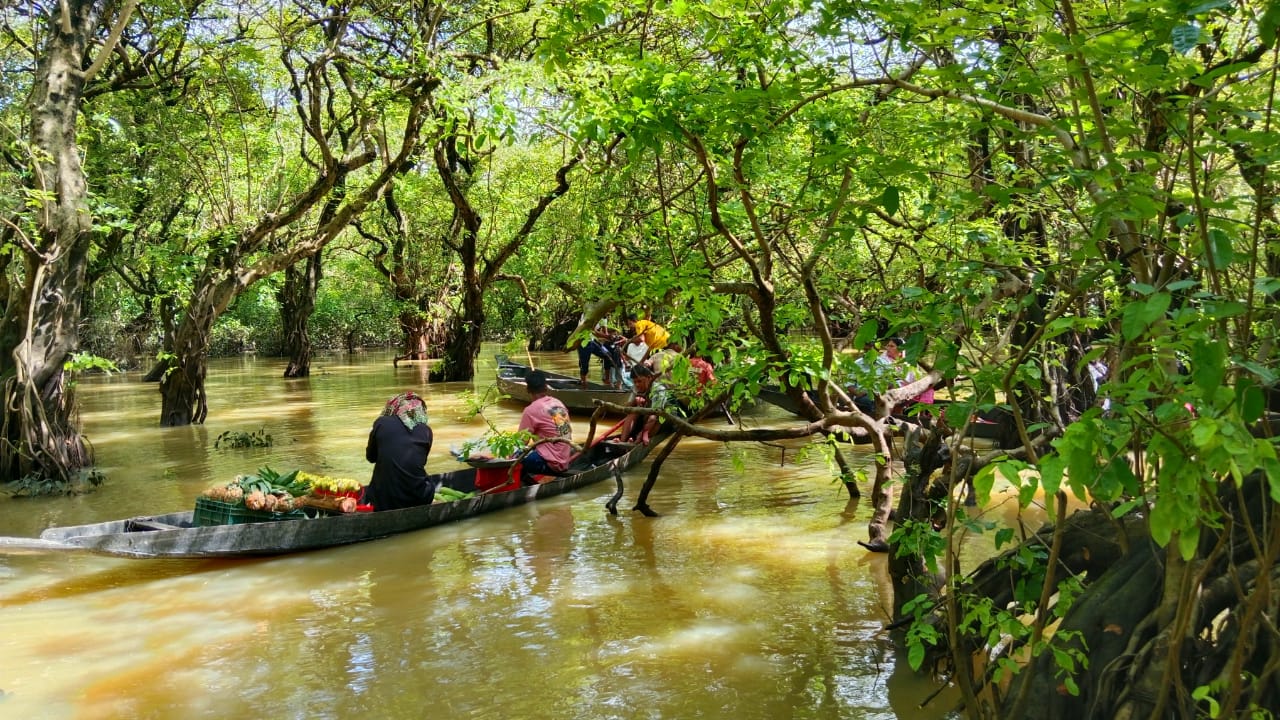
There’s a place in the northeastern corner of Bangladesh where the forest floor disappears every summer, swallowed whole by rising river water, and the trees simply learn to live with it. You glide through it in a narrow wooden boat, close enough to touch the leaves, while fish dart beneath the hull and the canopy filters the light into something dim and green and slightly dreamlike.
This is Ratargul Swamp Forest Sylhet, and if you’ve never heard of a freshwater swamp forest before, that’s understandable there are only a handful left on Earth, and Ratargul is the only one in Bangladesh, and one of the very few in South Asia.
Locals call it the “Amazon of Bangladesh” or the “Sundarbans of Sylhet,” and while both nicknames are a bit of a stretch in scale, they capture something true about the feeling of being there. This guide covers everything you need to plan a trip: what Ratargul actually is, when to go, how to get there, what it costs, what to bring, and how to combine it with the rest of Sylhet’s remarkable landscape so you don’t waste a single day of your trip.
What Exactly Is Ratargul Swamp Forest?
Ratargul is a freshwater swamp forest located in Gowainghat Upazila, roughly 26 kilometers from Sylhet city, tucked at the foothills of India’s Jaintia Hills. The forest spans over 3,325 acres, with 504 acres designated as a wildlife sanctuary, and it’s fed by the Gowain River flowing down from the Jaintia Hills.
What makes it genuinely rare, rather than just a pretty river-forest, is what happens to it every year. For five to six months, typically from May to October, Ratargul goes completely underwater, with the water level reaching depths of 10 to 20 feet and creating a landscape where only the treetops remain visible above the surface.
Some sources describe the peak flooding as even more dramatic during the heaviest part of the monsoon, the swamp can sit under 20 to 30 feet of water, compared to around 10 feet in the drier winter months.
The name itself comes from the local flora. The forest is named after the “Rata” or “Pati” tree, a species that dominates the landscape and is uniquely adapted to spend half its life fully submerged. These are not mangroves they’re freshwater-tolerant trees that have evolved a strange, admirable patience: months underwater, months in the open air, year after year.
Ecologically, this cycle is the whole point. The seasonal flooding of the Gowain River doesn’t just create a scenic swamp it delivers nutrients and sediment that sustain the forest’s plant and animal life, essentially reseeding the ecosystem every year through natural flood-pulse dynamics. It’s the same basic principle that keeps the Amazon basin’s várzea forests alive, which is probably where the “Amazon of Bangladesh” comparison actually comes from, beyond just marketing.
A UNESCO-Worthy Ecosystem in Miniature
Despite its relatively modest size compared to famous wetlands elsewhere in the world, Ratargul packs in a surprising amount of biodiversity. Boat trips through the flooded trees regularly turn up sightings of various monkey species swinging through the low canopy.
Dozens of resident and migratory bird species (kingfishers are a near-guarantee), and an underwater world of fish that becomes visible in the astonishingly clear water during the dry season. Snakes, including several non-venomous water snake species, are also part of the ecosystem, along with otters that are occasionally spotted by early-morning visitors.
The forest sits within a broader ecological corridor connected to the hills across the Indian border, which is part of why it supports species diversity that punches above its geographic weight.
Best Time to Visit Ratargul Swamp Forest Sylhet
This is the single most important planning decision you’ll make, because Ratargul is essentially two completely different destinations depending on the season.
Monsoon season (roughly June to September) is when most visitors come, and for good reason. This is when the forest is fully submerged, the water reaches its highest and clearest, and boats can maneuver directly between the tree trunks and even into the canopy in places. The visual effect a flooded forest with only treetops breaking the surface is what appears in nearly every photo you’ve seen of Ratargul, and it’s genuinely the reason to visit. The ideal window most guides recommend is from July to October, when the forest is most completely submerged and the views are at their peak.
Winter and dry season (November to March) brings a very different experience. The water recedes significantly, exposing much of the forest floor and tree roots, and boats can no longer access the deeper parts of the swamp. Some travelers find this version underwhelming after seeing photos of the flooded forest; others actually prefer it, since you can walk sections of the forest on foot and see the root systems and undergrowth that are completely hidden during the flood months. If your primary goal is the iconic “floating forest” look, avoid the dry months.
Rainy days within monsoon season are worth planning around too. Light rain doesn’t ruin the experience if anything, it adds atmosphere but heavy downpours can make boat travel choppy and reduce visibility. Aim for a morning visit if you can, both for calmer water and better light for photography.
A practical middle-ground tip: late June through August tends to have the most reliable flooding combined with (relatively) manageable crowds, since the absolute peak tourist season in Sylhet clusters around long weekends and Eid holidays.
How to Get to Ratargul Swamp Forest From Sylhet
Getting to Ratargul isn’t complicated, but there are genuinely two different route options, and choosing the right one depends on whether you’re combining the trip with other Sylhet attractions.
Route 1: Via Motor Ghat / Shringi Bridge (Shorter and More Popular)
This is the faster route and the one most day-trippers use.
From Sylhet city’s Ambarkhana point, take a CNG auto-rickshaw toward Shringi Bridge the ride is roughly 20 kilometers. A private CNG for a round trip typically costs somewhere between 800 and 1,200 taka and takes about an hour, while a shared CNG ride from Amberkhana runs around 80 taka per person. Some travelers instead head toward Motor Ghat, which is a slightly different departure point offering direct boat access into the forest.
Boats can be rented from either Motor Ghat or Chowrangi Ghat, with fares from Motor Ghat running around 1,500 taka, and 700–800 taka from Chowrangi Ghat. If kayaking interests you, Chowrangi Ghat is generally recommended as the better departure point for that experience. Boat fares generally range from 700 to 1,500 taka depending on boat size and how long you want to explore, with most small wooden boats comfortably seating four to six people.
Route 2: Via Gowainghat
The alternative is to travel from Sylhet to Goain Ghat by CNG, a trip of roughly 2.5 to 3 hours costing 450 to 500 taka. From Goain Ghat, you’ll need to reserve a trawler (a local engine boat) for a return trip into the forest, which costs 800 to 1,400 taka and takes under an hour. Once you arrive at the forest station, you’ll need to stop at the forest office for permission before they arrange a smaller wooden boat for the actual forest exploration, typically priced at 200 to 500 taka depending on duration.
This route takes noticeably longer but is convenient if you’re planning to continue on to Jaflong or Zafflong afterward, since you can get off at Goain Ghat on the way back and grab a CNG toward Zaflong for about 100 taka reserved, or 20 taka per person shared.
Hiring a Car or Private Vehicle for the Day
If you’re not comfortable negotiating CNG fares or simply want convenience, hiring a private car or microbus for a full day trip is a popular option, especially if you’re stacking multiple destinations. Car or microbus rental from Sylhet to Ratargul runs about 2,000 to 3,000 taka per day. This is often the most cost-effective choice if you’re traveling as a group of four or more, since the per-person cost drops fast and you skip all the CNG-to-boat transfer logistics.
Many local operators also combine transport for a “Ratargul plus Jaflong plus Bichanakandi” day package worth asking about if you’re short on time, since these three destinations are reasonably close to each other geographically.
Entry Fees and Costs
Bangladesh officially regulates entry pricing for Ratargul, and while informal boat pricing fluctuates with negotiation and season, here’s a realistic breakdown.
Official entry fees, as set by the Ministry of Environment, Forests and Climate Change: adult visitors pay 50 taka to enter the forest, minors under 12 and students with valid ID pay 25 taka, and foreign visitors pay 500 taka. Boat trips are priced separately, with local visitors paying 100 taka per trip and foreign visitors paying 1,000 taka.
Parking fees, if you’re arriving by private vehicle: 200 taka for a bus or truck, 100 taka for a pickup, jeep, car, or microbus, and 25 taka for a CNG auto-rickshaw or motorcycle.
Boat rental for the actual forest tour is where most of your negotiation happens, and prices vary by ghat, boat size, and season:
- Motor Ghat boats: around 1,500 taka
- Chowrangi Ghat boats: around 700–800 taka
- General range across sources: 700–1,500 taka for a small wooden boat carrying 4–8 people
Filming fees, if you’re bringing professional camera equipment: videography is priced at 10,000 taka per camera per day — this generally doesn’t apply to casual smartphone photos or personal cameras, but ask at the forest office if you’re bringing anything that looks semi-professional.
Local guides, if you want one: expect to pay somewhere in the range of $10–20 (roughly 1,000–2,000 taka) for a half-day tour. A guide isn’t strictly necessary since boatmen double as informal guides, but a dedicated guide can add real value if you’re interested in the specific flora, fauna, and local history rather than just the visual experience.
Rough total for a solo budget traveler: entry fee + shared transport + shared boat seat can realistically be done for under 500–800 taka. For a couple or small group with a private car and private boat, budget somewhere around 3,000–5,000 taka total for the day, transport included.
A tip that shows up again and again in traveler accounts: negotiate the boat price before you get in, not after. Prices are rarely fixed, and rates can shift depending on the day, the crowd, and how the conversation opens.
What to Bring
Ratargul isn’t a destination with facilities, shops, or shade you can count on, so packing correctly matters more than it might for a typical city day trip.
- Water-resistant clothing and footwear. You will get splashed, and depending on the boat and the water level, you may need to wade a little at the entry or exit points. Quick-dry fabric beats cotton every time here.
- Insect repellent. The combination of standing water, dense vegetation, and warm temperatures makes this essential, particularly during and right after monsoon season.
- Snacks and drinking water. There are no stores or restaurants inside the forest, so bring your own food and beverages. A few vendors sell basic snacks near the entry points, but nothing substantial.
- A dry bag or waterproof phone case. Boats are small, wooden, and can rock protecting your electronics is worth the extra ounce of gear.
- Sun protection. Even though much of the boat ride is shaded by canopy, the transit to and from the forest is often under open sky.
- Cash in small denominations. Entry fees, boat fares, and parking are all cash transactions, and change can be hard to come by at remote ghats.
- A hat or light rain jacket. Weather in the monsoon season can shift quickly from bright sun to sudden showers.
What the Experience Is Actually Like
Most visitors describe the same emotional arc: a slightly bumpy, dusty CNG ride out of Sylhet city, a somewhat chaotic negotiation at the boat dock, and then almost immediately after the boat pushes off a total shift in atmosphere.
The water in the flooded season is a deep, still green, occasionally clear enough near the edges to see fish moving beneath the surface. The trees rise directly out of the water, their trunks disappearing below the surface line, their canopies forming a loose, dappled ceiling overhead. Boatmen navigate narrow channels between trunks with practiced ease, often ducking under low branches or paddling in near silence to avoid disturbing wildlife.
You ride in a small wooden boat with branches hanging overhead, gliding through calm, dark green water — an experience many describe as the highlight of their entire Sylhet trip. The sound is minimal: water lapping against the hull, occasional birdsong, the distant call of unseen monkeys. It’s genuinely peaceful in a way that’s hard to replicate elsewhere in a country as densely populated and lively as Bangladesh.
Most boat tours last somewhere between one and three hours, depending on how much of the forest your boatman is willing (or able) to navigate, and how much you’ve negotiated for. Many visitors find 1.5 to 2 hours is the sweet spot enough time to explore several different channels and see a good variety of the forest without it feeling repetitive.
A watch tower near the forest offers panoramic views of the swamp, and it’s worth the short detour if your schedule allows seeing the flooded forest from above gives you a completely different sense of its scale than the boat-level view alone.
A Note on Crowds
Ratargul has become considerably more popular over the past several years, especially as photos have circulated on social media. Weekends and public holidays, particularly around Eid, can bring significant crowds to the docks, longer waits for boats, and higher informal pricing. If you have flexibility, a weekday visit ideally arriving early in the morning will get you a much quieter, more contemplative experience and likely a better price on your boat.
A Sample Two-Day Sylhet Itinerary
Day 1: Arrive in Sylhet, settle into accommodation, spend the afternoon at Khadim Tea Gardens and Khadimnagar National Park, explore Sylhet city’s markets and food scene in the evening.
Day 2: Leave early for Ratargul via the Motor Ghat / Shringi Bridge route, spend two to three hours exploring the swamp forest by boat, then continue on toward Jaflong and Bichanakandi for the afternoon, returning to Sylhet by evening.
This kind of pairing is extremely common among both domestic and international visitors, since it makes efficient use of transport and lets you experience the dramatic range of landscapes packed into this relatively small corner of Bangladesh dense flooded forest, clear mountain rivers, and stone-strewn borderlands, all within a couple of hours of each other.
Where to Stay
There’s no accommodation directly at Ratargul, so you’ll need to base yourself in Sylhet city itself. The good news is that Sylhet has a wide range of options to fit different budgets.
Budget: Guesthouses and modest hotels around Lala Bazar and Darga Road offer basic but clean rooms, generally in the range of a few hundred to around a thousand taka per night.
Mid-range and upscale: Sylhet city has a growing selection of well-reviewed hotels catering to both business and leisure travelers, with more amenities, air conditioning, and often on-site restaurants a comfortable base if you’re combining Ratargul with several days of exploring the wider Sylhet region.
Whichever tier you choose, staying centrally in Sylhet city gives you the easiest access to CNGs, private car rentals, and the main departure points toward Ratargul, Jaflong, and beyond.
Food and Dining Near Ratargul
Don’t expect restaurants at the forest itself as mentioned, you’ll need to bring your own snacks and water. Near the ghats and departure points, you may find small stalls selling tea, biscuits, and basic snacks, but nothing resembling a full meal.
The real food experience happens back in Sylhet city, which has a distinctive regional cuisine worth exploring on the days bookending your Ratargul trip. Sylheti food carries influences from the region’s tea-growing heritage and its proximity to the hills, with notable dishes including:
- Shatkora-based curries — a citrus fruit unique to the Sylhet region, used to add a distinctive tart flavor to meat dishes, especially beef and duck
- Hidol — a fermented fish preparation distinctive to Sylheti cuisine
- Fresh river fish preparations, given the region’s dense network of rivers and haors (wetland basins)
- Tea, unsurprisingly, given that Sylhet is the heart of Bangladesh’s tea-growing industry — many local cafes and tea gardens offer tastings alongside scenic views
If you’re an adventurous eater, asking your hotel or a local guide for a genuinely local Sylheti restaurant — rather than a tourist-oriented one — will usually reward you with a much more memorable meal.
Photography Tips for Ratargul
Ratargul is one of the most photogenic spots in Bangladesh, and a little planning goes a long way toward getting shots that actually capture the atmosphere rather than a flat, overexposed river scene.
Shoot in the early morning. Soft light filtering through the canopy is far more flattering than the harsh midday sun, and the water tends to be calmer, giving you better reflections.
Get low. Shooting from boat level, close to the waterline, emphasizes the flooded-forest effect much better than standing shots it’s the difference between “a forest near water” and “a forest submerged in water,” which is the whole point of the place.
Use a polarizing filter if you shoot with a dedicated camera. It cuts glare off the water’s surface and can dramatically improve color saturation in your shots of the submerged trees.
Protect your gear. Small wooden boats rock, and there’s no shortage of splash potential. A simple dry bag or waterproof camera housing is cheap insurance against a ruined trip.
Don’t forget the watch tower. Climbing the Ratargul Watch Tower gives you panoramic views of the swamp forest that are impossible to capture from water level it’s the shot that shows the true scale of the flooding.
Respect wildlife distance. If you spot monkeys or birds, resist the urge to get uncomfortably close for a photo. A slightly longer lens will get you a better, more natural shot without disturbing the animals or annoying your boatman.
FAQs
Is Ratargul Swamp Forest worth visiting?
For anyone interested in unique natural landscapes, yes — there are very few freshwater swamp forests in the world, and the experience of boating directly through a submerged forest canopy is genuinely unlike anything else you’ll find in Bangladesh, or arguably South Asia
How long does a visit to Ratargul take?
Most boat tours run one to three hours. Combined with transport time from Sylhet, plan for a half-day at minimum, though it fits comfortably into a longer day trip alongside Jaflong or Bichanakandi.
Can you swim in Ratargul Swamp Forest?
Swimming isn’t a standard part of the visitor experience and isn’t generally recommended the forest floor is uneven, submerged roots create hazards, and the area is a protected wildlife sanctuary. Stick to boat exploration.
Is Ratargul safe for solo travelers?
Generally yes. The main considerations are the same as anywhere in rural Bangladesh: negotiate prices clearly upfront, stick with licensed boatmen operating from the official ghats, and avoid venturing into the forest without a boat and boatman.
Do I need a guide to visit Ratargul?
Not strictly boatmen function as informal guides and will show you through the main channels regardless. A dedicated guide adds value mainly if you want detailed information about specific flora and fauna rather than just the visual experience.
Can Ratargul be visited as a day trip from Dhaka?
Technically possible but not recommended the travel time between Dhaka and Sylhet alone (by road or air) eats up most of a day. Basing yourself in Sylhet for at least one or two nights makes for a far more relaxed and worthwhile trip.