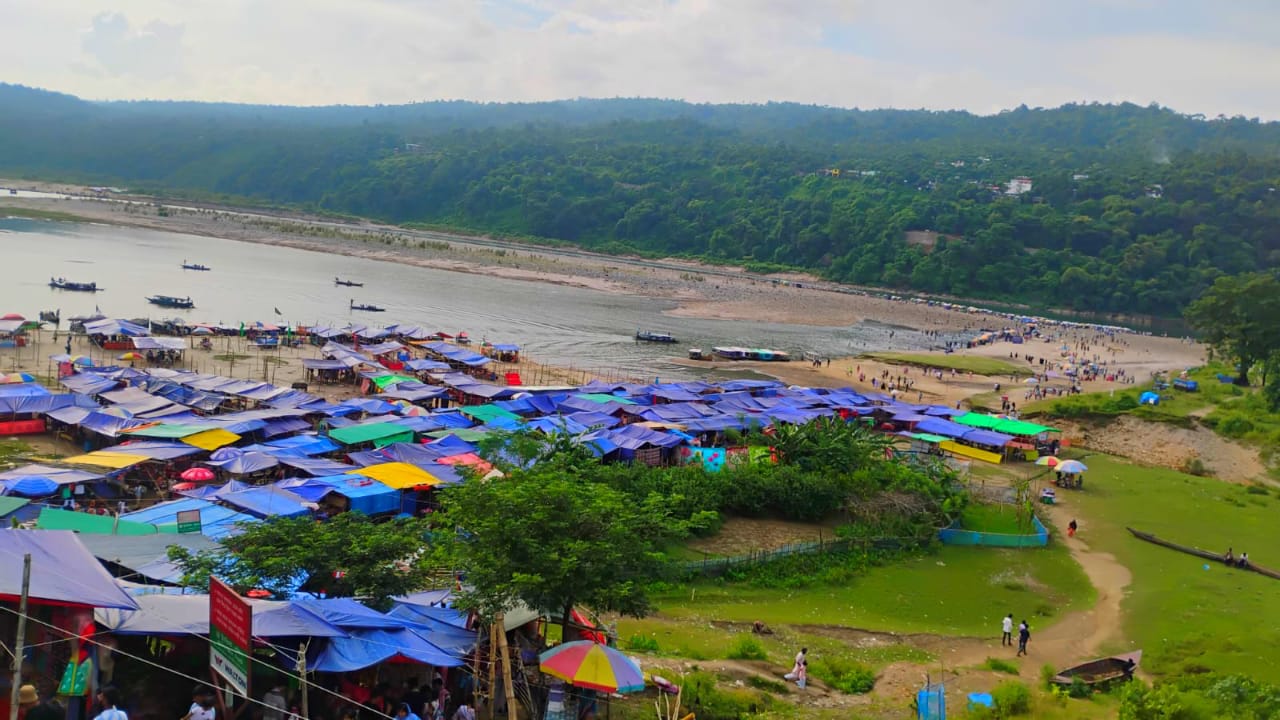
Tucked away in the far northeastern corner of Bangladesh, where the plains rise gently to meet the hills of India, lies a small border town that has captured the imagination of travelers for decades. Jaflong Sylhet Bangladesh is often described as one of the most scenic spots in the entire country, and once you stand on its riverbank with the Khasi Hills of Meghalaya rising in the distance, you understand exactly why.
This is a place where crystal-clear water tumbles over smooth stones, where clouds drift low enough to touch the hilltops, and where the rhythm of daily life still revolves around the river and the rocks it carries down from the mountains.
If you are planning a trip to Bangladesh, or if you already live here and are looking for your next weekend escape, Jaflong deserves a spot at the top of your list. This guide covers everything you need to know: how to get there, what to see, when to go, where to stay, what to eat, and the practical details that make the difference between an average trip and an unforgettable one.
Where Is Jaflong Located?
Jaflong sits in Gowainghat Upazila, in the Sylhet district of northeastern Bangladesh, right on the international border with the Indian state of Meghalaya. It is roughly 62 kilometers from Sylhet city, which makes it an easy day trip for anyone based in the region, and a popular add-on for travelers who are already visiting Sylhet for its tea gardens and shrines.
The defining feature of Jaflong’s geography is the Piyain River (also spelled Piain or Dawki River on the Indian side), which flows down from the Khasi Hills and crosses into Bangladesh at this exact point. The river is famous for its unusual clarity, a quality that comes from the fact that it originates in the hills and carries very little silt compared to the great rivers of the Bangladeshi delta.
On a clear day, you can see straight through several feet of water to the pebbles and stones resting on the riverbed below, an image that has made Jaflong one of the most photographed locations in the country.
Because of its location directly on the border, Jaflong also has a distinct cultural flavor. The Khasi and Pnar (Jaintia) communities, indigenous groups with strong ties to the hill regions on both sides of the border, have lived in and around this area for generations. Their presence adds another layer of interest to a visit here, from the small Khasi villages nestled in the hills to the fruit and betel leaf markets that line the approach roads.
Why Is Jaflong So Famous?
Ask anyone in Bangladesh what Jaflong is known for, and the answer will almost always be the same: stones. For decades, the collection and trade of stones and pebbles from the riverbed has been the economic backbone of this area. Workers, many of them from the local Khasi and Bengali communities, wade into the shallow parts of the Piyain River with baskets and simple tools, gathering stones that are then sorted, washed, and sold for construction purposes across the country.
Watching this process is, for many visitors, one of the most memorable parts of a Jaflong trip. Rows of workers stand in the river, bent over their task, while boats loaded with stones drift past them toward collection points on the shore. It is physically demanding work, and seeing it firsthand gives visitors a much deeper appreciation of the landscape than photographs alone ever could.
Beyond the stones, Jaflong is famous simply for being beautiful. The combination of the river, the hills, the tea gardens on the surrounding slopes, and the ever-present mist rolling down from Meghalaya creates a landscape that feels different from anywhere else in Bangladesh. It is the kind of place where the horizon itself becomes the main attraction, and where a simple walk along the riverbank can feel like stepping into a painting.
How to Reach Jaflong Sylhet Bangladesh
Getting to Jaflong is part of the adventure, and thankfully, the route is well established and manageable for most travelers, whether you are coming from Dhaka, from Sylhet city, or from elsewhere in the country.
From Dhaka to Jaflong
There is no direct transport from Dhaka straight to Jaflong, so the journey happens in two stages. First, you travel from Dhaka to Sylhet, and from there you continue on to Jaflong.
For the Dhaka to Sylhet leg, you have three main options:
By air: Several domestic airlines operate flights between Dhaka’s Hazrat Shahjalal International Airport and Osmani International Airport in Sylhet. The flight takes around 40 minutes, making it the fastest option if your time is limited. This is a good choice for travelers who want to maximize their time in Jaflong itself rather than spend hours on the road.
By train: Bangladesh Railway runs several intercity trains between Dhaka and Sylhet, including popular services that depart in the morning and evening. The train journey takes roughly 6 to 7 hours, but it is comfortable, scenic, and generally considered one of the more relaxing ways to make the trip, especially if you book an air-conditioned chair or berth.
By road: Numerous non-AC and AC coach services connect Dhaka to Sylhet, with the journey typically taking 5 to 6 hours depending on traffic and road conditions. This is usually the most budget-friendly option and offers the most flexibility in terms of departure times.
From Sylhet City to Jaflong
Once you arrive in Sylhet city, reaching Jaflong is straightforward. The distance is about 62 kilometers, and the journey by road takes approximately 2 to 2.5 hours depending on traffic and the condition of the roads.
You have a few transport choices for this leg:
- Reserved CNG auto-rickshaw or private car: This is the most popular option among tourists, especially small groups or families. You can hire a CNG (three-wheeler) or a private car for the day, which gives you the flexibility to stop at other attractions along the way, such as Lalakhal or Bichnakandi, if your itinerary allows.
- Microbus rental: For larger groups, renting a microbus from Sylhet city is a comfortable and cost-effective way to travel, particularly if you plan to combine Jaflong with other nearby destinations in a single day.
- Local bus: Budget travelers can take a local bus from Sylhet toward Gowainghat/Jaflong, though this option takes longer and involves more stops.
Most travelers find that hiring a CNG or car for a full day, with the driver waiting while you explore, is the most practical approach. Prices are generally negotiated in advance, and it is worth confirming the total distance and stops before agreeing on a fare.
Combining Jaflong With Other Destinations
Because Jaflong is roughly two hours from Sylhet city, many travelers choose to combine it in a single day trip with other famous nearby attractions like Lalakhal, Bichnakandi, or Ratargul Swamp Forest. If you are short on time, it is worth discussing this combined route with your driver or tour operator before setting out, since the roads branch off in different directions and planning the order of stops in advance saves considerable time.
Top Attractions and Things to See in Jaflong
Jaflong is a compact area, but it packs in a surprising number of distinct sights, each with its own character. Here is a breakdown of the places you should not miss.
The Piyain River and Zero Point
The heart of any Jaflong visit is the Piyain River itself, particularly the area known locally as Zero Point, which sits right at the border. This is where the clear water, the visible stones on the riverbed, and the backdrop of the Khasi Hills all come together in one sweeping view. Many visitors simply sit here for an hour, taking in the scenery, snapping photographs, and watching the boats and workers moving along the water.
The water level and clarity vary significantly by season, which is an important detail to keep in mind when planning your trip (more on that below). In the dry winter months, the river runs shallow and exceptionally clear, exposing wide stretches of smooth stones along the banks. In the monsoon season, the same river can swell dramatically, turning a muddy brown and losing much of the visual charm that makes it famous.
DC Bungalow View Point (Jaflong View Point)
A short distance from the main river area is the DC Bungalow viewpoint, sometimes simply called the Jaflong View Point. This elevated spot offers a panoramic vista over the river, the hills, and the surrounding tea gardens. It is one of the best places to appreciate the full scale of the landscape, especially in the early morning or late afternoon when the light is softer and the hills across the border are less obscured by haze.
The viewpoint gets its name because it once served as a rest house for the Deputy Commissioner (DC), and while access rules have changed over the years, it remains a popular stop for photographers and anyone who wants a wider perspective on the area before heading down to the riverbank itself.
Mayabi Jhorna (Enchanted Waterfall)
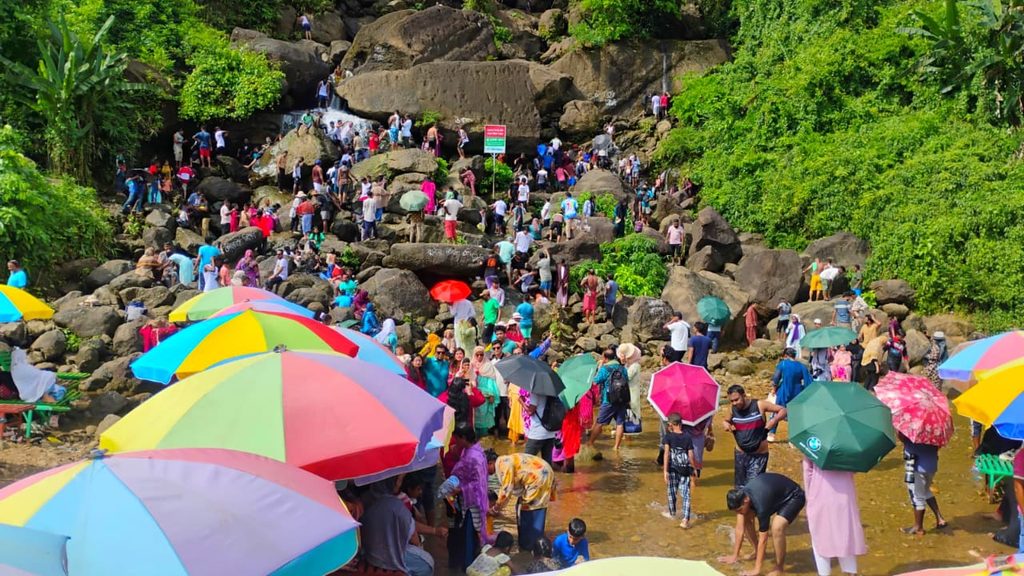
Not far from the main Jaflong area is Mayabi Jhorna, a small but charming waterfall whose name translates roughly to “enchanting” or “illusory” waterfall. It is a favorite stop for travelers who want a slightly different landscape from the wide river views, offering a cooler, shadier spot where water cascades over rocks amid greenery.
The path to Mayabi Jhorna can involve a short walk over uneven terrain, so comfortable footwear is a good idea. The waterfall is most impressive during and shortly after the monsoon season, when water flow is at its strongest, though it remains a pleasant spot to visit throughout the year.
Khasi Punji (Khasi Villages)
A visit to Jaflong offers a rare opportunity to learn about the indigenous Khasi community, whose villages, known locally as “punji,” dot the hillsides in this region. The Khasi people are known for their distinct culture, traditional betel leaf (paan) cultivation, and matrilineal social structure, which is relatively uncommon in South Asia.
Visiting a Khasi punji, when done respectfully and ideally with a local guide, gives travelers insight into a way of life that has continued largely unchanged for generations. It is worth noting that these are people’s homes and working communities, not tourist attractions in the formal sense, so visitors should behave with the same courtesy and restraint they would show in any residential area.
The Stone and Pebble Collection Zones
As mentioned earlier, the sight of workers collecting stones from the riverbed is one of the defining images of Jaflong. Walking along certain stretches of the riverbank, you will see the entire process unfold: workers wading into the water with baskets, boats being loaded with freshly gathered stones, and makeshift sorting areas along the shore where the stones are separated by size before being transported for sale.
This is also an area where visitors should exercise a degree of sensitivity. The work is physically taxing and represents the primary livelihood for many local families. Photographing the scene is generally welcomed, but it is courteous to be mindful and avoid disrupting the workers’ activities.
Tamabil Border and Dawki Bridge Views
Jaflong lies close to the Tamabil land port, one of the official border crossings between Bangladesh and India. While casual tourists generally cannot cross into India from here without proper visas and documentation.
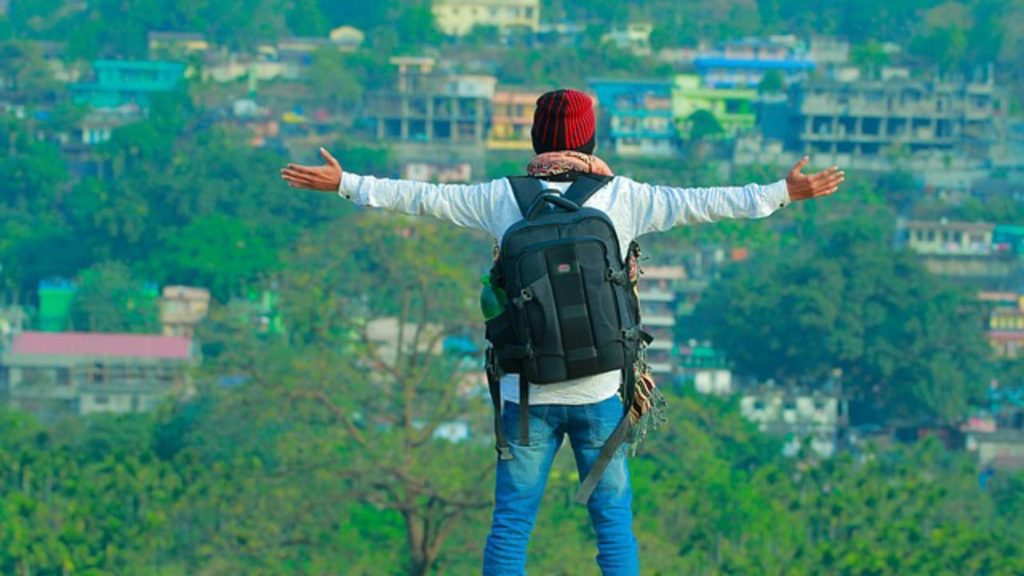
The border area itself is worth a brief stop for the atmosphere alone. On the Indian side, directly across the river, lies the town of Dawki, known for its own stretch of the same crystal-clear river and a well-known bridge that has become an attraction in its own right for travelers on that side of the border.
Standing near Tamabil, you get a genuine sense of how close two countries can be, separated here by little more than a river and a stretch of hills.
Surrounding Tea Gardens
The road to Jaflong winds through several tea estates, their neatly trimmed bushes forming green carpets across the rolling hills. While Jaflong itself is not primarily known as a tea-growing area in the way that Srimangal is, the tea gardens along the route add to the overall scenic experience and are worth a few photo stops as you travel.
Best Time to Visit Jaflong
Timing your visit correctly makes an enormous difference to the experience you will have in Jaflong, largely because the character of the Piyain River changes so dramatically with the seasons.
Winter (November to February)
Winter is widely considered the best time to visit Jaflong. During these months, the weather is dry, comfortable, and generally free of the heavy rains that define the monsoon season. The river runs at its clearest and shallowest, exposing the smooth stones along the bed that give Jaflong its signature look.
Visibility is also generally better, meaning the views of the Khasi Hills across the border are less likely to be obscured by cloud or mist. If your priority is getting that classic postcard photograph of clear turquoise water against a hilly backdrop, plan your trip for these months.
Monsoon Season (June to September)
The monsoon transforms Jaflong into a completely different place. Rainfall is heavy in this part of Sylhet division, among the highest in the country, and the Piyain River swells considerably, often turning a muddy brown color and losing the clarity it is famous for.
However, this season has its own appeal: waterfalls like Mayabi Jhorna are at their most powerful, the surrounding hills turn a deep, saturated green, and the overall atmosphere feels lush and dramatic. If you don’t mind trading clear water for waterfalls and greenery, and you’re prepared for the possibility of rain interrupting your plans, a monsoon visit can be rewarding in its own right.
Post-Monsoon and Early Winter (October to November)
This transitional period often offers a nice balance: the excessive rains have tapered off, the landscape retains some of its monsoon-season greenery, and the river is beginning to clear up again. Many travelers consider this a slightly underrated window to visit, avoiding both the peak crowds of the winter high season and the unpredictability of the monsoon.
Summer (March to May)
Summer brings hot, humid weather to Sylhet, and while Jaflong is still accessible and enjoyable, the heat can make extended time outdoors less comfortable, especially around midday. If you are traveling during this period, plan your riverside activities for the early morning or late afternoon and carry plenty of water and sun protection.
Things to Do in Jaflong
Beyond simply sightseeing, Jaflong offers a handful of activities that make for a well-rounded visit.
Boating on the Piyain River: Small boats are available for hire along the river, giving you the chance to get out onto the water itself rather than just viewing it from the banks. A short boat ride offers a different perspective on the surrounding hills and is a relaxing way to spend part of an afternoon.
Stone collecting and photography: Even if you’re not there to buy stones commercially, wandering along the pebble-strewn banks and picking through the smooth, rounded stones is a simple pleasure that many visitors enjoy. It is also, unsurprisingly, one of the best spots in the whole trip for photography, whether you’re shooting landscapes, portraits, or simply detailed close-ups of the colorful stones themselves.
Shopping at the local market: Near the Jaflong area, small markets sell local products, including Khasi betel leaf (paan), seasonal fruits, and handicrafts. It’s a good place to pick up a small souvenir or simply sample some local produce.
Visiting nearby waterfalls: As covered above, Mayabi Jhorna offers a short excursion away from the main river area, and depending on your schedule and interest, there may be other smaller falls in the vicinity worth exploring with a local guide.
Cultural interaction: With patience, respect, and ideally a local guide who can help with introductions, visitors have the opportunity to learn more about Khasi culture and traditions directly from community members, an experience that adds real depth to a trip that might otherwise be purely scenic.
Where to Stay Near Jaflong
Jaflong itself is a relatively small area with limited accommodation options, so most visitors choose to base themselves in Sylhet city, which is about two hours away and offers a much wider range of hotels, resorts, and guesthouses across all budget categories.
Staying in Sylhet city: This is the most practical option for the majority of travelers. Sylhet has everything from budget guesthouses to comfortable mid-range hotels and a handful of upscale resorts, particularly around the Airport Road and Zindabazar areas. Staying in the city also gives you easy access to Sylhet’s other famous attractions, such as the shrines of Hazrat Shah Jalal and Hazrat Shah Paran, as well as the region’s tea gardens.
Staying closer to Jaflong or Gowainghat: For travelers who prefer to be closer to nature and don’t mind more basic amenities, there are a small number of resorts and guesthouses in the Gowainghat and Jaflong area itself. These tend to be simpler than city hotels but offer the advantage of proximity, letting you catch the early morning light on the river without a long drive first.
Day trip approach: Given that Jaflong can realistically be covered in a single day from Sylhet city, many visitors, especially those on a tighter schedule, choose not to stay overnight in Jaflong at all, opting instead for an early departure from Sylhet and a full day of sightseeing before returning in the evening.
Whichever option you choose, it’s worth booking accommodation in advance during peak winter season (December to February), when domestic tourism to Sylhet and its surrounding attractions is at its highest.
Food and Local Cuisine
No trip to Sylhet division is complete without sampling the region’s distinctive food, and the area around Jaflong offers a few notable options.
Along the road to Jaflong and near the main viewing areas, you’ll find small local restaurants and roadside stalls serving traditional Bengali dishes, often featuring fresh river fish, rice, and regional curries. Sylhet’s cuisine has its own regional character, and dishes like shatkora (a citrus fruit unique to the region) cooked with beef or chicken are worth seeking out if you have the chance.
Fresh fruit is another highlight of the area, particularly seasonal offerings sold at roadside stands along the way to Jaflong. Depending on the time of year, you might find pineapples, oranges, and other produce grown in the surrounding hills.
For a more substantial meal, many visitors choose to eat either before leaving Sylhet city in the morning or on the return journey, since dining options directly in Jaflong tend to be simpler, catering primarily to day-trippers and local workers rather than offering an extensive menu.
If you have any specific dietary requirements, it’s a good idea to carry snacks and water with you, as options become more limited the further you travel from Sylhet city itself.
Sample Itineraries for Visiting Jaflong
One-Day Jaflong Trip from Sylhet City
For travelers with limited time, a single well-planned day is enough to see the highlights of Jaflong.
- Early morning: Depart from Sylhet city by hired CNG or car, ideally by 7 or 8 AM to make the most of the daylight and avoid midday crowds.
- Mid-morning: Arrive at Jaflong and head first to the DC Bungalow viewpoint for a panoramic overview of the area while the light is still soft.
- Late morning: Head down to the riverbank and Zero Point for photographs, a short boat ride, and time to walk along the stones.
- Midday: Take a break for lunch at one of the local restaurants near the main viewing area.
- Afternoon: Visit Mayabi Jhorna and, time permitting, a nearby Khasi punji with a local guide.
- Late afternoon: Begin the return journey to Sylhet city, arriving in the early evening.
Two-Day Trip Combining Jaflong With Other Attractions
If you have more time, consider extending your trip to combine Jaflong with other nearby highlights.
- Day 1: Travel from Sylhet to Bichnakandi, another stunning riverside destination known for its own stone hills and clear water, then continue on to Jaflong in the afternoon, staying either near Jaflong or returning to Sylhet for the night.
- Day 2: Visit Lalakhal, famous for its striking blue-green water, in the morning, followed by a visit to Ratargul Swamp Forest, Bangladesh’s only swamp forest, in the afternoon, before returning to Sylhet city in the evening.
This combined itinerary gives you a much fuller picture of the natural attractions in the Sylhet region, all of which are within a reasonable driving distance of one another.
Practical Travel Tips for Jaflong
A few practical considerations will help ensure your trip goes smoothly.
Negotiate transport fares in advance. Whether you’re hiring a CNG, car, or microbus, agree on the total price, the specific stops included, and the expected return time before starting the journey. This avoids misunderstandings later in the day.
Carry cash. ATMs and card payment facilities are limited once you leave Sylhet city, so carry enough cash for transport, food, entry fees, and any souvenirs you plan to purchase.
Wear comfortable, sturdy footwear. Much of the exploration in Jaflong involves walking over uneven, stony ground, particularly near the riverbank and around Mayabi Jhorna, so proper shoes make a significant difference to your comfort.
Check the weather and river conditions before you go. Since the appeal of Jaflong depends heavily on the clarity of the river, it’s worth checking recent weather patterns, especially if you’re traveling outside the dry winter season, to set realistic expectations for what you’ll see.
Respect local communities. The Khasi villages and stone-collecting workers you’ll encounter are going about their daily lives and livelihoods, not performing for tourists. Approach photography and interactions with courtesy, and ask permission where appropriate.
Be mindful near the border. Jaflong sits directly on an international border, and there are restricted areas that should not be approached or crossed without proper authorization. Stick to the recognized tourist areas and follow any instructions from local authorities or your guide.
Bring sun protection and water. Whether you visit in the heat of summer or the milder winter months, the riverside areas offer little shade, so sunscreen, a hat, and plenty of drinking water are worth packing.
Consider hiring a local guide. While much of Jaflong can be explored independently, a local guide can add significant value, particularly for visits to Khasi villages, insights into the stone trade, and navigating the less obvious pathways to spots like Mayabi Jhorna.
Avoid single-use plastic where possible. As with many natural attractions in Bangladesh, litter has become a growing concern in Jaflong. Carrying a reusable water bottle and disposing of waste responsibly helps preserve the area for future visitors.
FAQs
How far is Jaflong from Sylhet city?
Jaflong is approximately 62 kilometers from Sylhet city, a journey that typically takes around 2 to 2.5 hours by road.
Is one day enough to visit Jaflong?
Yes, a single well-planned day trip from Sylhet city is enough to see the main highlights, including the Piyain River, the DC Bungalow viewpoint, and Mayabi Jhorna, though a longer stay allows for a more relaxed pace and deeper cultural exploration.
What is the best time of year to visit Jaflong?
The winter months, from November to February, are generally considered the best time to visit, as the weather is dry and the Piyain River is at its clearest.
Can I cross the border into India from Jaflong?
Casual tourists cannot cross the border at Tamabil without the appropriate visa and travel documentation. The border crossing is an official land port used for legitimate travel between the two countries, not a casual pedestrian crossing point.
Can I visit Jaflong during the monsoon season?
Yes, though the character of the visit changes significantly. The river becomes muddier and less clear, but waterfalls are more powerful and the landscape becomes noticeably greener.
Are there entry fees for Jaflong?
Access to the general Jaflong area is typically free, though there may be small parking fees, boat rental charges, or informal fees at certain viewpoints, so it’s worth carrying small denominations of cash.