Central Park is 843 acres of lakes, meadows, bridges, and hidden corners in the middle of Manhattan — and you don’t need to pay for a guided tour to experience the best of it. With a little planning, a comfortable pair of shoes, and this self-guided Central Park tour, you can hit every iconic landmark, avoid the biggest crowds, and still have time left over for a picnic on the Great Lawn.
This guide lays out a complete walking route from the south end of the park to the north, with directions, timing, and insider tips for each stop, so you can explore at your own pace and skip the $50-per-person walking tours.
Why Take a Self Guided Tour of Central Park?
Guided tours have their place, but a self-guided Central Park walking tour has real advantages:
- Flexibility. Linger at Bethesda Terrace as long as you want, or skip the Zoo if it’s not your thing.
- Cost. Central Park itself is free to enter, and this route costs nothing beyond snacks or a coffee.
- Pace. Walk fast if you’re short on time, or turn this into an all-day outing with plenty of photo stops.
- Crowd control. Knowing which entrances and paths locals use helps you dodge the tour-group bottlenecks.
The full loop below covers roughly 3 to 4 miles and takes about 3 to 5 hours at a relaxed pace, depending on how long you linger at each stop.
Before You Go: Practical Tips
- Best entrance: Start at Grand Army Plaza (5th Avenue and 59th Street), right across from The Plaza Hotel. It’s the most central starting point for this route.
- Best time of day: Early morning (before 10 a.m.) or late afternoon offers the softest light for photos and thinner crowds, especially at Bethesda Terrace and Bow Bridge.
- What to bring: Water, sunscreen, a portable charger, and cash or a card for food carts.
- Download an offline map before you go — cell service can be spotty in some wooded sections.
- Wear real walking shoes. Central Park’s paths are paved, but many detours to landmarks involve stairs, hills, or uneven terrain.
The Route: Central Park Self Guided Walking Tour
Stop 1: Grand Army Plaza & The Pond
Begin at the park’s southeast corner near 5th Avenue and 59th Street. Head in and follow the path toward The Pond, a small, quiet lake tucked just inside the park boundary. It’s an easy, scenic way to ease into the walk before the crowds pick up further north.
Stop 2: The Central Park Zoo
A few minutes’ walk north brings you to the Central Park Zoo. It’s compact, family-friendly, and home to snow leopards, sea lions, and a red panda exhibit. If you’re touring with kids or simply love animals, budget 45 minutes to an hour here. If not, feel free to admire the sea lion pool from outside the gate and continue on.
Stop 3: The Mall and Literary Walk
Continue north to The Mall, a straight, tree-lined promenade also known as Literary Walk for the statues of authors like Shakespeare and Robert Burns that line the path. The American elm trees overhead form one of the last stands of their kind in North America, creating a natural cathedral of branches — especially striking in fall.
Stop 4: Bethesda Terrace and the Fountain
At the northern end of The Mall, descend the stairs to Bethesda Terrace, arguably the most photographed spot in the entire park. The ornate carved stonework, the Angel of the Waters fountain, and the lake views make this the emotional centerpiece of any Central Park tour. Take your time here — it’s worth ten minutes just sitting on the fountain steps.
Stop 5: Bow Bridge
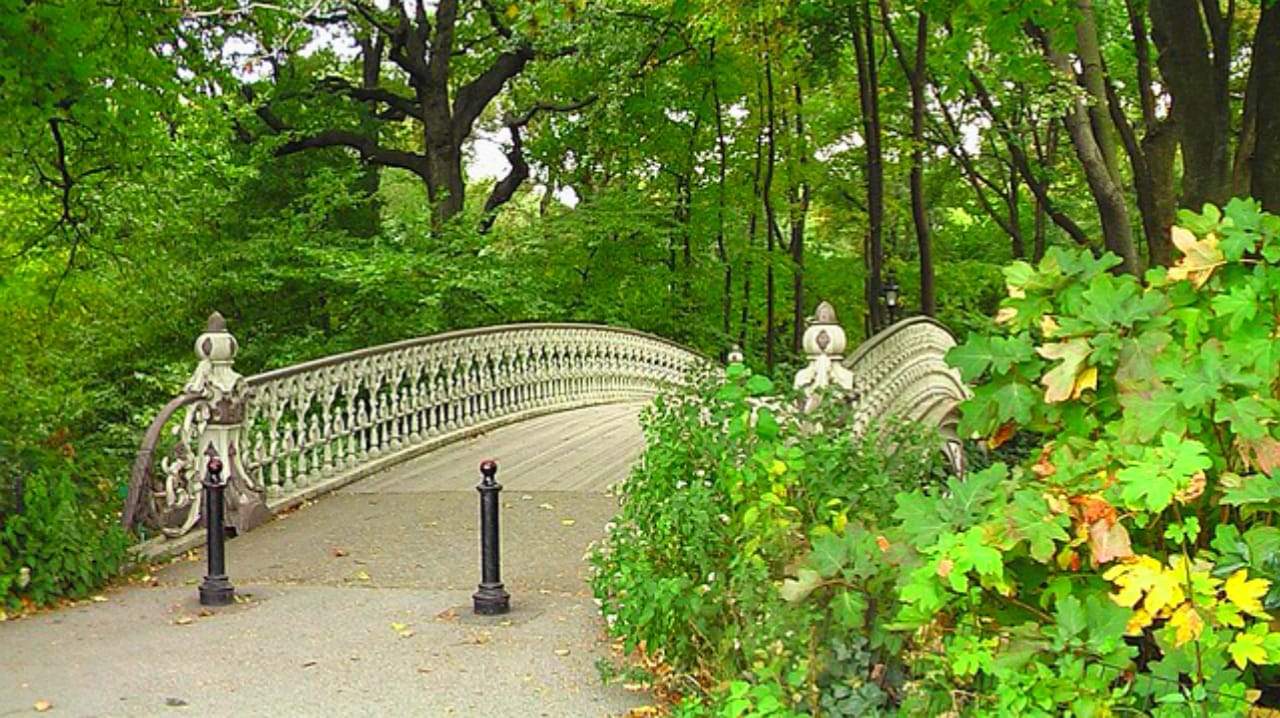
From Bethesda Terrace, follow the lake path west to the famous Bow Bridge, a cast-iron bridge that has appeared in dozens of films. It connects the Terrace area to the wooded paths of the Ramble and offers one of the best skyline-over-water views in the park.
Stop 6: The Ramble
Cross Bow Bridge into The Ramble, a 36-acre woodland of winding, unmarked paths designed to feel wild and disorienting compared to the park’s manicured sections. It’s a favorite among birdwatchers — over 230 species have been spotted here. Don’t worry about getting turned around; every path eventually leads back out.
Stop 7: Belvedere Castle
Climb north out of the Ramble to Belvedere Castle, a miniature Victorian folly perched on the park’s highest natural rock outcropping. It houses a small nature exhibit and, more importantly, offers one of the best panoramic views in Central Park, overlooking the Delacorte Theater and Turtle Pond below.
Stop 8: Sheep Meadow or the Great Lawn
Depending on your energy and the time of day, this is a natural spot to pause. Backtrack slightly to Sheep Meadow, a 15-acre open lawn ideal for a picnic and skyline photos, or continue toward the Great Lawn near the park’s midpoint, which offers similar open-sky views and, in summer, is a venue for free concerts.
Stop 9: Strawberry Fields
If your route takes you back west, don’t miss Strawberry Fields, the memorial to John Lennon located near the Central Park West entrance at 72nd Street, directly across from the Dakota building. The mosaic reading “Imagine” is a must-see photo stop and a quiet, reflective spot in an otherwise busy park.
Stop 10: Jacqueline Kennedy Onassis Reservoir
For those continuing north, the Reservoir offers a 1.58-mile running and walking path with unobstructed views of the surrounding skyline — particularly stunning at sunrise or sunset. This is a good turnaround point for a shorter tour, or a scenic midway stretch for those pushing further north.
Stop 11 (Optional): The North Woods and Harlem Meer
For a full-day, edge-to-edge tour, continue into the park’s less-visited northern third. The North Woods feels even wilder than the Ramble, with waterfalls and rustic bridges, while the Harlem Meer at the park’s northeast corner offers a peaceful lake with far fewer tourists than the southern half of the park.
Sample Self Guided Central Park Tour Itineraries
Not everyone wants the full 3–4 mile trek. Here are a few ways to shorten or adjust the route:
Short version (1.5–2 hours): Grand Army Plaza → The Mall → Bethesda Terrace → Bow Bridge → Strawberry Fields, exiting at 72nd Street.
Half-day version (3–4 hours): The full route through Stop 9 (Strawberry Fields), ending near the American Museum of Natural History for lunch.
Full-day version (5+ hours): The entire route including the Reservoir, North Woods, and Harlem Meer, ending at the park’s northern entrance near 110th Street.
Where to Eat Along the Way
You don’t need to leave the park to refuel:
- Food carts near the Zoo and Bethesda Terrace serve pretzels, hot dogs, and coffee.
- The Loeb Boathouse, near Bethesda Terrace, has a sit-down restaurant with lake views if you want a proper meal.
- Le Pain Quotidien and various kiosks near Sheep Meadow are good for a quick snack.
- Pack a picnic and pick up supplies beforehand from a deli near your entrance point — Sheep Meadow and the Great Lawn are both built for exactly this.
FAQs
Is Central Park safe to walk through alone?
Central Park is generally very safe during daylight hours and sees millions of visitors a year. As with any large public park, it’s best to stick to populated paths after dark.
How long does it take to walk through all of Central Park?
Walking the park end to end (north to south) takes roughly 1.5 to 2 hours without stops. Add landmark visits, photo breaks, and food stops, and a thorough self-guided tour runs 3 to 5 hours.
Do I need to book anything in advance?
No. Entry to Central Park is free and requires no reservation. The only exceptions are specific paid attractions inside the park, like the Central Park Zoo or a rowboat rental at the Loeb Boathouse.
What’s the best season for a self-guided Central Park tour?
Fall (late October) offers spectacular foliage, especially along The Mall. Spring (April–May) brings blooming cherry blossoms and milder crowds. Summer is liveliest but hottest; winter is quiet and beautiful after snowfall, though some paths may be closed.
Can I bike this route instead of walking?
Yes — Central Park has dedicated bike lanes on its main loop road, and Citi Bike stations are available at several entrances. Biking lets you cover the full route, including the northern sections, in under two hours.