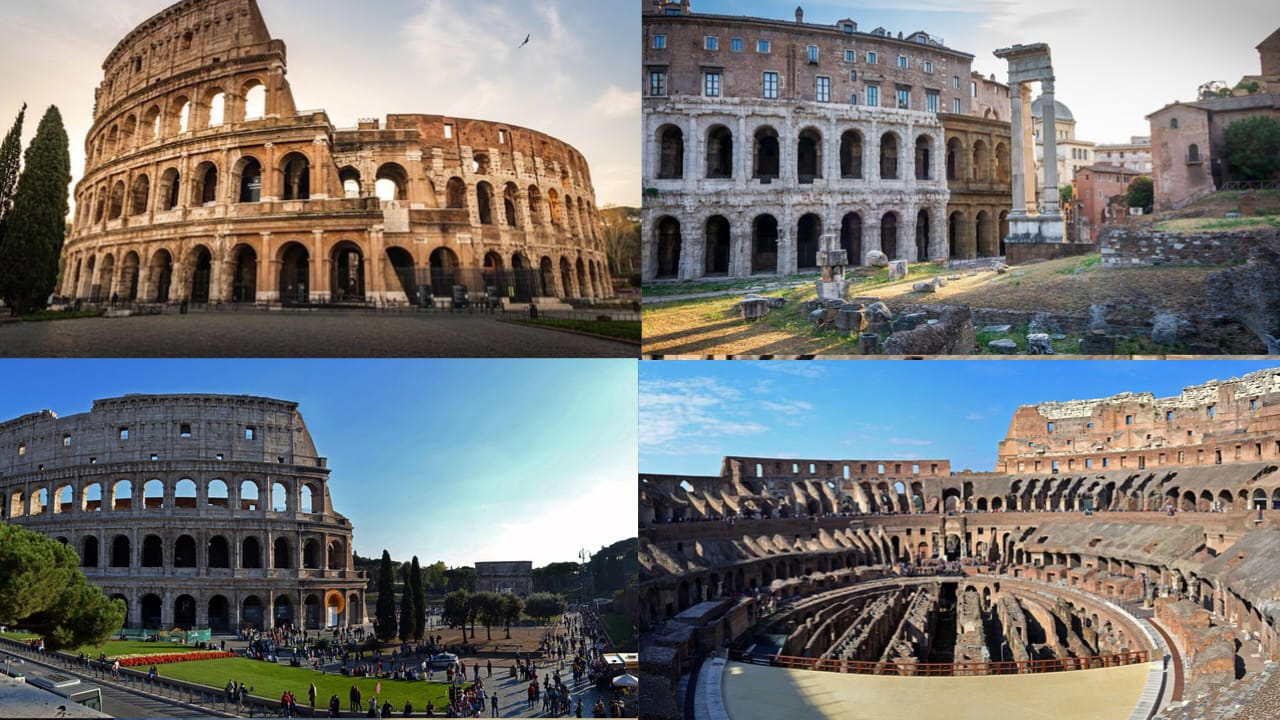
If you’re planning a trip to Rome, there’s a good chance one image is doing most of the heavy lifting in your imagination: the Colosseum, its broken outer wall rising against the sky, sunlight slanting through the arches the way it has for nearly two thousand years. It’s the single most recognizable monument in Italy, and for most travelers, it’s the reason the trip exists in the first place.
But here’s what almost nobody tells you before you land in Rome: simply “visiting the Colosseum” is not one experience. It’s at least half a dozen different experiences wearing the same building as a costume, and picking the wrong one is one of the most common regrets travelers report after a Rome trip.
Some tours put you on the arena floor where gladiators once fought. Others take you underground into the hypogeum, the tangle of tunnels and animal cages beneath the sand. Some are quick skip-the-line visits with a guide pointing at the good stuff. Others are half-day deep dives that also cover the Roman Forum and Palatine Hill.
This guide exists to cut through that confusion. We’ll walk through exactly how the Colosseum ticketing system works in 2026, what each type of tour actually includes, which one is genuinely the “best,” and how to avoid the booking mistakes that leave people standing outside the gates with a useless ticket in hand. By the end, you’ll know precisely which tour to book for your trip, your budget, and your curiosity level.
Why You Can’t Just “Show Up” at the Colosseum Anymore
There was a time when tourists could walk up to the Colosseum, buy a ticket at the counter, and wander in within the hour. That time is over, and it’s been over for a while.
Today, Colosseum access is tightly controlled through timed entry slots managed by the Parco Archeologico del Colosseo, the official body that oversees the monument along with the Roman Forum and Palatine Hill. During peak season, roughly April through October, showing up without a pre-booked ticket can mean waiting two to three hours at the box office, with no guarantee that any time slots will even be left by the time you reach the window. On popular days, walk-up visitors are sometimes turned away entirely.
There’s a structural reason for this. Official Colosseum tickets are released only 30 days in advance of the visit date, sold in tightly spaced timed-entry windows (often 10 to 15 minutes apart) to keep foot traffic manageable inside the ancient structure. That narrow release window, combined with global demand, means popular slots especially anything between 9:00 and 10:30 in the morning can disappear within hours of going live.
If you’re the type of traveler who likes to plan a full itinerary two or three months out, the official channel alone won’t work for you; you’ll need to either mark your calendar for the exact 30-day mark or book through a licensed tour operator that holds its own separate allocation of tickets.
This is precisely why guided tours have become the default choice for most visitors rather than a luxury upgrade. A reputable tour company pre-secures its tickets in bulk, which means you’re not gambling on a specific 30-day release window. You show up, your guide has already handled the logistics, and you walk through security without the stress of wondering if your online booking actually went through.
Arena Floor vs. Underground vs. Standard Access
Before comparing specific tour companies or itineraries, you need to understand the three fundamentally different “layers” of Colosseum access, because this is where most people get confused and where most of the buyer’s remorse comes from.
Standard Access (Levels One and Two)
This is the baseline ticket, and it’s what most people picture when they think of “visiting the Colosseum.” It grants access to the first and second floors the tiered seating areas where spectators once watched the games along with panoramic views down into the arena and hypogeum from above. Standard tickets also include same-day or next-day entry to the Roman Forum and Palatine Hill, which together make up one continuous archaeological park.
Standard access is genuinely satisfying for most first-time visitors. You get the full scale of the building, sweeping views across the arena, and access to the multimedia exhibits that explain construction techniques and the mechanics of gladiatorial combat. If your Rome trip includes a dozen other must-see sites and you don’t want to sink an entire afternoon into ancient history, this tier does the job well.
Arena Floor Access
This is the upgrade that most travel writers, historians, and repeat visitors say is genuinely worth the extra cost. The arena floor is the elliptical performance space at the center of the amphitheater — the literal stage where gladiators fought and where the name “arena” comes from (it derives from the Latin word for sand, since the original wooden floor was blanketed in sand to absorb blood and debris during the games).
Standing there is a different experience entirely from viewing the space from the stands above. The arena floor measures roughly 83 by 48 meters, and once you’re on it, you’re surrounded by tiered seating rising some 48 meters above you on every side.
Suddenly the scale of the place the fact that it once held around 50,000 roaring spectators actually registers in your body instead of just in your head. Photography is excellent here too, since capacity on the floor is capped at roughly 50 people at a time, keeping the space busy but not overwhelming.
Arena floor tickets also include everything the standard ticket does: levels one and two, plus the Forum and Palatine Hill.
Underground (Hypogeum) Access
This is the deepest and most exclusive tier, and it’s the one serious history enthusiasts tend to gravitate toward. The hypogeum is the two-level underground network built around 90 AD under Emperor Domitian, consisting of corridors, animal cages, ramps, and the remains of lift and pulley mechanisms that hoisted animals, scenery, and gladiators up into the arena through trapdoors essentially ancient stagecraft engineering.
Access is genuinely restricted here. Groups are kept small (often capped around seven guests per group), a licensed guide is mandatory, and slots sell out well in advance of most other ticket types because daily capacity is limited. Walking through the hypogeum, you’ll see chambers used to hold wild animals before release, understand the mechanical trickery behind dramatic “surprise” entrances during the games, and get a sense of just how industrial and choreographed Roman spectacle really was behind the scenes.
The tradeoff: the underground floor is uneven, mixing original stone and dirt with modern wooden and metal walkways built over ongoing excavation areas, so comfortable closed-toe shoes are non-negotiable here.
So Which One Should You Actually Pick?
If you’re visiting Rome for the first time and can only justify one upgrade, arena floor access is the stronger pick for most travelers. It’s the more iconic, more photogenic experience, it’s slightly easier to book than underground slots, and it works better for families traveling with younger children or anyone with mobility considerations, since the underground’s uneven terrain and stairs can be more physically demanding.
The underground tour earns its premium price for a specific kind of traveler: those who are visiting Rome for a second or third time, those with a genuine interest in Roman engineering and military history, or older kids and teenagers who are already engaged with archaeology.
Neither option is objectively “better” they answer different questions about the same building. Arena floor answers “what did it feel like to be a gladiator standing in the spotlight,” while underground answers “how did the Romans actually pull off all this theatrical spectacle.”
If cost or time is the deciding factor and you’re satisfied with the more traditional, still genuinely awe-inspiring visitor experience, standard access remains completely worthwhile, especially when it’s paired with a knowledgeable guide who can bring the empty stone back to life with stories and context.
What “The Best Tour” Actually Looks Like in Practice
Once you’ve decided which access level you want, the next decision is what kind of guided experience wraps around it. Broadly, Colosseum tours fall into a few categories, and understanding the differences will save you from either overpaying or underdelivering on your one shot at this monument.
Small-group guided tours with a licensed guide: These are widely considered the gold standard for a reason: Italian law actually requires a licensed guide for anyone accessing restricted areas like the arena floor or underground, so this isn’t just a nice-to-have upsell — it’s often mandatory. Small-group tours, typically capped at 12 people for arena floor visits and as few as 7 for underground visits, mean you can actually hear your guide, ask questions, and avoid the shuffling, impersonal feeling of a 40-person crowd being herded through in silence.
Combined half-day tours (Colosseum + Roman Forum + Palatine Hill): Because a single ticket already grants access to all three sites, most quality tours bundle them into one 2 to 2.5-hour experience. This is efficient use of your time in Rome and is genuinely the better structural choice for most travelers, since seeing the Forum and Palatine Hill immediately after (or before) the Colosseum helps contextualize the whole of ancient Roman public life in one connected narrative, rather than treating the Colosseum as an isolated postcard stop.
Skip-the-line only tours (no restricted access): These are shorter, cheaper options often around an hour designed simply to get you past the ticketing bottleneck and give you a guided walkthrough of the standard levels. They’re a solid budget-friendly choice if your schedule is tight or your interest in ancient history is more casual.
VIP and private tours: For travelers wanting a fully customized pace, private guides, and often early or after-hours access, VIP small-group or fully private options exist at a premium price point. These tend to include the same restricted-area access as regular guided tours but with a guide dedicated solely to your party.
What a Typical Guided Colosseum Tour Actually Costs
Pricing varies by ticket tier, group size, and whether you book through the official park authority or a licensed third-party operator, but as of 2026, here’s a realistic range to budget around:
- Standard entry with a guide (skip-the-line, levels 1–2, Forum & Palatine): Roughly $20–$65 per person, depending on group size and operator.
- Arena floor guided tours: Roughly $55–$115 per person, with premium small-group options running closer to $115–$160.
- Underground guided tours: Generally the most expensive tier, often starting around $115–$160 and climbing higher for VIP small-group experiences, since daily hypogeum capacity is the most restricted of all.
- Official standalone entry ticket (no guide, self-guided): The base official ticket is €18, which includes levels one and two plus the Forum, Palatine Hill, and Imperial Fora — though note this doesn’t include arena floor or underground access, and third-party booking platforms typically add a modest service fee on top of official pricing in exchange for easier availability and included extras like audio guides.
One consistent piece of advice across seasoned Rome travel writers: booking through an established, reputable operator is worth the small service fee premium over the official site, purely because of availability. Third-party providers maintain their own separate ticket allocations, so when the official 30-day release window sells out (which happens constantly in peak season), a licensed tour operator may still have slots open.
When to Visit for the Best Experience
Timing your visit well can make or break the experience, regardless of which tour type you book.
Time of day: The quietest window is right at opening, around 8:30 a.m., especially Tuesday through Thursday. The busiest stretch of any given day tends to fall between 10:30 a.m. and 2:30 p.m., so if your tour offers flexibility, aim for an early morning or a mid-to-late afternoon slot instead.
Time of year: If you have flexibility in your travel dates, visiting outside the school holiday periods between November and February (excluding the busy Christmas and New Year stretch) will give you a noticeably calmer experience with shorter security lines and a more relaxed atmosphere overall, even though the site remains popular year-round.
Day of week: Weekends draw larger crowds than weekdays across the board, so if your itinerary allows for a weekday visit, take it.
Booking lead time: For travel during the high season (roughly April through October), most experienced guides recommend booking your tour two to three months ahead, particularly if arena floor or underground access is on your wishlist, since those tiers sell out the fastest. Outside peak season, booking just a few days to a couple of weeks in advance is often still sufficient, though it’s never a bad idea to lock in your preferred slot as soon as your travel dates are confirmed.
Practical Tips for Tour Day
A few details make a real difference once you’ve got your tour booked and your travel dates locked in:
Bring a valid photo ID: Colosseum tickets are personalized, meaning the names of all visitors are tied to the booking, and a passport or photo ID matching that name is checked at entry. Since 2026, name changes on existing bookings are also tightly restricted, so double-check spelling at the time of purchase.
Arrive early, not on time: Most tour operators ask guests to arrive 15 to 30 minutes before the scheduled start to complete check-in and pass through security, and late arrivals often can’t be accommodated, refunded, or rescheduled. Treat your tour’s listed start time as a hard deadline you need to beat, not a target to hit exactly.
Wear the right shoes: This matters more than people expect. Cobblestones, uneven ancient pathways at the Palatine Hill, and if you’re doing the underground tour a genuinely rough mix of original stone, dirt, and temporary wooden walkways all call for sturdy, closed-toe walking shoes. Sandals or thin-soled shoes will make for an uncomfortable couple of hours.
Know what’s prohibited: Large bags, drones, knives, and other sharp objects are barred from entry, and security screening is mandatory for everyone, tour group or not.
Check for site-specific closures: Certain restricted areas, like the Attic level, occasionally close for maintenance or facility setup on specific dates, so if a particular section of the Colosseum is the whole reason you’re booking a given tour, it’s worth a quick check of the operator’s or official park’s current notices before you commit to a date.
Don’t skip water and snacks beforehand: There are no restaurants or cafés inside the Colosseum complex itself, and depending on your tour length, you could be walking and standing for two-plus hours without a break, often outdoors in direct sun during warmer months.
Is a Guided Tour Really Necessary, or Can You Just Buy a Ticket?
It’s a fair question, and the honest answer is: it depends on what kind of access you want and how much you value your own time.
If all you want is standard levels-one-and-two access with no restricted areas, you can absolutely buy a self-guided ticket directly through the official booking platform and explore independently, using a guidebook or an audio app to fill in the historical context. It’s cheaper, and plenty of visitors are perfectly happy doing it this way.
However, the moment you want arena floor or underground access, a licensed guide typically becomes mandatory by regulation, not just a recommendation, because those areas are managed as restricted zones with controlled group sizes. Beyond the legal requirement, though, most visitors report that the guide is what actually makes those spaces come alive.
Standing in a two-thousand-year-old tunnel is interesting on its own, but hearing a trained historian explain the pulley mechanisms that hoisted lions up into the arena, or the choreography behind a “surprise” gladiator entrance, is what turns a photo opportunity into something you’ll actually remember years later.
There’s also a purely logistical argument in favor of guided tours even for standard access: they remove nearly all of the friction. Instead of racing to book the moment tickets release 30 days out, refreshing a ticketing page that isn’t always the most intuitive to navigate, and hoping your preferred time slot hasn’t vanished, a guide handles all of that on your behalf. You simply show up at the meeting point, and someone else has already solved the hardest part of visiting one of the world’s most in-demand monuments.
What to Actually Book
If you’re trying to boil this entire guide down into one clear recommendation, here’s the practical takeaway:
For most first-time visitors: Book a small-group guided tour that includes Arena Floor access, bundled with the Roman Forum and Palatine Hill. This combination delivers the single most photogenic, historically resonant experience the Colosseum offers, without the physical demands or scarcity of underground tickets, and it wraps in the two other major ancient sites so you’re not making three separate trips.
For history enthusiasts or repeat visitors: Upgrade to an Underground (hypogeum) guided tour. It costs more and books up faster, but if you already have a mental picture of the Colosseum from a previous trip, this is the version of the story you haven’t heard yet — the engineering, the logistics, the theater happening beneath the theater.
For travelers on a tighter schedule or budget: A standard skip-the-line guided tour covering levels one and two, plus the Forum and Palatine Hill, remains a genuinely worthwhile way to spend an hour or two, especially with a guide who can narrate the history as you go.
Whichever tier you choose, the single most important piece of advice is the same: book ahead. Whether that means marking your calendar for the exact 30-day official release window or securing your spot through a licensed tour operator two to three months before a high-season trip.
The worst version of a Colosseum visit is showing up in Rome only to discover the experience you actually wanted has been sold out for weeks. Plan early, choose the access level that matches your curiosity, and you’ll walk away with the kind of Rome memory that a quick photo from the sidewalk could never give you.
How Long Should You Budget for the Colosseum?
A basic guided tour covering just the amphitheater typically runs 60 to 90 minutes. Add the Roman Forum and Palatine Hill, which most tickets already include and which sit right next door, and you should plan for 2.5 to 3 hours total if you want to see all three sites properly rather than rushing through.
If you’ve booked arena floor or underground access, build in extra buffer time on both ends: these restricted-area tours often require checking in 30 minutes early for additional security screening, and the guided portion tends to run longer since there’s simply more ground literal and historical to cover. A realistic estimate for a full experience.
Forum and Palatine Hill included, is closer to 3 to 3.5 hours from meeting point to finish. Because the surrounding area involves plenty of walking on uneven terrain with little shade in summer, most guides suggest treating this as your main activity for that half of the day rather than squeezing in another major sight immediately after.
How to Spot a Reputable Tour Operator
With so many companies selling nearly identical-sounding Colosseum tours, it helps to know what separates a trustworthy operator from one that might leave you stranded outside the gates.
Look for a licensed guide, explicitly stated: Reputable operators clearly note that your guide is licensed to lead tours inside the Colosseum’s restricted areas, since Italian regulations require this for arena floor and underground access. A vague listing on guide credentials is a caution sign.
Check the group size cap: The best small-group tours cap arena floor groups around 12 people and underground groups around 7, keeping the experience personal. A suspiciously large group at a suspiciously low price usually means a rushed, impersonal visit.
Read recent reviews, not just the overall rating: Skim a handful of the most recent reviews specifically, since ticketing systems and meeting points can shift season to season, making recent feedback more reliable than a rating built up over several years.
Confirm what’s included versus what costs extra: including whether the Roman Forum and Palatine Hill are bundled in, and stick to established, well-known booking platforms and directly vetted local operators to avoid scam listings.
FAQs
Do I need to book a tour in advance, or can I buy tickets on the day?
Advance booking is strongly recommended, and for arena floor or underground access it’s essentially mandatory given how fast those tickets sell out. Walk-up availability for standard tickets exists but is unreliable in peak season.
Is the Colosseum tour suitable for young children?
Standard and arena floor tours are generally manageable for families, though the walking and uneven surfaces should be factored in. The underground tour’s rougher terrain and longer duration suit older, more engaged children better.
What happens if it rains on the day of my tour?
Tours generally proceed rain or shine, since the Colosseum offers some natural cover. Severe weather can occasionally affect scheduling, so check your operator’s cancellation policy at booking.
Are photos allowed inside the Colosseum, including the underground?
Yes, personal photography is generally permitted throughout, including on the arena floor and in the underground chambers, though flash and tripods may be restricted in some areas.
Is it worth doing a private tour instead of a small group tour?
A private tour suits travelers wanting full control over pacing or larger parties where a dedicated guide makes more sense. Solo travelers, couples, and small families typically get comparable quality from a small-group tour at a lower price.