
If you’re dreaming of gliding through narrow tidal creeks under a canopy of mangroves, spotting a shy kingfisher on a half-submerged root, and hoping just hoping for a glimpse of the Royal Bengal Tiger, the Sundarbans should be on your 2026 travel list. Just a few hours from Kolkata, this UNESCO World Heritage delta is one of the last truly wild landscapes within easy reach of a major Indian city, and it rewards even a short weekend visit with an experience unlike anything else in the country.
This guide walks you through everything you need to plan a Sundarban tour from Kolkata in 2026 package options, realistic costs, the best time to go, cruise and houseboat choices, permit rules, and a sample itinerary so you can book with confidence instead of guesswork.
Why Visit the Sundarbans From Kolkata
The Sundarbans is the largest mangrove forest on Earth, spread across the delta where the Ganges, Brahmaputra, and Meghna rivers empty into the Bay of Bengal. The Indian side alone covers thousands of square kilometres of forest, tidal rivers, and low-lying islands, much of it protected as the Sundarban Tiger Reserve and National Park. Its biggest draw is obvious it’s the only mangrove forest in the world that’s home to a wild tiger population, with recent counts on the Indian side showing tiger numbers trending upward compared to a decade ago.
But tigers are only part of the appeal. The Sundarbans is also a birdwatcher’s paradise, with hundreds of recorded species, from kingfishers and herons to raptors and winter migrants. Spotted deer graze along the mudflats, saltwater crocodiles bask on the banks, and if you’re lucky, Gangetic dolphins surface beside your boat. Add in the everyday rhythm of life on the delta islands honey collectors, fishing communities, and villages that have learned to live alongside apex predators and you get a trip that’s equal parts wildlife safari and cultural immersion.
Because Kolkata sits so close to the delta’s edge, it’s entirely possible to do a Sundarban trip as a long weekend rather than a full vacation, which is exactly why it has become one of the most popular short getaways from the city.
Best Time to Visit Sundarban in 2026
Timing your trip well makes a real difference to comfort, safety, and the quality of wildlife sightings.
Winter (November to February) – Peak Season: This is, without question, the best window for a Sundarban tour. Mornings are cool and misty, days are pleasantly warm, the water is calm, and visibility is at its best. Wildlife activity, including the chances of spotting deer, crocodiles, and even a tiger from a watchtower, peaks in these months. The trade-off is that this is also peak tourist season, so packages cost more and boats fill up faster, making early booking important.
Spring and early summer (March to May): Days get progressively hotter, sometimes climbing toward 40°C by April–May, and animals retreat into deeper cover during the heat, which reduces sightings. This period suits travellers who want a quieter trip and don’t mind trading some wildlife odds for smaller crowds and lower prices.
Monsoon (June to October): Heavy rain turns the forest a vivid, saturated green and swells the rivers, which can make for a dramatic, if less predictable, cruise. This is also when the Hilsa fish run is at its best, and several operators run a dedicated Sundarban Hilsa Festival tour through July–September built around the fish’s peak season. River conditions can be rougher in monsoon, so safaris run under closer forest department supervision, and it’s not the ideal season for families or first-time visitors focused purely on wildlife.
If this is your first Sundarban trip and wildlife sightings matter to you, aim for December through February. If you want fewer crowds and a food-and-culture angle, consider the shoulder or monsoon Hilsa season instead.
How to Reach the Sundarbans Tour From Kolkata
Almost every Sundarban tour package begins with a road transfer from Kolkata to a jetty town, followed by a boat journey into the delta. The most common gateway points are Godkhali, Sonakhali, Canning, and Najat, all roughly a two-and-a-half to three-and-a-half hour drive from central Kolkata depending on traffic and your exact pickup point.
A typical day begins early many one-day tours start with pickup between 5:00 and 6:00 AM because reaching the jetty, boarding the boat, and making the most of daylight hours inside the forest requires an early start. From the jetty, you board your safari or cruise boat and travel through rivers like the Hogol, Gomor, Durgaduani, and Bidya to reach the core tourism zone around Sajnekhali, Sudhanyakhali, Dobanki, and Sundarbans’ other well-known watchtowers.
If you’re short on time, some operators also offer transfers via Canning, which cuts down the road journey and gets you onto the water faster. Either way, you won’t need to arrange your own transport virtually all Sundarban tour packages from Kolkata include return transfers as part of the price.
Sundarban Tour Packages From Kolkata 2026
Sundarban tour operators generally structure their packages around three formats, and almost every itinerary can be adapted to any of these durations.
1-Day Sundarban Tour
This is the fastest way to sample the Sundarbans if you’re short on leave days. You leave Kolkata before sunrise, cruise through the core watchtower zone typically Sajnekhali and Sudhanyakhali enjoy meals on board, and head back to the city by evening, usually arriving around 8:00 or 9:00 PM. It’s a long day, but it’s a genuine, guided introduction to the forest, complete with a government-approved guide and all permits handled for you.
Because there’s no overnight stay, this is also the most budget-friendly option, generally landing in the ₹2,000–₹4,000 per person range for shared group tours, with private or exclusive day charters costing considerably more depending on group size.
2 Days / 1 Night Package
This is a popular middle-ground choice. You get one night’s stay at a forest-side resort or tourist lodge (note: overnight stays on the boat itself are not permitted under forest department regulations, so accommodation is always land-based), plus a full second day of boat safaris covering multiple watchtowers.
This format gives you two safari sessions instead of one, meaningfully raising your odds of good sightings compared to a single-day dash. Expect pricing broadly in the ₹4,000–₹7,000 per person range for standard shared packages, moving higher for premium resorts or private boats.
3 Days / 2 Nights Package
The most recommended format for first-time visitors, and the one most operators build their flagship itineraries around. Two nights of accommodation and roughly three days of boat time let you comfortably cover Sajnekhali, Sudhanyakhali, Dobanki, and often Sundarbans’ more remote watchtowers such as Bonnie Camp or Jhingekhali, along with village walks, sunset points, and cultural programmes in some packages.
Prices for standard 3D2N group tours commonly start around ₹4,000–₹5,500 per person for Indian nationals and run higher for premium resorts, exclusive boats, or non-Indian travellers, easily crossing ₹8,000–₹13,000 per person on the premium end. Larger groups booking a private boat can also negotiate a flat per-boat rate that works out cheaper per head.
Beyond these three core formats, look out for themed departures — the Hilsa Festival tour built around the July–September fish season, and customised/exclusive tours where the entire boat and itinerary are arranged just for your group, with pickup from your home or hotel rather than a fixed meeting point.
Sundarban Tour Cost 2026
Advertised prices for Sundarban packages vary hugely you’ll see everything from budget offers starting around ₹3,500 to premium packages well above ₹10,000 per person so it helps to understand what typically gets bundled into the cost and what might be charged separately.
Usually included:
- Return transfers between Kolkata and the jetty (car, van, or shared vehicle depending on group size)
- Boat safari through the core tourist zone
- Accommodation for overnight packages (resort, forest lodge, or tourist lodge)
- All meals during the tour
- Government-approved guide
- Forest entry permits and boat entry fees
Sometimes charged extra:
- Camera or video fees at certain watchtowers
- Entry to remoter zones such as Nethidhopani, which typically carry higher permit charges than the standard watchtowers
- Alcohol, laundry, or personal expenses
- Private boat or exclusive-group surcharges
As a rough reference for the underlying forest charges (separate from what a tour operator bundles into their package price): boat entry and guide charges for the main watchtower circuit have typically run around ₹500 for Indian nationals and considerably more often ₹1,500-₹2,000 for foreign nationals, with guide fees charged on top. Entry to the more remote core-area watchtowers is usually double the standard rate. These government charges can shift with the season, so always confirm current figures with your operator before you travel rather than relying on older price lists.
The biggest cost lever, unsurprisingly, is season and exclusivity. A shared group tour in the shoulder season will always be cheaper than a private boat charter during peak December–February weekends. If budget is tight, joining a fixed-departure group tour rather than booking a private or customised trip is the easiest way to bring costs down.
Sundarban Cruise and Houseboat Options
“Cruise” in the Sundarbans context usually refers to a multi-deck tourist boat that serves as your transport, dining space, and viewing deck as you move between watchtowers rather than a stationary luxury liner. These boats range from simple, functional vessels used by budget operators to larger, better-appointed cruises with covered upper decks, dining areas, and more comfortable seating, often used for group and premium packages.
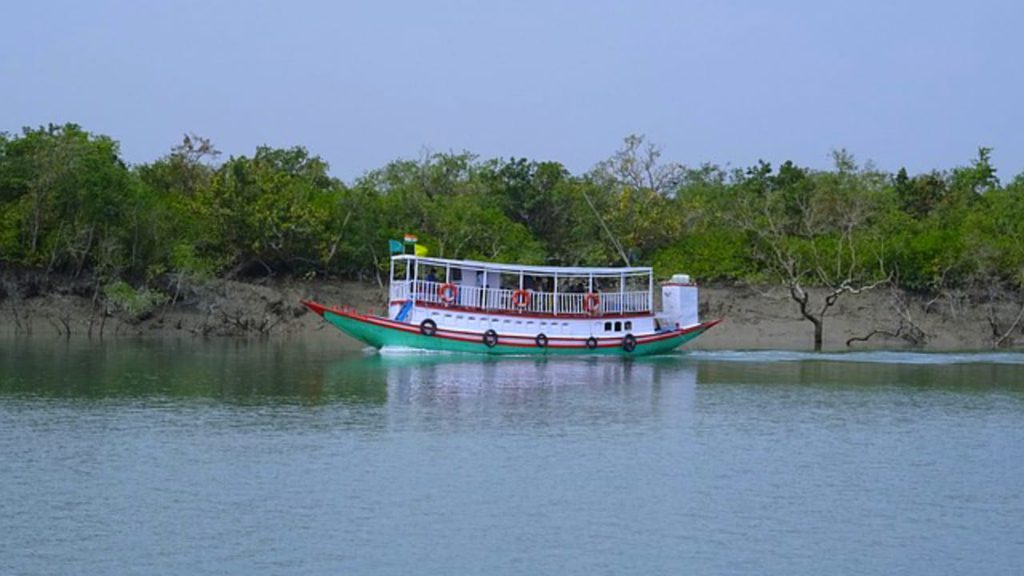
A few points worth knowing before you book a cruise:
- No overnight boat stays: Forest department rules require tourists to sleep at land-based accommodation, not on the boat, so any “cruise package” that includes nights away will still route you to a lodge or resort for sleeping.
- Group vs. private boats: Budget and mid-range packages typically put you on a shared boat with other travellers on the same itinerary. If privacy matters, ask specifically for a private or exclusive boat charter it costs more but lets you set your own pace.
- Comfort features vary a lot: If you care about a shaded upper deck, proper toilets, or charging points, ask your operator directly rather than assuming most registered tourist boats run generators to provide power for charging phones and cameras, but standards differ between operators.
- Life jackets are non-negotiable: A reputable operator will insist on life jackets for the entire river journey; treat any boat that doesn’t as a red flag.
Choosing the Right Sundarban Tour Guide
With dozens of operators running near-identical routes, the difference between an average trip and a great one usually comes down to the guide and the ground-level execution. A few things worth checking before you book:
- Government-approved guides: Every legitimate tour includes a forest department-approved naturalist guide who boards at Sajnekhali and handles permit formalities. This isn’t optional it’s a legal requirement to enter the core forest zones.
- Transparent, itemised pricing: Ask exactly what’s included meals, permits, camera fees, and accommodation category rather than accepting a single bundled number.
- Reviews and experience: Look for operators with a solid track record and verifiable reviews on platforms like Google or Tripadvisor rather than only their own website.
- Accommodation quality: “Resort” and “tourist lodge” can mean very different things across operators ask for photos or recent traveller feedback before assuming a category.
- Group size and boat type: A smaller group on a private boat gives you more flexibility to linger at a good sighting; a large shared group tour is more budget-friendly but moves on a fixed schedule.
- Flexibility with pickup points: Many operators pick up from central Kolkata points like Esplanade or Science City, while some also offer home or hotel pickup for a customised fee useful if you’re travelling with young kids or elderly family.
Permits and Documents You’ll Need
The Sundarban Tiger Reserve is a protected area, and no one Indian or foreign is allowed into the core forest zones without a valid entry permit. The good news is that for anyone booking through a registered tour operator, this is handled on your behalf as part of the package; you simply need to carry the right identity documents.
- Indian nationals: carry your Aadhaar card or another valid government photo ID. Permits for Indian travellers are usually processed quickly, often on the same day.
- Foreign nationals: you’ll need your original passport and valid visa. Foreigners require a special forest permit, arranged through the Sajnekhali Range Office or the West Bengal Tourism Office, and this typically needs more lead time than domestic permits, so it’s worth confirming with your operator well in advance of travel.
- Independent travellers (not booked through an agency) can apply directly at the Sajnekhali Range Office or the Office of the Field Director, Sundarban Tiger Reserve, in Canning, but this route takes more effort and local knowledge than simply booking a package.
Whichever route you take, never attempt to enter restricted forest zones without a permit and an approved guide it’s both illegal and genuinely unsafe given the area’s wildlife.
A Sample 3 Days / 2 Nights Sundarban Itinerary
To give you a realistic sense of how a standard package unfolds:
Day 1 — Kolkata to Sundarbans: Early morning pickup from Kolkata, road transfer of roughly three hours to the jetty at Godkhali or Sonakhali, then a boat transfer into the delta. Check in to your resort or lodge, followed by an afternoon boat safari covering nearby creeks, a sunset point, and perhaps a village walk to see local life on the islands.
Day 2 — Full-Day Jungle Safari: An early start for the best wildlife activity, with the boat covering the core watchtower circuit typically Sajnekhali, Sudhanyakhali, and Dobanki where raised walkways let you view the forest from a safe vantage point. Lunch is usually served on board. Some itineraries add a stop at a remoter watchtower like Bonnie Camp for travellers with more time. Evenings often include a cultural programme back at the resort local folk performances or storytelling about the Bon Bibi legend that’s central to Sundarbans folklore.
Day 3 — Return to Kolkata: A final short safari or birdwatching session in the morning, breakfast, and check-out, followed by the boat and road journey back to Kolkata, typically arriving by early evening.
Shorter packages simply compress this structure a 2D1N trip drops one safari session, and a 1-day tour condenses everything into a single long day without an overnight stay.
What to Pack for a Sundarban Trip
- Light, neutral-coloured cotton clothing (bright colours and loud patterns are best avoided near wildlife)
- A light jacket or shawl for cool winter mornings on the water
- Comfortable, closed, waterproof-friendly footwear
- Sunscreen, a hat, and mosquito or insect repellent the delta’s humidity and insects are no joke
- Binoculars, if you’re serious about birdwatching or tiger-spotting from watchtowers
- A basic first-aid kit and any personal medication
- A power bank, since charging access on boats can be inconsistent
- A flashlight or headlamp electricity at delta lodges can be erratic
What to Realistically Expect From Wildlife Sightings
It’s worth setting expectations honestly: a tiger sighting is a genuine possibility, not a guarantee, on any Sundarban trip. The tiger population here is elusive by nature, and most visitors leave without seeing one that’s the reality of an unfenced, wild forest, not a failure of the tour.
What you can count on far more reliably is spotting deer, various birds of prey and waterbirds, crocodiles basking on mudbanks, and, if you’re fortunate, Gangetic river dolphins surfacing near the boat. Treat the trip as an immersive nature and culture experience first, with a tiger sighting as a thrilling bonus rather than the sole measure of success that mindset makes for a far more enjoyable trip regardless of what you see.
The Sundarban Hilsa Festival
If your travel window falls between July and September, consider timing your trip around the Sundarban Hilsa Festival, a seasonal celebration built around the Hilsa fish run, when the fish is at its freshest and most flavourful in the delta’s rivers.
These tours typically follow the same boat-safari structure as a standard package but weave in multiple Hilsa preparations across meals a genuinely different, food-forward way to experience the region compared to the classic winter wildlife safari. Just keep in mind that monsoon river conditions can be less predictable, so safaris in this window run under closer supervision and are better suited to travellers who don’t mind a bit of unpredictability in exchange for lush scenery and exceptional food.
Tips for a Safe, Enjoyable Sundarban Trip
- Book with a licensed operator: This isn’t just about convenience permits, guides, and safety equipment are all tied to using a registered tour provider.
- Stay quiet on the water: Loud music or shouting is both disrespectful to the ecosystem and virtually guarantees you won’t see any wildlife.
- Wear your life jacket the entire time you’re on the boat: even if the water looks calm.
- Don’t litter, and don’t feed the animals – both disrupt the fragile ecosystem the entire trip depends on.
- Book winter trips early: December to February is peak season, and good boats and lodges fill up weeks in advance.
- Carry cash: Card and UPI acceptance can be patchy once you’re away from Kolkata and out on the islands.
- Double-check accommodation details: before booking, since “resort” branding varies widely in quality across operators ask for recent photos or reviews if you’re unsure.
Group Tours vs. Private Tours Which Should You Book?
Most Sundarban operators offer two broad booking styles, and picking the right one changes both your cost and your experience.
Fixed-departure group tours put you on a shared boat with other travellers heading to the same watchtowers on the same schedule. These are the most economical option, since the boat, guide, and permit costs are split across a full group. The trade-off is a fixed itinerary you move on when the group moves on, whether or not you’d like more time at a particular spot. This style suits solo travellers, couples on a budget, and anyone happy to socialise with fellow travellers along the way.
Private or customised tours put an entire boat, guide, and itinerary at your group’s disposal. You can adjust timings, linger longer at a promising sighting, and even request pickup from your home or hotel instead of a fixed meeting point in Kolkata. This flexibility comes at a real premium often close to double the per-person cost of a shared tour for small groups but for families with children, elderly travellers who need a slower pace, or photographers chasing specific shots, it’s usually worth the extra spend. Larger families or friend groups can often negotiate a flat per-boat rate that narrows this price gap considerably, since the fixed costs of the boat and guide are shared across more people.
If you’re undecided, a useful rule of thumb is group size: solo and duo travellers usually get better value from a shared departure, while groups of six or more often find a private charter comes out close to the same per-person cost with far more control over the day.
FAQs
How many days are ideal for a Sundarban tour from Kolkata?
A 3 days/2 nights package is the sweet spot for most first-time visitors, giving you two full safari sessions and a realistic shot at good sightings. If you’re pressed for time, a 1-day tour is still a worthwhile, guided introduction to the forest.
What is the average cost of a Sundarban tour package in 2026?
Budget group tours can start as low as ₹3,500–₹4,000 per person for shorter formats, with standard 3D2N packages typically ranging from around ₹4,000 to ₹8,000 per person, and premium or private-boat packages going well beyond that. Foreign nationals generally pay higher permit and entry fees than Indian travellers.
Can I visit the Sundarbans without a tour package?
Technically yes, but it requires arranging your own transport, applying for forest permits directly at Canning or Sajnekhali, and hiring an approved boat and guide independently considerably more effort than most travellers want to take on, especially for a short trip.
Is the Sundarbans safe for solo travellers and families?
Yes, when you travel with a licensed operator, follow the guide’s instructions, and stay within the approved tourist zones. The forest itself is genuinely wild, which is exactly why sticking to permitted routes and approved guides matters.
What’s the best month to see a tiger in the Sundarbans?
Winter months, particularly December through February, offer the best combination of comfortable weather, calm water, and higher wildlife activity though, as with any wild tiger habitat, sightings are never guaranteed.