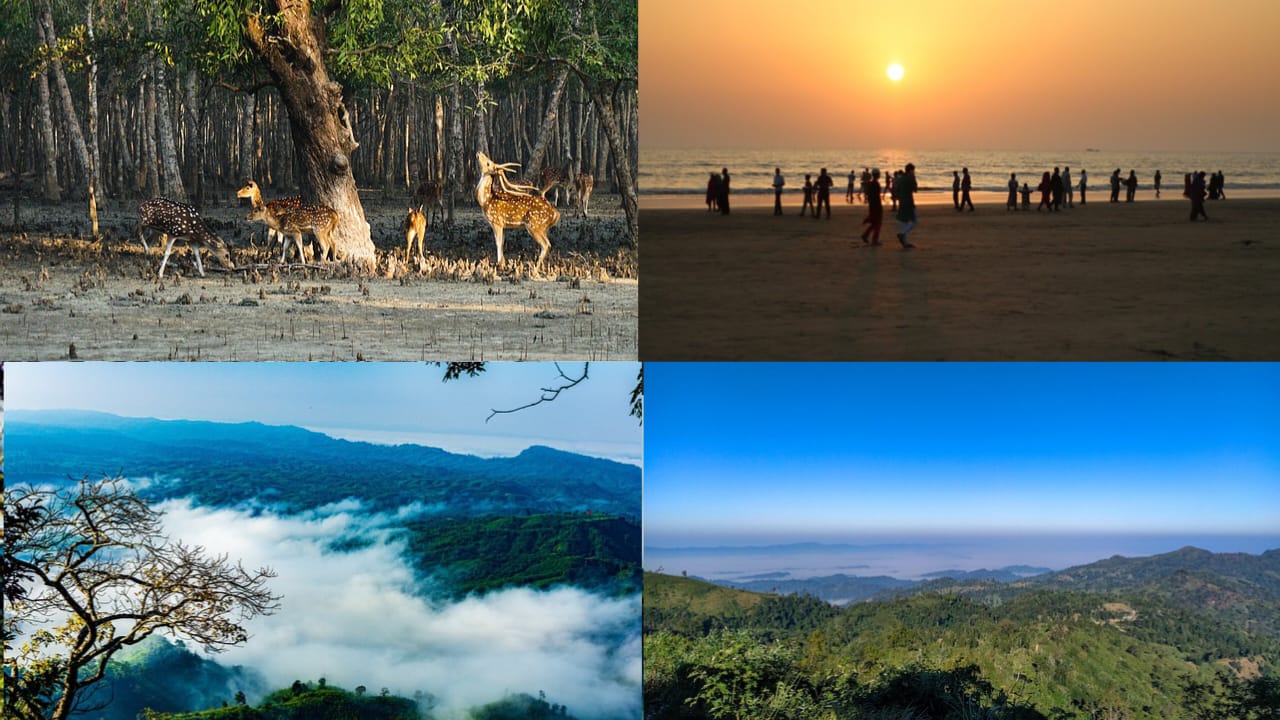
Bangladesh rarely makes the front page of anyone’s travel bucket list, and that’s precisely what makes it so rewarding to visit. Tucked between India and Myanmar, this deltaic nation is a patchwork of mangrove forests, tea-green hills, the world’s longest natural sea beach, and river towns that move at the unhurried pace of the boats drifting past them. If you’re searching for the best travel places in Bangladesh, the honest answer is that there isn’t just one the country’s beauty is spread across mangrove swamps, hill valleys, tea estates, and island beaches that each offer a completely different experience.
This guide walks through the destinations that consistently top every serious traveler’s list, along with practical details on when to go, how to get there, and what to expect once you arrive.
Why Visit Bangladesh?
Before diving into specific destinations, it’s worth addressing the obvious question: why Bangladesh at all? The country is home to the Sundarbans, the largest mangrove forest on Earth and the last stronghold of the wild Bengal tiger.
It has Cox’s Bazar, the longest unbroken natural sea beach in the world, stretching for roughly 120 kilometers. It has rolling tea gardens in Sylhet that rival anything in Darjeeling or Sri Lanka, and hill tracts in Bandarban that feel more like Southeast Asia than South Asia.
Beyond the landscapes, Bangladesh offers something increasingly rare in global travel: authenticity without the crowds. Tourist infrastructure is still developing in many areas, which means you’ll often have entire beaches, forest trails, or ancient ruins largely to yourself.
Add in famously warm hospitality, some of the best freshwater fish and rice dishes in South Asia, and a rich history spanning Buddhist monasteries, Mughal architecture, and colonial river ports, and you have a destination that rewards curious travelers disproportionately to its current fame.
It also helps that Bangladesh is a country built around water. The Ganges-Brahmaputra-Meghna delta is the largest river delta on Earth, and that single geographic fact shapes nearly everything about traveling here the boat journeys through the Sundarbans, the flooded forest trails of Ratargul, the river ports of Old Dhaka, and even the way villages and rice paddies seem to float on the landscape during monsoon season. Understanding this watery backbone helps explain why so many of the country’s best experiences happen from the deck of a boat rather than the seat of a car.
Best Travel Places in Bangladesh
1. The Sundarbans
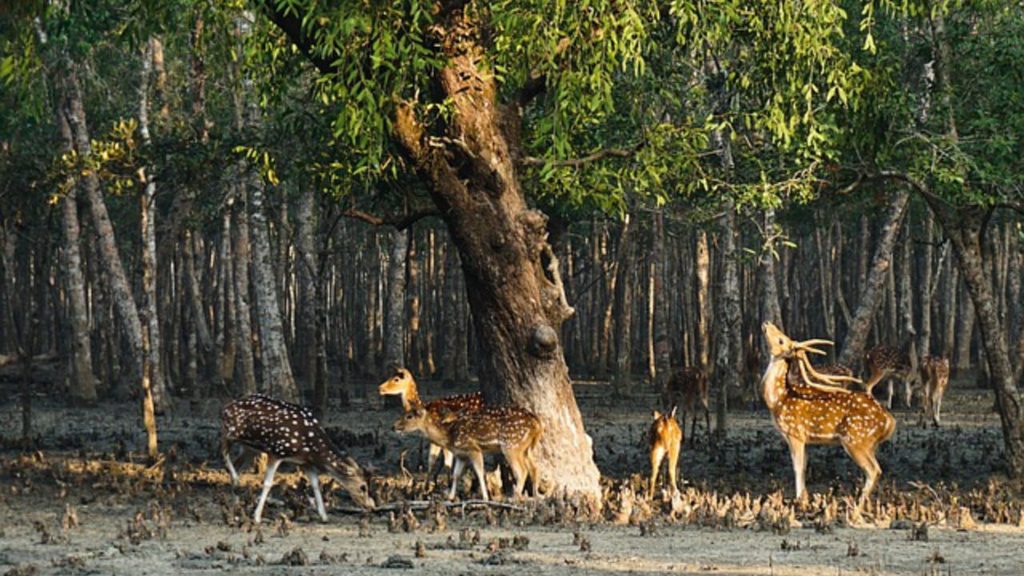
No list of the best travel places in Bangladesh can start anywhere except the Sundarbans. This UNESCO World Heritage Site spans the delta where the Ganges, Brahmaputra, and Meghna rivers meet the Bay of Bengal, and it is the only mangrove forest on the planet that still supports a wild tiger population.
Most visitors experience the Sundarbans by boat, since the forest is a maze of tidal waterways, mudflats, and mangrove channels that are largely inaccessible on foot. Multi-day river cruises depart from Khulna or Mongla, drifting through narrow creeks where you’re likely to spot spotted deer, wild boar, saltwater crocodiles, and an extraordinary variety of birdlife. Seeing a Royal Bengal tiger is rare and never guaranteed sightings happen for only a small fraction of visitors but the atmosphere of the forest itself, dense, silent, and slightly eerie, is worth the trip on its own.
Best time to visit: November through February, when the weather is cool and dry, and wildlife tends to gather closer to the riverbanks.
How to get there: Most tours are organized as multi-day packages from Dhaka or Khulna, including transport, boat accommodation, and a mandatory forest guard escort (required by law for safety).
Traveler tip: Book with an established tour operator rather than freelance boatmen. The forest’s channels are genuinely dangerous to navigate without local expertise, and licensed operators also handle the permits required to enter the reserve.
2. Cox’s Bazar

Cox’s Bazar is the destination most Bangladeshis themselves associate with a beach holiday, and for good reason. The unbroken stretch of golden sand runs for roughly 120 kilometers along the Bay of Bengal, making it the longest natural sea beach in the world. Unlike pocket beaches elsewhere in Asia, Cox’s Bazar feels expansive you can walk for hours without running out of shoreline.
The main beach area near Cox’s Bazar town is lively, with beachfront hotels, seafood restaurants, and a bustling promenade, especially around sunset when locals gather to watch the sky turn orange over the water. For a quieter experience, head south toward Himchari National Park, where waterfalls tumble down from hillside cliffs almost onto the sand, or continue further to Inani Beach, known for its coral-strewn shoreline and calmer crowds.
Best time to visit: November to March offers the clearest skies and calmest seas. Monsoon season (June–September) brings dramatic waves but also heavy rain and rough currents.
How to get there: Cox’s Bazar has its own airport with regular flights from Dhaka (around 50 minutes), or you can take an overnight bus or the newer direct train service from Dhaka, which opened up scenic rail access to the coast.
Traveler tip: The town gets extremely crowded during Bangladeshi national holidays and winter weekends. If you want a peaceful beach experience, aim for weekdays or consider basing yourself slightly outside the main town.
3. Saint Martin’s Island
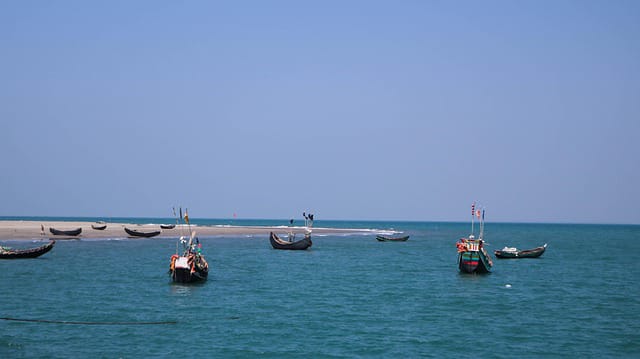
A few hours by boat from Cox’s Bazar’s southern tip sits Saint Martin’s Island, the country’s only coral island and one of its most photogenic destinations. Locally called Narikel Jinjira (“Coconut Island”), it’s fringed by turquoise water, coconut palms, and a laid-back fishing village atmosphere that feels worlds away from mainland Bangladesh.
The island is small enough to explore on foot or by rented bicycle in a single day, though most visitors stay at least one night to properly slow down. Snorkeling around the coral reefs is possible, particularly near the smaller Chera Dwip sandbar that appears at low tide, and the fresh seafood grilled fish, crab, and squid sold by beachside vendors is a highlight in itself.
Best time to visit: November through February. The island is often closed to tourists during monsoon season due to rough seas, and ferry services are suspended for safety reasons.
How to get there: Ferries and speedboats depart from Teknaf, itself a few hours by road from Cox’s Bazar. Day trips are possible, but staying overnight lets you experience the island once the day-tripper crowds leave on the last boat.
Traveler tip: Environmental concerns around coral damage and waste have led authorities to periodically restrict overnight stays or visitor numbers, so it’s worth checking current access rules before finalizing plans.
4. Sylhet
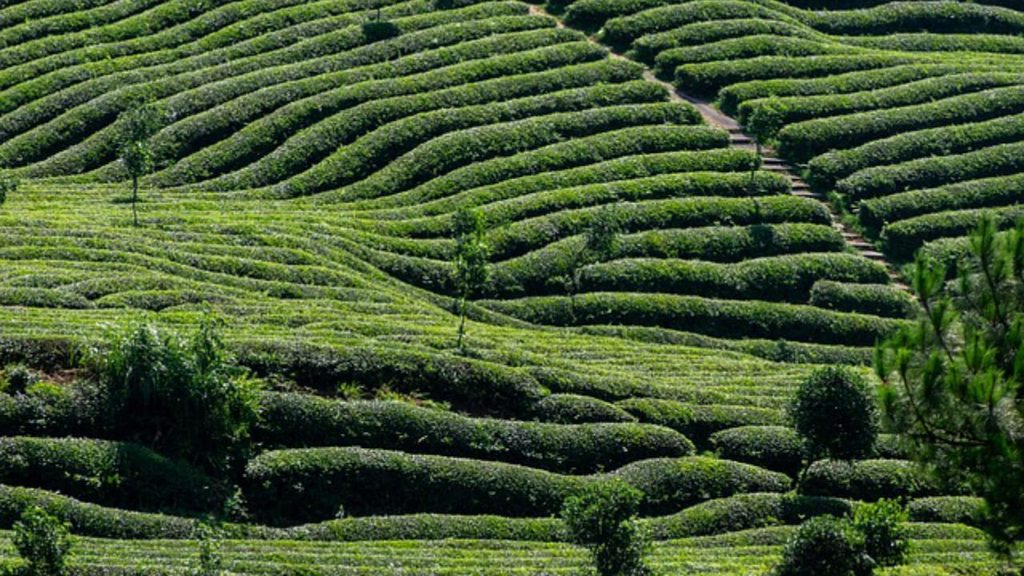
If the Sundarbans represents Bangladesh’s wild side and Cox’s Bazar its beach culture, Sylhet is where the country turns lush and green in a completely different way. This northeastern region is famous for its sprawling tea estates, where neatly manicured bushes carpet rolling hills as far as the eye can see. The Srimangal area in particular is often called the “tea capital of Bangladesh,” and a walk or bike ride through its plantations, especially at sunrise, is one of the most peaceful experiences the country offers.
Beyond the tea gardens, Sylhet division is home to Ratargul Swamp Forest, sometimes nicknamed the Amazon of Bangladesh. This freshwater swamp forest is best explored by small wooden boat, gliding between half-submerged trees during the monsoon season when the forest floor floods completely. It’s a genuinely unique ecosystem, one of very few freshwater swamp forests in South Asia that remain in a near-natural state.
The region also has Jaflong, where the Piyain River flows down from the Indian border hills over smooth stones and shallow rapids, framed by the Khasi hills in the distance, and Lalakhal, known for its striking blue-green river water.
Best time to visit: For the swamp forest, June to September, when water levels are highest and boats can navigate deep into the trees. For tea gardens and general sightseeing, October to March offers more comfortable weather.
How to get there: Sylhet has its own airport with flights from Dhaka (around 40 minutes), plus train and bus connections. From Sylhet city, most attractions like Srimangal, Jaflong, and Ratargul require additional local transport by CNG auto-rickshaw or hired car.
Traveler tip: Combine a Srimangal tea garden visit with a stop at one of the local “seven-layer tea” stalls — a Sylhet specialty where different tea infusions are carefully layered in a single glass, a small but memorable local craft.
5. Bandarban

Bandarban, part of the Chittagong Hill Tracts, offers a side of Bangladesh that surprises most first-time visitors: dramatic hill scenery, dense forest, and a rich mix of indigenous communities, including the Marma, Bawm, Mro, and Chakma peoples, each with distinct traditions, languages, and architecture.
The region’s centerpiece for many travelers is Nilgiri, a hill station offering sweeping views over layered green ridges that often disappear into cloud cover, giving the area an almost otherworldly atmosphere. Nearby, Chimbuk Hill offers similarly expansive viewpoints and is a popular stop en route to Bandarban town.
For more adventurous travelers, Boga Lake (Bogakain) is a crater lake sitting at nearly 3,000 feet, considered sacred by local Bawm communities, and often used as a base camp for trekking toward Keokradong, one of the country’s highest points. Multi-day treks through the hills, staying in indigenous village homestays, are increasingly popular among travelers looking for something beyond typical sightseeing.
Best time to visit: October to March, avoiding both the monsoon rains and the intense summer heat. Trekking routes can become dangerous or impassable during heavy rains.
How to get there: Buses run from Dhaka and Chittagong to Bandarban town, from where local jeeps (“chander gari”) are the standard way to reach more remote viewpoints and villages, since roads are steep and often unpaved.
Traveler tip: Some areas of the Chittagong Hill Tracts require special travel permits for foreign visitors due to the region’s semi-restricted status. Check current requirements with a local tour operator before traveling, since rules can change with little notice.
6. Sajek Valley

Technically part of Rangamati district but often grouped with the broader hill tracts circuit, Sajek Valley has become one of the most Instagrammed destinations in the country in the past decade, and it’s easy to see why. Perched at over 1,800 feet, the valley regularly sits above the cloud line, giving visitors the surreal experience of watching clouds roll through the valley below their hilltop cottages.
The village of Sajek itself is small, with bamboo and wood cottages built along a ridge, most offering panoramic views in multiple directions. Sunrise here is genuinely spectacular, with layers of mist settling into the valleys between hills as the sky lightens. The area is populated primarily by the Lushai and Tripura indigenous communities, and short guided walks to nearby villages offer a glimpse into hill tract life.
Best time to visit: November to February for the clearest cloud views and cooler temperatures; the monsoon months bring the thickest cloud cover but also landslide risk on the access roads.
How to get there: The journey typically starts with a bus from Dhaka to Khagrachari, followed by a jeep convoy (required for security reasons in parts of the route) up to Sajek. The final stretch of road is steep and winding, so this isn’t a trip for anyone prone to motion sickness.
Traveler tip: Accommodation in Sajek is limited, and cottages book out quickly during winter weekends and holidays. Reserve well in advance if you’re traveling during peak season.
7. Paharpur and Mahasthangarh

For travelers interested in history rather than landscapes, northern Bangladesh holds two remarkable archaeological sites. Paharpur, officially known as Somapura Mahavihara, is a UNESCO World Heritage Site and one of the largest Buddhist monasteries south of the Himalayas, dating back to the 8th century. Its cruciform central temple, surrounded by more than 170 monastic cells, gives a genuine sense of scale to what was once a major center of Buddhist learning across the region.
Not far away, Mahasthangarh claims the title of the oldest archaeological site in Bangladesh, with settlement evidence dating back over 2,500 years. Walking the ramparts of this ancient city and visiting its small on-site museum offers a very different kind of Bangladesh travel experience one centered on the deep, layered history of the Bengal delta long before it became the country it is today.
Best time to visit: November to February, avoiding the intense summer heat, since much of the site involves walking outdoors with limited shade.
How to get there: Both sites are most easily reached from the northern city of Bogura, itself accessible by bus or train from Dhaka in around 4–5 hours.
Traveler tip: These sites see far fewer international visitors than Bangladesh’s natural attractions, so it’s worth hiring a local guide (available at the entrance) who can bring the ruins to life with historical context that isn’t always available on-site signage.
8. Sonargaon

Just outside Dhaka, Sonargaon served as the capital of medieval Bengal and remains one of the most rewarding day trips from the capital. The Panam City area features a row of ornate, now-abandoned merchant mansions from the colonial trading era, their crumbling facades overtaken by vines and roots in a way that feels almost cinematic.
Nearby, the Folk Art and Craft Museum, housed in a restored zamindar’s palace, showcases traditional Bangladeshi crafts, from nakshi kantha embroidery to terracotta work, offering useful cultural context before heading deeper into the country.
Best time to visit: Year-round as a day trip, though cooler months (November–February) make walking around the historic quarter more comfortable.
How to get there: Sonargaon is roughly an hour from Dhaka by car or bus, making it an easy half-day or full-day excursion for travelers based in the capital.
Traveler tip: Combine Sonargaon with a stop at the nearby Meghna riverbank for a simple, scenic lunch before heading back to Dhaka a nice contrast between old ruins and everyday river life.
9. Old Dhaka

Dhaka itself rarely gets called beautiful, but Old Dhaka is one of the most sensorially intense and rewarding urban districts in South Asia. Narrow lanes packed with rickshaws, centuries-old mosques, Mughal-era forts, and food stalls selling some of the best street food in the country make this a destination best explored slowly, ideally on foot or by cycle-rickshaw.
Highlights include Lalbagh Fort, an unfinished 17th-century Mughal fortress with manicured gardens and a small museum; Ahsan Manzil, the elegant pink Pink Palace that once served as the residence of Dhaka’s Nawabs; and Star Mosque, notable for its intricate blue-and-white mosaic tilework. A sunset boat ride on the Buriganga River, watching the chaotic river traffic of cargo boats and ferries, is one of the most memorable low-cost experiences in the entire country.
Best time to visit: November to February, when Dhaka’s notorious heat and humidity ease off considerably, making walking tours far more comfortable.
How to get there: Old Dhaka is easily reached by rickshaw, ride-share app, or a short taxi ride from anywhere in central Dhaka.
Traveler tip: Old Dhaka’s food scene is legendary try Kacchi biryani at one of the area’s long-standing restaurants, and don’t skip the street-side fuska (a Bangladeshi variant of pani puri) for an authentic taste of local life.
What to Eat in Bangladesh
No travel guide to Bangladesh is complete without a nod to the food, which is reason enough on its own to visit. Bangladeshi cuisine centers on rice and fish, unsurprising for a delta nation criss-crossed by rivers, but the variety within that framework is enormous. Hilsa (ilish), the national fish, is prepared dozens of ways, from mustard-steamed bhapa ilish to simple fried fillets served with plain rice, and it’s considered something of a delicacy during the Bengali New Year celebrations.
Kacchi biryani, a slow-cooked layered rice and mutton dish perfumed with saffron and whole spices, is arguably the country’s signature celebratory dish, and Old Dhaka is widely regarded as the place to try it at its best. Street food culture is equally vibrant: fuska (a Bangladeshi take on pani puri), jhalmuri (spiced puffed rice), and grilled corn sold from carts are staples of evening life in cities and towns alike. In Sylhet, don’t miss the seven-layer tea mentioned earlier, and in coastal areas like Cox’s Bazar and Saint Martin’s Island, freshly grilled seafood sold right on the beach is hard to beat.
For dessert, look out for mishti doi (sweetened fermented yogurt) and rosogolla-style sweets, both deeply rooted in Bengali culinary tradition and sold in sweet shops throughout the country.
Practical Travel Tips for Visiting Bangladesh
Best time to visit overall: The winter months, from November through February, offer the most comfortable weather across nearly all of these destinations — cooler temperatures, lower humidity, and minimal rainfall. If your priority is the Sundarbans mangroves or Sylhet’s swamp forest at full flood, some destinations are actually better in the monsoon shoulder months, so it’s worth planning your itinerary around your priority destinations rather than a single blanket season.
Getting around: Domestic flights connect Dhaka to Chittagong, Sylhet, Cox’s Bazar, and Jessore (near the Sundarbans), which can save considerable time compared to road travel. For shorter distances, intercity buses are extensive and inexpensive, while trains offer a more scenic, if slower, alternative on several key routes, including the Dhaka–Cox’s Bazar line.
Visas: Most travelers will need to arrange a visa in advance or on arrival depending on nationality; requirements change periodically, so it’s worth checking with the nearest Bangladeshi embassy or consulate, or Bangladesh’s official immigration resources, close to your travel dates.
Currency and costs: Bangladesh remains one of the more affordable destinations in South Asia. Budget accommodation, local transport, and street food can make for very low daily costs, while mid-range hotels and organized tours (particularly for the Sundarbans and hill tracts) will raise the budget accordingly.
Permits for hill tracts: As noted above, certain areas of the Chittagong Hill Tracts, including parts of Bandarban and Rangamati, may require special permits for foreign travelers. This is worth confirming with a local tour operator before finalizing an itinerary, since enforcement and requirements can shift.
Respecting local customs: Bangladesh is a majority-Muslim country with generally conservative dress norms, particularly outside major cities and tourist beach areas. Modest clothing is appreciated when visiting mosques, villages, and rural areas, and is a simple way to travel respectfully.
Connectivity and SIM cards: Local SIM cards from providers like Grameenphone, Robi, and Banglalink are inexpensive and widely available at the airport or in city centers, and generally offer solid 4G coverage in cities and most tourist areas. Coverage can drop off in remote hill tract regions and deep inside forest reserves like the Sundarbans, so it’s worth downloading offline maps and letting people back home know you may be briefly unreachable in those areas.
What to pack: Lightweight, breathable clothing works for most of the year given Bangladesh’s tropical climate, but pack layers if you’re heading to hill areas like Bandarban or Sajek Valley, where evening temperatures can drop noticeably. A good rain jacket is essential during monsoon season, and comfortable closed-toe shoes are worth bringing for both hill trekking and navigating Old Dhaka’s uneven, crowded streets.
FAQs
Is Bangladesh safe for tourists?
Bangladesh is generally safe for travelers who take normal precautions, though as with any destination, it’s wise to stay updated on regional travel advisories, particularly for the Chittagong Hill Tracts, and to travel with reputable local guides in remote areas like the Sundarbans.
What is the single best place to visit in Bangladesh?
It depends entirely on what you’re after. For wildlife and unique ecosystems, the Sundarbans is unmatched. For beaches, Cox’s Bazar and Saint Martin’s Island lead the pack. For hill scenery and cloud-forest views, Sajek Valley and Bandarban are the standouts. Most seasoned visitors combine two or three regions rather than picking just one.
Do I need a guide for the Sundarbans?
Yes, a licensed forest guard escort is legally required to enter the Sundarbans Reserve Forest, and booking through an established tour operator is strongly recommended for both safety and navigation through the mangrove channels.
How many days do you need to see the best of Bangladesh?
Two weeks allows a reasonably paced trip covering the Sundarbans, Cox’s Bazar or Saint Martin’s Island, and one hill or tea-garden region such as Sylhet or Bandarban. Shorter trips of 5–7 days work well if you focus on just one or two regions rather than trying to cover the whole country.