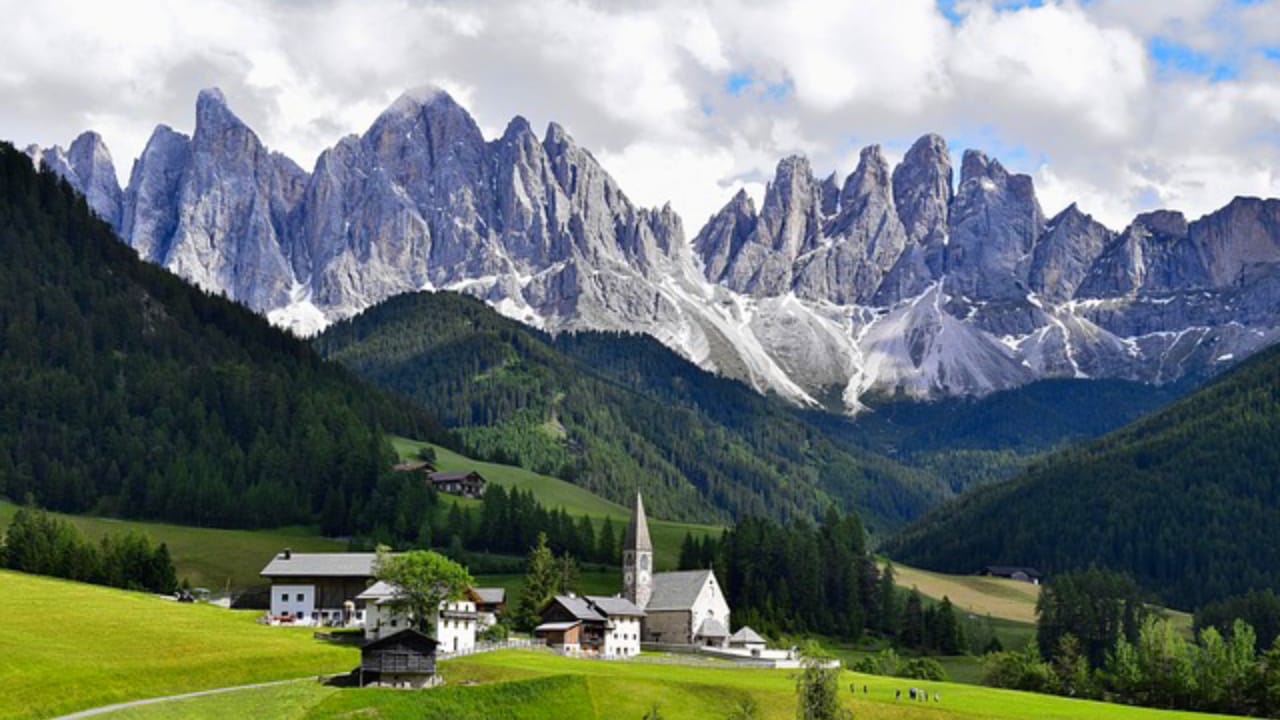
Venice gives you canals, gondolas, and centuries of art crammed onto a handful of islands. But less than three hours away, the landscape changes entirely jagged limestone spires rise out of green alpine meadows, turquoise lakes mirror the peaks around them, and mountain villages serve polenta and speck instead of spritz and cicchetti.
If you’re planning a Dolomites tour from Venice, you’re about to experience one of the most dramatic contrasts in European travel, and you don’t need weeks to do it justice. This guide walks through everything you need to know: how far the Dolomites actually are from Venice, whether a day trip is worth it or you should stay longer, the best routes and viewpoints, transportation options, seasonal considerations, and sample itineraries for one, two, or three days.
Whether you’re a first-time visitor squeezing in a single unforgettable day or someone planning a full mountain getaway, this article will help you build a trip that fits your time, budget, and sense of adventure.
Introduction to the Dolomites
Before diving into logistics, it helps to understand what makes this mountain range so distinct. The Dolomites take their name from the pale, dolomitic limestone that forms their peaks a rock type that was once part of an ancient tropical seabed millions of years ago.
That geological history is why the mountains glow pink and orange at sunrise and sunset, a phenomenon locals call “enrosadira,” and why the peaks look so different from the granite giants of the western Alps: sheer vertical walls, dramatic spires, and pale rock faces that seem to change color throughout the day.
UNESCO recognized the Dolomites as a World Heritage Site in 2009, citing both their exceptional natural beauty and their geological significance. The range straddles three Italian provinces Belluno, South Tyrol, and Trentino each with its own linguistic and cultural flavor, from Italian to German to Ladin, a legacy of the region’s complicated history as part of the Austro-Hungarian Empire before becoming Italian territory after World War I.
That layered history is still visible today in the architecture, the food, and even the road signs, which are often written in two or three languages. For visitors coming from Venice, this means your day trip or multi-day escape isn’t just a change of scenery it’s a shift into an entirely different cultural and culinary region, even though you never leave Italy.
How Far Are the Dolomites From Venice?
The Dolomites aren’t a single destination they’re a mountain range spanning roughly 350,000 acres across the provinces of Belluno, South Tyrol, and Trentino in northeastern Italy. The distance from Venice depends heavily on which part of the range you’re heading toward.
- Cortina d’Ampezzo, the most famous and glamorous Dolomites town, sits about 150 km (93 miles) from Venice, roughly a 2 to 2.5-hour drive.
- Lake Braies (Pragser Wildsee), one of the most photographed lakes in Italy, is closer to 3 hours away.
- Alpe di Siusi, Europe’s largest high-altitude alpine meadow, is around 3 to 3.5 hours from Venice.
- Tre Cime di Lavaredo, the iconic three-peaked rock formation, requires about 2.5 hours of driving plus additional time to reach the trailhead.
Because UNESCO’s designated Dolomites World Heritage Site actually comprises nine separate mountain groups, “the Dolomites” isn’t a single point on a map. This matters when you’re planning your route, since trying to cram multiple far-flung areas into one day will leave you spending more time in the car than admiring the scenery.
Is a Day Trip From Venice to the Dolomites
Yes – with realistic expectations. A well-planned day trip lets you see genuinely spectacular scenery, but you’ll be trading breadth for depth. Given that round-trip driving alone can eat up 5 to 6 hours, a single day is best spent focused on one core area rather than trying to hit every famous lake and peak you’ve seen on Instagram.
The most common and rewarding day-trip target from Venice is the Cortina d’Ampezzo area, paired with either Lake Misurina or a scenic drive over Passo Falzarego. This combination delivers dramatic mountain panoramas, a charming alpine town, and manageable driving times, all within a single (long) day.
If your heart is set on Lake Braies or Tre Cime di Lavaredo specifically, a day trip is still doable, but you’ll want to leave Venice by 6:00 or 6:30 a.m. and accept that you’ll return late in the evening. Many travelers find that spending one night in the mountains transforms the experience from “a rushed dash for photos” into a proper visit with time to actually breathe in the scenery.
Best Time of Year to Visit the Dolomites From Venice
Timing shapes your entire experience, so it’s worth thinking through the seasons before you book anything.
Summer (June to September): is peak season, and for good reason. Hiking trails are fully open, mountain refuges (rifugi) are serving hot meals, cable cars are running, and wildflowers blanket the meadows in July. July and August bring the warmest weather but also the biggest crowds, especially at hotspots like Lake Braies and Tre Cime. June and September offer a sweet spot: fewer tourists, still-reliable weather, and trails that aren’t overrun.
Autumn (late September to October): transforms the larch forests into gold, and the crisp air makes for some of the clearest mountain views of the year. This is a favorite season among photographers, though some higher-altitude lifts and rifugi begin closing toward the end of the season.
Winter (December to March): turns the Dolomites into a world-class ski destination, particularly around Cortina d’Ampezzo, which will host the 2026 Winter Olympics. If skiing or snow-covered scenery is your goal, winter is spectacular, but many hiking trails and mountain passes close, and a day trip becomes more weather-dependent and logistically complex.
Spring (April to May): is the shoulder season to approach with caution. Snowmelt can make higher trails muddy or impassable, and some cable cars and rifugi haven’t reopened yet. If you’re set on a spring visit, stick to lower-elevation valleys and double-check what’s actually open before you go.
For most first-time visitors doing a Dolomites tour from Venice, June through September offers the best balance of accessibility, weather, and open facilities.
From Venice to the Dolomites Transportation Options
Renting a Car
Driving is by far the most flexible way to explore the Dolomites, and honestly, it’s the option most seasoned travelers recommend. The mountain roads themselves are part of the experience hairpin switchbacks, panoramic passes, and pull-offs where you’ll want to stop every few kilometers for photos.
A few practical notes:
- Pick up your rental car in Venice Mestre (on the mainland) rather than in the historic center, since cars can’t enter Venice’s islands.
- GPS coverage is generally reliable, but download offline maps as a backup, since mountain valleys can have patchy signal.
- Many of the Dolomites’ most scenic roads, like the Passo Giau and Passo Falzarego, involve steep grades and tight curves. If you’re not confident with mountain driving, take it slow and let faster local drivers pass.
- Parking at popular sites like Lake Braies fills up fast, especially in summer. Some locations now require timed-entry reservations for parking check current rules before you go.
Dolomites Tour From Venice Day Tour
If you’d rather not navigate mountain roads yourself, numerous companies run guided day trips to the Dolomites from Venice, typically departing early morning and returning in the evening. These tours usually include round-trip transportation in a minibus or coach, a driver-guide, and stops at two or three iconic viewpoints or towns.
The upside is convenience no driving, no parking stress, and a guide who can share context about the region’s history and geology. The downside is a fixed schedule: you’ll spend a set amount of time at each stop, and won’t have flexibility to linger at spots you love or skip stops that don’t interest you.
Guided tours work particularly well for travelers without a rental car, those uncomfortable with mountain driving, or anyone who prefers a structured day without logistics to manage.
Train and Bus Combination
Public transportation to the Dolomites from Venice is possible but slower and less flexible. You’d typically take a train from Venice to Calalzo di Cadore or Cortina d’Ampezzo (via connections), then rely on regional buses to reach specific trailheads or lakes. This option works if you’re planning to base yourself in one mountain town for several days rather than doing a single rushed day trip, since the connections and waiting times make a same-day round trip impractical.
Private Driver or Transfer
For travelers who want flexibility without driving themselves, hiring a private driver for the day is a middle-ground option. You get a custom itinerary and someone else handling the roads, at a higher price point than a group tour or car rental.
Top Destinations for a Dolomites Tour From Venice
Cortina d’Ampezzo
Often called the “Queen of the Dolomites,” Cortina is the most accessible and best-known mountain town in the range, and a natural anchor point for any itinerary. Nestled in a valley surrounded by dramatic peaks like Tofana and Cristallo, Cortina combines postcard scenery with genuine alpine charm cobblestone streets, boutique shopping, and mountain-view cafés. It’s also gearing up to co-host the 2026 Winter Olympics, which has brought a wave of infrastructure investment to the area.
From Cortina, you can easily reach several other highlights by car, making it a smart base whether you’re day-tripping or staying overnight.
Lake Braies (Pragser Wildsee)
This emerald-green lake, framed by dense pine forest and the Croda del Becco peak, is arguably the most photographed body of water in the Italian Alps. Its still, mirror-like surface on calm mornings has made it a bucket-list stop for photographers and casual visitors alike. A flat, easy walking path circles the entire lake in about an hour, making it accessible for all fitness levels.
Because of its popularity, arriving early (ideally before 9 a.m.) is essential in summer, both for parking and for experiencing the lake before crowds and tour buses arrive.
Tre Cime di Lavaredo
These three distinctive peaks are perhaps the most recognizable symbol of the Dolomites, appearing on countless postcards and travel posters. A moderate 9-10 km loop hike circles the base of the formation, offering constantly changing perspectives on the towers and views across the surrounding valleys. The trailhead parking lot at Rifugio Auronzo requires a paid entry fee for vehicles during peak season.
Alpe di Siusi (Seiser Alm)
Europe’s largest high-altitude alpine meadow spreads across rolling green hills dotted with wooden huts and grazing cattle, with the jagged Sassolungo massif rising dramatically at one edge. During peak season, private vehicle access is restricted, and visitors take a cable car up from the valley below a system designed to preserve the meadow’s tranquility. It’s an ideal spot for gentle walks, picnics, or simply sitting and taking in the view.
Passo Falzarego and Passo Giau
These two mountain passes connect Cortina to other parts of the Dolomites and are spectacular destinations in their own right. Passo Giau, with its dramatic switchback road climbing to over 2,200 meters, offers some of the most photographed panoramas in the entire range. Passo Falzarego is also home to a cable car up to Lagazuoi, where World War I tunnels carved into the mountain are open for exploration.
Val di Funes and Seceda
Val di Funes is a valley famous for the small church of San Giovanni in Ranui, its white steeple set against the jagged Odle mountain backdrop one of the most-photographed church scenes in Italy. Nearby, a cable car from Ortisei climbs to Seceda, where a short walk reveals sweeping views of the Odle peaks that regularly top “most beautiful views in the Dolomites” lists.
Sample Itineraries
One-Day Dolomites Tour From Venice
- 6:00–6:30 a.m.: Depart Venice
- 8:30–9:00 a.m.: Arrive in the Cortina d’Ampezzo area
- 9:00 a.m.–12:00 p.m.: Drive the Passo Giau or Passo Falzarego, stopping at scenic overlooks
- 12:00–1:30 p.m.: Lunch in Cortina or at a mountain rifugio
- 1:30–4:00 p.m.: Short walk around Lake Misurina or a gentle hike near Cortina
- 4:00–6:30 p.m.: Drive back to Venice
- ~7:00 p.m.: Arrive back in Venice
This itinerary keeps driving distances manageable and focuses on one region, which is the key to a satisfying single-day visit.
Two-Day Dolomites Tour From Venice
Day 1:
- Depart Venice early, drive to Lake Braies, arriving by mid-morning
- Walk the lake loop trail
- Continue to Tre Cime di Lavaredo in the afternoon for the base loop hike
- Overnight in or near Cortina d’Ampezzo
Day 2:
- Morning drive over Passo Falzarego, with a cable car ride up to Lagazuoi for panoramic views
- Continue over Passo Giau
- Afternoon drive back to Venice, arriving by early evening
Splitting the trip over two days removes the time pressure of a single-day dash and lets you see both Lake Braies and Tre Cime without an exhausting itinerary.
Three-Day Dolomites Tour From Venice
Day 1: Drive to Cortina d’Ampezzo, explore the town, and take an easy afternoon walk or cable car ride nearby. Overnight in Cortina.
Day 2: Full day dedicated to Tre Cime di Lavaredo and Lake Misurina, followed by a scenic evening drive over Passo Giau. Overnight in Cortina or a nearby valley.
Day 3: Head toward Val di Funes and Alpe di Siusi, visiting the San Giovanni church viewpoint and taking the cable car up to Seceda or exploring the alpine meadow. Drive back to Venice in the late afternoon.
A three-day trip gives you a genuine taste of multiple mountain groups without feeling rushed, and it’s a popular sweet spot for travelers who want more than a day trip but don’t have a full week to spend.
Where to Stay in the Dolomites
If you’re extending your trip beyond a single day, choosing where to base yourself matters. Cortina d’Ampezzo is the most popular choice thanks to its central location, range of accommodations, and easy access to multiple mountain passes and trailheads. It tends to be pricier, especially during ski season.
Ortisei, Santa Cristina, and Selva in Val Gardena offer a slightly different base, closer to Alpe di Siusi and Seceda, with a strong Ladin cultural identity and excellent cable car access.
For a quieter, more rustic option, small villages in the Val di Funes or near Lake Misurina put you closer to nature with fewer crowds, though you’ll want a car to get around.
Booking accommodations well in advance is strongly recommended during July, August, and ski season, as rooms in popular towns fill up months ahead.
What to Pack for Your Dolomites Trip
Mountain weather changes quickly, even in summer, so layering is essential. A few packing essentials:
- Sturdy hiking shoes or boots with good grip, even for shorter walks
- A waterproof or windproof jacket, since afternoon storms are common in summer
- Layers you can add or remove temperatures can shift 15-20°F between valley and peak
- Sunglasses and sunscreen, since UV exposure is stronger at altitude
- A refillable water bottle, as many rifugi and trailheads have potable water sources
- Cash in small denominations for parking fees, mountain huts, and cable cars in remote areas that may not accept cards
Food and Culture
The Dolomites sit at a cultural crossroads between Italian, Austrian, and Ladin traditions, and the food reflects that blend. Expect hearty dishes like canederli (bread dumplings, often served in broth), speck (a smoked, cured ham), polenta paired with melted cheese or mushrooms, and strudel for dessert. Mountain rifugi serve simple, filling meals designed to fuel hikers, and eating lunch at one often with a view that rivals any restaurant terrace is a highlight in itself.
In areas like Val Gardena and Alpe di Siusi, you’ll also notice signage and conversations in Ladin, a distinct Romance language and a marker of the region’s unique cultural heritage, alongside Italian and German.
How Much Does a Dolomites Tour From Venice Cost?
Costs vary widely depending on how you travel and how long you stay, but here’s a general sense of what to budget.
Guided day tours typically range from €90 to €180 per person, depending on group size, inclusions, and whether lunch or cable car tickets are bundled in. Private day tours with a dedicated driver-guide run considerably higher, often €400 to €800 for the vehicle regardless of group size, which can actually be cost-effective for families or small groups splitting the fare.
Self-drive day trips mainly involve rental car costs (roughly €50-€100 per day for a standard vehicle), fuel (expect €30-€50 round-trip depending on your route), and parking fees at popular sites, which can range from €5 to €25 depending on location and season. Some cable cars, like the one up to Alpe di Siusi or Seceda, cost an additional €20-€35 per person for a round-trip ticket.
Multi-day trips add accommodation costs on top of transportation. Expect to pay anywhere from €90 per night for simple guesthouses to €300 or more per night for higher-end hotels in Cortina, especially during peak summer weeks or ski season. Meals at mountain rifugi are generally affordable, with a hearty lunch running €12-€20 per person.
Overall, a well-planned day trip can be done for under €150 per person including a guided tour, while independent multi-day trips give you more control over spending but require more upfront planning.
Practical Considerations Before You Go
A few additional details are worth sorting out before your trip, especially if this is your first time navigating Italy’s alpine regions.
Travel insurance and hiking safety. If you plan on hiking, even on moderate trails like the Tre Cime loop, it’s worth checking that your travel insurance covers mountain activities. Weather can shift quickly at altitude, and trails that look easy on a map can involve loose rock or exposed sections.
Mobile connectivity. Signal coverage is generally decent in main valleys and towns but can drop out in more remote passes and hiking areas. Downloading offline maps (Google Maps or a dedicated hiking app like Komoot) before you leave Venice is a smart precaution.
Language and etiquette. While English is widely understood in tourist hubs, a few words of Italian or German go a long way in smaller villages, and locals appreciate visitors who make the effort. It’s also customary to greet fellow hikers on the trail with a simple “Buongiorno” or “Grüß Gott,” depending on the region.
Sustainability considerations. The Dolomites’ popularity has led some municipalities to introduce visitor caps, timed parking reservations, and shuttle-only access at certain hotspots to protect fragile alpine environments. These measures can change from year to year, so checking current regulations for your specific destinations shortly before your trip is worth the extra five minutes.
Tips for a Smooth Dolomites Tour From Venice
- Start early: Whether you’re driving yourself or joining a tour, an early departure avoids traffic near popular sites and gives you the best light for photography.
- Check parking rules in advance: Several hotspots, including Lake Braies and Tre Cime, have limited parking or require reservations during peak summer months.
- Watch the weather: Mountain weather can shift rapidly; afternoon thunderstorms are common in summer, so plan strenuous hikes for the morning when possible.
- Fuel up before mountain roads: Gas stations are sparser once you’re deep in the valleys and passes.
- Bring cash: Some cable cars, mountain huts, and parking areas in remote spots don’t accept cards.
- Don’t overplan: Trying to see too many far-apart locations in one day usually means more driving than sightseeing. Pick one or two focus areas per day.
FAQs
Can you do a Dolomites day trip from Venice without a car?
Yes, through a guided day tour, which handles all transportation. Public transit alone makes a same-day round trip difficult due to connection times.
How many days do you need for the Dolomites?
A single day gives you a taste, but two to three days allow you to see multiple highlight areas without excessive time pressure. A week or more suits travelers who want to hike extensively or explore several mountain groups in depth.
Is it better to stay overnight in the Dolomites or do a day trip from Venice?
If your schedule allows it, staying at least one night dramatically improves the experience, since you avoid several hours of round-trip driving on the same day you’re trying to sightsee and hike.
What is the closest Dolomites town to Venice?
Cortina d’Ampezzo is generally considered the most accessible and famous gateway town, roughly 2 to 2.5 hours away by car.
Do I need to speak Italian to visit the Dolomites?
No. English is widely spoken in tourist areas, hotels, and restaurants, especially in Cortina and other well-visited towns.