There’s a reason Coney Island has been drawing crowds for well over a century. Long before theme parks became a billion-dollar industry. This narrow strip of Brooklyn shoreline was already perfecting the art of the good time rickety wooden roller coasters, salt-air boardwalks, hot dogs eaten standing up, and a Ferris wheel that’s been turning since the Roaring Twenties. If you’re planning a Coney Island tour, you’re not just visiting an amusement park.
You’re stepping into a living piece of American pop culture that still manages to feel gritty, joyful, and completely unlike anywhere else in New York City. This guide walks you through everything you need for the perfect Coney Island day trip: how to get there, what to see, where to eat, when to go, and the small details that turn a good visit into an unforgettable one.
Why Coney Island Still Matters
Coney Island earned its nickname America’s Playground in the late 1800s, when it became the country’s first great seaside amusement destination. At its peak in the early 20th century, the area boasted three competing amusement parks Luna Park, Dreamland, and Steeplechase Park each one trying to out-dazzle the others with electric lights, wild rides, and spectacles that drew millions of visitors a year from across the tri-state area and beyond.
Much of that original grandeur is gone, lost to fires, the Great Depression, and decades of neglect. But Coney Island never actually closed. It reinvented itself instead, and today it exists as a fascinating blend of old and new: a handful of century-old rides operating alongside modern attractions.
A beach that’s free and open to the public, and a boardwalk that still hums with the same carnival energy that made the neighborhood famous. Walking a Coney Island tour today means walking through layers of history while eating a corn dog and hearing the ocean in the background.
A Deeper Look at Coney Island’s History
To really appreciate a Coney Island tour, it helps to know how the neighborhood got here. Coney Island’s transformation from a quiet barrier island into a mass entertainment destination began in the mid-1800s, when rail lines and horse-drawn transit made the beach accessible to Brooklyn and Manhattan residents for the first time. By the 1880s and 1890s, hotels, racetracks, and early amusement attractions had already begun to spring up along the shore.
The neighborhood’s golden age arrived with the opening of three rival amusement parks in quick succession: Steeplechase Park in 1897, Luna Park in 1903, and Dreamland in 1904. Each competed to outdo the others with taller towers, brighter electric lights, and more elaborate mechanical rides, and together they helped define what an “amusement park” even meant in American culture. At its peak, Coney Island could draw well over a million visitors on a single summer weekend, arriving by trolley, ferry, and eventually subway.
The mid-20th century brought a long decline. Dreamland burned down in a massive fire in 1911 and was never rebuilt. The rise of automobile travel and suburban living gave New Yorkers new vacation options, and by the 1960s and 70s, much of Coney Island had fallen into disrepair, with crime and disinvestment replacing the crowds of earlier decades. Steeplechase Park itself closed for good in 1964.
What makes Coney Island’s story remarkable is that it never fully disappeared. The Cyclone kept running. Nathan’s kept selling hot dogs. The Wonder Wheel kept turning. Slowly, through a mix of city investment, preservation efforts, and the opening of modern Luna Park in 2010.
The neighborhood clawed its way back into relevance not as a recreation of its early-1900s self, but as a genuinely new chapter built on top of the old one. That layered history is part of what makes walking around today so interesting: you’re seeing rides from three different centuries operating within a few blocks of each other.
Events and Festivals Worth Planning Around
If you have flexibility in your travel dates, timing your Coney Island tour around one of the neighborhood’s signature events can make the trip even more memorable.
The Mardi Gras-style Mermaid Parade, held annually in late spring, is Coney Island’s most famous event and one of the largest art parades in the country. Thousands of participants march down Surf Avenue in elaborate, sea-themed costumes, and the boardwalk fills with spectators, vendors, and a genuinely festive, offbeat energy that captures the neighborhood’s artistic, slightly eccentric spirit. If you can time a visit around it, it’s an unforgettable way to experience Coney Island.
Fourth of July brings Nathan’s famous hot dog eating contest, broadcast nationally and drawing enormous crowds to the original Surf Avenue location. Expect the entire neighborhood to be at capacity arrive very early for a decent vantage point, or pick a different day if crowds aren’t your thing.
Friday night fireworks run through the summer season along the boardwalk, giving evening visitors a reason to stick around after the rides close free, family-friendly, and a nice way to cap off a beach day.
Getting to Coney Island
One of the best things about Coney Island is how accessible it is. You don’t need a car, a ferry reservation, or a tour bus just a subway card.
By subway: The D, F, N, and Q trains all terminate at the Coney Island–Stillwell Avenue station, which sits just a block from the boardwalk. This is by far the easiest and cheapest way to arrive, and the ride from Manhattan takes roughly 45 minutes to an hour depending on where you start. The station itself is worth a glance it’s the largest elevated subway terminal in the world.
By car: If you’re driving, there are several paid parking lots near the boardwalk and Luna Park, though spots fill up fast on summer weekends. Expect to pay a flat daily rate, and arrive early if you want anything close to the entrance.
By ferry: In warmer months, the NYC Ferry system sometimes runs seasonal routes with stops near Coney Island, offering a scenic alternative if you don’t mind a longer trip and want views of the harbor along the way.
By bike: Coney Island is also bike-friendly, connected to Brooklyn’s greenway network. If you’re staying nearby, cycling down and locking up near the boardwalk is a pleasant, low-cost option.
Whichever way you choose, try to arrive earlier in the day, especially during summer. Coney Island gets crowded fast once the temperature climbs, and getting there before noon means shorter lines and easier beach access.
Planning Your Coney Island Tour
Coney Island has a distinct seasonal rhythm, and knowing it will shape your whole visit.
Summer (June–August) is peak season. The rides are all running, the beach is open for swimming, and the boardwalk is at its liveliest. This is also when it’s most crowded, especially on weekends and holidays. If you want the full carnival experience with every attraction operating, this is your window just prepare for heat, sunscreen, and lines.
Spring and early fall (April–May, September–October) offer a quieter, more relaxed version of Coney Island. Some rides may have limited hours or be closed for the season, but the weather is often more comfortable for walking around, and you’ll have more breathing room on the boardwalk. This is a great time for a more laid-back Coney Island tour focused on food, people-watching, and the beach itself rather than rides.
Winter transforms Coney Island into something almost eerie and beautiful a quiet, windswept beach town with shuttered ride gates and a boardwalk mostly to yourself. Most attractions close for the season, but it’s an interesting time to see the neighborhood’s bones, visit the New York Aquarium (which stays open year-round), and grab a bite at one of the few restaurants that don’t shut down. Not the trip for thrill rides, but a genuinely underrated option for photographers and anyone curious about the “real” off-season Coney Island.
For most first-time visitors, a weekday in late June or early September hits the sweet spot: warm enough to enjoy the beach and rides, but before or after the heaviest holiday-weekend crowds.
The Boardwalk
Officially named the Riegelmann Boardwalk, this 2.7-mile wooden promenade runs along the shoreline and connects Coney Island to the neighboring communities of Brighton Beach and Manhattan Beach. It opened in 1923 and remains the spine that everything else in the neighborhood is built around.
Walking the boardwalk is, in many ways, the real Coney Island tour. You’ll pass classic arcades, food stands selling everything from fried clams to knishes, souvenir shops stacked with novelty sunglasses and beach towels, and a rotating cast of street performers and vendors.
The energy shifts depending on which stretch you’re on closer to the amusement parks it’s louder and more commercial, while the sections near Brighton Beach feel more residential, with older locals playing chess or reading on benches facing the water.
Don’t rush the boardwalk. Budget at least 30-45 minutes just to walk its length near the main amusement area, stopping for photos, snacks, and the inevitable people-watching. It’s free, it’s beautiful in a scrappy, sun-bleached way, and it’s the single best way to get oriented before diving into rides or the beach.
Luna Park
Luna Park is the amusement park most visitors picture when they imagine a Coney Island tour today. Reopened in 2010 under Central Amusement International after decades without a major operating amusement park on the site, it borrows its name and some of its spirit from the original Luna Park that dazzled crowds in the early 1900s.
Modern Luna Park is a mix of classic thrill rides and family-friendly attractions. Highlights typically include:
- The Cyclone — a designated New York City landmark and one of the oldest wooden roller coasters still operating in the United States. Built in 1927, it’s steep, fast, and famously rough in the best possible way. Riding the Cyclone is close to a rite of passage for anyone doing a proper Coney Island tour.
- Thunderbolt — a modern steel coaster with steep drops and inversions, offering a smoother but no less intense ride than its wooden neighbor.
- The Wonder Wheel — technically part of a separate, adjacent park (more on that below), but often grouped with Luna Park in visitors’ minds since it’s right next door.
- Spinning rides, drop towers, water rides, and a dedicated kiddie area for younger children, making the park workable for multi-generational groups.
Tickets are typically sold either as single-ride tokens or unlimited-ride wristbands, and pricing varies by season and day. If you’re planning to ride more than three or four attractions, the wristband usually works out cheaper. Check current hours before you go, since Luna Park operates on a seasonal schedule with reduced hours in shoulder months and closure in winter.
Deno’s Wonder Wheel Amusement Park
Right next to Luna Park sits Deno’s Wonder Wheel Amusement Park, home to the single most iconic image associated with Coney Island: the Wonder Wheel itself.
Built in 1920, the Wonder Wheel is a 150-foot-tall Ferris wheel that’s been declared a New York City landmark. What makes it special isn’t just its age it’s the design. Half of its passenger cars are stationary, offering a classic, gentle ride with sweeping views of the boardwalk, the ocean, and the Manhattan skyline on a clear day. The other half are “swinging” cars that slide along a track as the wheel turns, giving braver riders a much more dynamic experience.
The park around the Wonder Wheel includes additional rides, games, and food stands, and it has a slightly more old-school, family-run feel compared to the larger corporate footprint of Luna Park. If you only have time for one iconic ride during your Coney Island tour, the Wonder Wheel is arguably the most essential it’s the ride that appears in nearly every postcard, movie scene, and photograph associated with the neighborhood.
Nathan’s Famous
No Coney Island tour is complete without a stop at Nathan’s Famous, the hot dog stand that put the neighborhood on the culinary map. Founded in 1916 by Nathan Handwerker, the original location still stands at the corner of Surf Avenue and Stillwell Avenue, just steps from the subway station.
Nathan’s became internationally famous not just for its hot dogs but for the annual Fourth of July hot dog eating contest, a spectacle that draws competitive eaters and massive crowds every summer and gets national television coverage. Even if you’re not visiting in July, the stand itself is worth the stop order a classic hot dog with mustard and sauerkraut, add a side of their famous crinkle-cut fries, and eat standing at one of the outdoor counters the way generations of visitors have before you.
Beyond Nathan’s, the neighborhood has plenty of other food worth trying:
- Totonno’s — one of the oldest pizzerias in New York, known for its coal-fired, thin-crust pies.
- Williams Candy — a decades-old shop specializing in candy apples and homemade fudge, a beloved boardwalk institution.
- Paul’s Daughter — a boardwalk staple for cheap eats, cold beer, and a laid-back beachside vibe.
- Ruby’s Bar & Grill — one of the last old-school boardwalk bars, with a history stretching back to the 1930s.
If you’re building a food-focused Coney Island tour, plan to graze rather than sit down for one big meal. Half the fun is walking the boardwalk with a hot dog in one hand and a candy apple in the other.
The New York Aquarium
Tucked along the boardwalk just past the amusement parks, the New York Aquarium is one of Coney Island’s most underrated stops, particularly for families and anyone visiting outside peak summer season. Operated by the Wildlife Conservation Society, it’s one of the oldest continuously operating aquariums in the United States, with exhibits featuring sea otters, sharks, sea lions, and a variety of coastal and deep-sea species.
The aquarium is open year-round, which makes it a great fallback option if you’re visiting in cooler months when the rides are closed. It typically takes two to three hours to see thoroughly, and it pairs well with a boardwalk walk either before or after your visit. Check current ticket prices and hours in advance, as the aquarium periodically runs special exhibits and seasonal programming.
The Beach
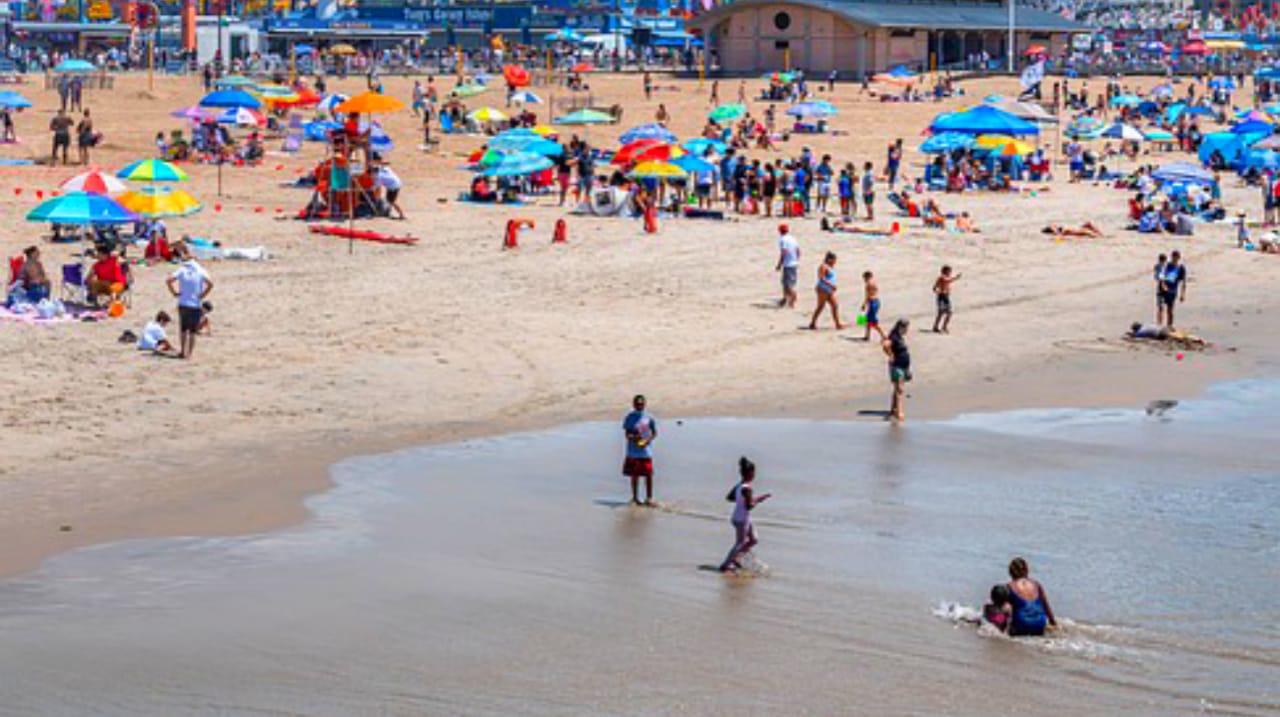
It’s easy to get so focused on rides and food that you forget Coney Island is, first and foremost, a beach. The sand stretches for miles along the shoreline, and unlike the amusement parks, access to the beach itself is completely free.
The water tends to be calmer than ocean beaches further out on Long Island, making it reasonably approachable for casual swimming, though as with any urban beach, water quality and lifeguard coverage vary by season, so it’s worth checking current conditions before diving in. Lifeguards are typically on duty during summer months, and swimming outside of guarded hours or areas isn’t recommended.
Even if you don’t plan to swim, the beach is worth a walk. Lay out a towel, watch the volleyball games that spring up along the sand, or simply enjoy views of the boardwalk and rides from the water’s edge. Sunset in particular is a beautiful, often overlooked time to be on the beach, as the crowds from the amusement parks start to thin and the light turns golden over the Atlantic.
Beyond the Main Strip
A well-rounded Coney Island tour doesn’t have to stop at the boardwalk’s busiest stretch. A few lesser-known spots reward visitors willing to wander a bit further:
Coney Island Museum — A small, quirky museum dedicated to the neighborhood’s history, run by the nonprofit Coney Island USA. It’s a great stop for anyone interested in the deeper story behind the rides and boardwalk, with vintage photographs, memorabilia, and rotating exhibits.
Sideshows by the Seashore — Also run by Coney Island USA, this is a modern continuation of the old-fashioned sideshow tradition, featuring sword swallowers, fire performers, and other classic acts performed live.
Brighton Beach — Just east of Coney Island proper, this neighborhood is known as “Little Odessa” for its large Russian and Eastern European community. It offers a quieter beach stretch and a completely different food scene, with excellent Russian bakeries, delis, and restaurants worth the extra walk or short subway ride.
MCU Park — Home to the Brooklyn Cyclones, a minor-league baseball team. Catching a summer evening game here is a fun, low-key way to extend a Coney Island day into the evening, with the ballpark sitting just steps from the beach.
Where to Stay if You’re Extending Your Trip
Most visitors treat Coney Island as a day trip from elsewhere in New York City, and honestly, that’s the most common and practical approach Manhattan and most of Brooklyn are under an hour away by subway. But if you’d rather base yourself closer to the water, there are a handful of hotels in the surrounding area, ranging from budget-friendly chain options to boutique properties near Brighton Beach.
Staying nearby has real advantages: you can catch sunrise on the beach before the crowds arrive, enjoy the boardwalk in the cooler evening hours after day-trippers head home, and avoid the subway crush on the way back into the city after a long day in the sun.
Shopping and Souvenirs
Part of the fun of a Coney Island tour is the shopping not high-end retail, but the specific brand of boardwalk kitsch that’s been part of the neighborhood for generations. Vendors along the boardwalk sell everything from custom airbrushed T-shirts and novelty hats to magnets, postcards, and beach gear for anyone who forgot a towel or sunscreen.
The Coney Island Museum’s gift shop is a good stop for something a little more curated, with vintage-style prints and merchandise tied to the neighborhood’s sideshow and amusement history. If you want a genuinely unique souvenir, look for anything featuring the Wonder Wheel or Cyclone silhouette both are treated almost like unofficial neighborhood mascots and show up on everything from tote bags to enamel pins.
Sample One-Day Coney Island Itinerary
If you’re not sure how to structure your visit, here’s a simple framework that covers the highlights without feeling rushed.
Morning: Arrive by subway before 11 a.m. to beat the crowds. Start with a walk along the boardwalk to get oriented, then head to the beach for an hour if the weather’s warm.
Midday: Grab lunch at Nathan’s Famous or one of the boardwalk food stands. Spend the next couple of hours riding the Cyclone, Wonder Wheel, and a few other attractions at Luna Park and Deno’s.
Afternoon: Visit the New York Aquarium, especially if you’re traveling with kids or want a break from the sun. Alternatively, explore the Coney Island Museum or catch a sideshow performance.
Evening: Wind down with a walk back along the boardwalk as the light softens, grab a candy apple from Williams Candy, and if it’s baseball season, consider catching a Brooklyn Cyclones game before heading home.
This itinerary works well for solo travelers, couples, and families alike, and it can easily be trimmed down to a half-day if you’re short on time or extended into a full weekend if you want to explore Brighton Beach and Manhattan Beach as well.
Practical Tips for Your Coney Island Tour
Bring cash. While most rides and larger vendors accept cards, many of the smaller boardwalk stands and games are cash-only or work more smoothly with cash.
Wear comfortable shoes. Between the boardwalk, the beach, and standing in ride lines, you’ll be on your feet most of the day.
Sunscreen is non-negotiable. There’s very little shade along the boardwalk and none on the beach, so reapply throughout the day, especially in summer.
Check ride hours before you go. Coney Island’s amusement parks operate on seasonal schedules, and hours can shift due to weather, especially for outdoor rides during storms or extreme heat.
Pack a swimsuit and towel if you’re visiting in warmer months and want the option to swim, even if it’s not your main plan.
Expect crowds on weekends. If your schedule is flexible, a weekday visit in summer offers a noticeably calmer experience with shorter lines.
Watch your belongings. Like any crowded tourist destination, Coney Island has its share of pickpocketing risk on peak days keep valuables secure, especially on the beach and in ride lines.
FAQs
Is Coney Island worth visiting?
Yes — it’s one of the most distinctive day trips available from New York City, combining beach access, historic rides, iconic food, and genuine neighborhood character in one compact area.
How much time do you need for a Coney Island tour?
A half-day (4–5 hours) covers the essentials: a few rides, a walk on the boardwalk, and a meal. A full day allows time for the aquarium, the beach, and a more relaxed pace.
Is Coney Island safe?
Generally yes, particularly in the main boardwalk and amusement park areas, which see heavy foot traffic and a visible presence of staff and security during operating hours. As with any dense, crowded tourist area, standard city precautions apply.
Is Coney Island good for kids?
Very much so. Between the kiddie rides at Luna Park, the aquarium, the free beach, and the boardwalk arcades, it’s one of the more kid-friendly day trips in New York City.
Do I need to buy tickets in advance?
For most standard visits, tickets for rides and the aquarium can be purchased on-site, though buying online in advance can occasionally save time and money, particularly for the aquarium or during peak summer weekends.