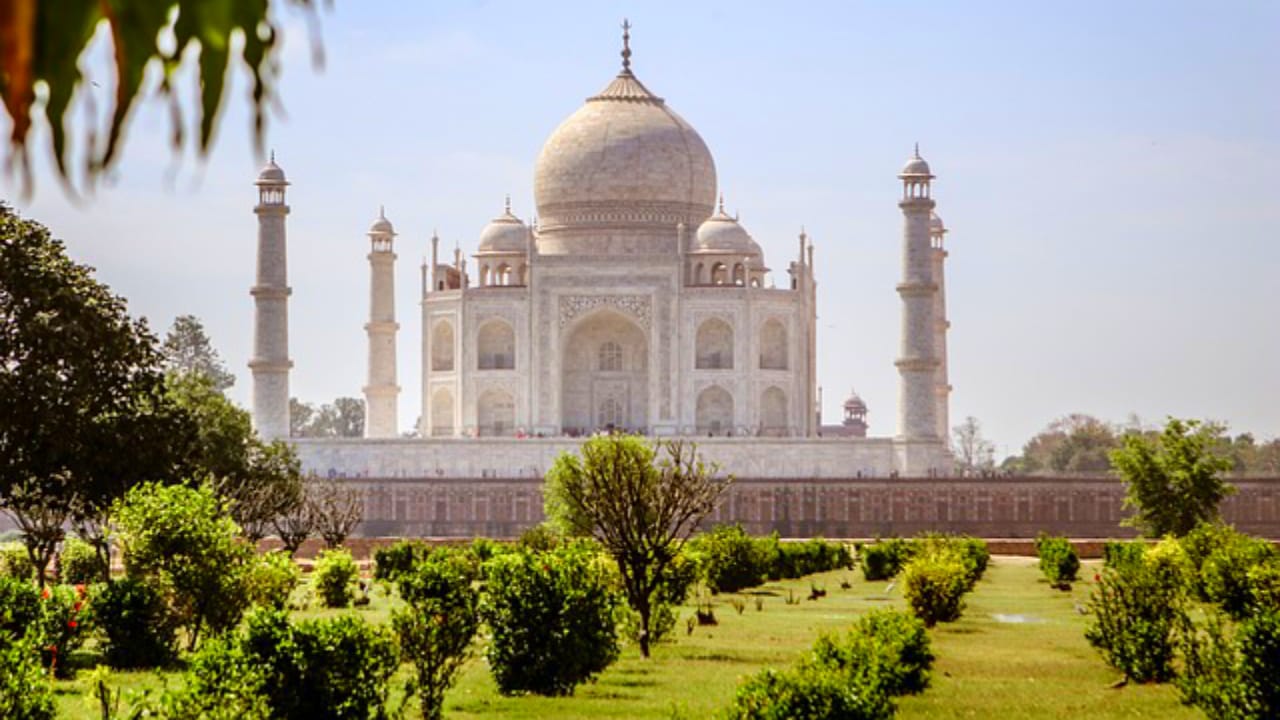
Few monuments carry the weight of expectation that the Taj Mahal does. You’ve seen it on postcards, in movies, on the cover of a thousand travel brochures a perfectly symmetrical white marble dome floating above a mirror-still reflecting pool. And yet, almost every first-time visitor says the same thing once they’re standing in front of it: photographs don’t do it justice.
But getting there and getting the most out of your visit takes a bit of planning. Ticket categories have layers most tourists don’t expect, timings shift with the seasons, and there’s a growing list of items you simply cannot carry past the security gate. If you’re planning a 2026 trip to Agra, this guide walks you through everything: tour packages, the real ticket costs (broken down by nationality), the best time to visit, and the rules that catch first-timers off guard.
Why the Taj Mahal Still Tops Every India Itinerary
Built between 1632 and 1653 by Mughal emperor Shah Jahan in memory of his wife Mumtaz Mahal, the Taj Mahal is widely considered the finest example of Mughal architecture a blend of Persian, Islamic, and Indian design traditions. It’s a UNESCO World Heritage Site, one of the New7Wonders of the World, and for many travelers, the single biggest reason to visit India at all.
What makes it special isn’t just the scale it’s the detail. Up close, the “white marble” reveals itself as a canvas of inlaid semi-precious stones (a technique called pietra dura), intricate calligraphy from the Quran, and geometric patterns that shift in tone depending on the light. Dawn pink, midday white, dusk gold, moonlight silver the monument genuinely looks different depending on when you see it, which is exactly why timing your visit matters so much.
Planning Your Visit Independent Trip or Package Tour?
Before getting into costs and timings, it helps to decide how you want to experience the Taj Mahal, because that decision shapes everything else your budget, your schedule, and how smoothly the day goes.
Going Independent
If you’re comfortable navigating unfamiliar cities, booking tickets online, and dealing with local transport, visiting independently is entirely doable and considerably cheaper. You handle your own train or car booking from Delhi (or wherever you’re coming from), book your Taj Mahal e-ticket in advance through the official portal, and arrange local transport within Agra yourself.
It gives you full control over your schedule, but it also means you’re responsible for getting timing, documentation, and logistics right which matters more here than at most tourist sites, given the security checks and time-slot system.
Booking a Tour Package
Most travelers, especially those visiting India for the first time or those short on time, opt for an organized tour. Packages typically fall into a few standard categories:
Same-Day Taj Mahal Tour from Delhi This is the most popular option for travelers based in Delhi or those with limited time. You’re picked up early in the morning (often by 5:00–6:00 AM), driven or taken by express train to Agra, guided through the Taj Mahal and usually Agra Fort as well, given time for lunch, and driven back to Delhi by late evening. It’s a long day 12 to 14 hours round trip but it’s efficient if the Taj Mahal is the one thing you absolutely need to see.
Taj Mahal Sunrise Tour Departing Delhi in the very early hours (around 3:00–4:00 AM) or starting from an overnight stay in Agra, this package gets you to the monument right at opening time, before the crowds and the heat arrive. It’s widely regarded as the best version of the experience soft light, thinner crowds, and cooler temperatures, especially valuable if you’re visiting between April and September.
Agra Overnight or Two-Day Tour This option includes a hotel stay in Agra, letting you see the Taj Mahal at sunrise on one day and explore Agra Fort, Fatehpur Sikri, Itmad-ud-Daulah (“Baby Taj”), and Mehtab Bagh at a relaxed pace. It’s the better choice if you want depth over speed, or if you’re combining Agra with a broader Golden Triangle circuit (Delhi–Agra–Jaipur).
Golden Triangle Tours Multi-day packages (typically 5–7 days) covering Delhi, Agra, and Jaipur are extremely common for international travelers on their first trip to India. The Taj Mahal is usually the centerpiece, visited on day two or three, with private transport and guides bundled throughout.
Private vs. Group Tours Private tours cost more but offer flexibility your own vehicle, your own pace, and a guide who works around your interests. Group tours are more budget-friendly and a good option for solo travelers who want company, though you’ll be working around a fixed itinerary and other people’s pace.
What a Typical Package Includes
Most reputable Agra tour operators bundle the following into their packages:
- Round-trip transport (AC car, or train tickets plus local transfers)
- Taj Mahal entry ticket (sometimes prepaid, sometimes reimbursed against receipt)
- A licensed local guide
- Entry to Agra Fort and/or other monuments
- Lunch at a recommended restaurant (sometimes included, sometimes optional)
- Hotel pickup and drop-off
Prices for these packages vary widely depending on group size, transport mode, and inclusions a same-day trip by car for two people typically runs higher per person than a group tour by train, while private overnight packages with a hotel stay cost more still.
Because pricing shifts often with fuel costs, hotel rates, and operator competition, it’s worth comparing quotes from two or three licensed operators before booking rather than relying on a single fixed number.
Taj Mahal Tours Ticket Cost in 2026
This is where most first-time visitors get confused, because the ticket structure has more than one layer. Here’s how it actually works.
Two Separate Tickets, Not One
The Archaeological Survey of India (ASI), which manages the Taj Mahal, sells two distinct tickets:
- Main complex entry – covers the gardens, the main platform, and the exterior of the mausoleum.
- Mausoleum entry (optional add-on) – an extra ticket required if you want to step inside the actual marble chamber where the tombs are housed.
Most travel blogs quote only the base price, which is why the numbers you see online can look inconsistent. The real total cost is the complex ticket plus the mausoleum add-on, if you choose to go inside.
2026 Ticket Prices by Nationality
| Visitor Category | Complex Entry | Mausoleum Add-On | Total (if visiting mausoleum) |
|---|---|---|---|
| Indian citizens / OCI cardholders | ₹50 | ₹200 | ₹250 |
| SAARC & BIMSTEC nationals | ₹540 | ₹200 | ₹740 |
| Foreign tourists | ₹1,100 | ₹200 | ₹1,300 |
| Children under 15 | Free | Free | Free |
SAARC and BIMSTEC nationalities include countries such as Bangladesh, Sri Lanka, Nepal, Bhutan, Maldives, Pakistan, Afghanistan, Myanmar, and Thailand visitors from these countries pay a reduced rate compared to other foreign tourists, but still more than Indian citizens.
For reference, the foreign tourist total works out to roughly USD 15–16, depending on the exchange rate at the time of booking.
Is the Mausoleum Add-On Worth It?
Honestly, it depends on your priorities. The chamber itself is small, dimly lit, and you’ll spend barely a minute or two inside once you factor in the queue photography isn’t even permitted inside. If it’s your first visit, you want to see the tomb inscriptions and marble inlay work up close, or you’re a photography or architecture enthusiast, it’s worth the extra ₹200.
If you’re short on time, visiting with young children, or this is a repeat trip, most seasoned travelers say you can comfortably skip it the view from the platform and gardens is arguably the more photogenic part of the experience anyway.
How to Book Tickets
Tickets are sold through the official ASI online booking portal, and increasingly, online booking is the default rather than the exception. Booking in advance lets you skip the ticket counter queue entirely, which can save a significant chunk of time during peak season. Payment can typically be made via credit/debit card, UPI, or digital wallets.
Physical ticket counters still exist at the Western Gate (near Saheli Burj) and the Eastern Gate, generally operating from about an hour before sunrise until roughly 45 minutes before sunset but expect longer waits here, especially on weekends and around Indian holidays.
A few practical booking notes:
- Tickets are generally non-refundable, though many booking systems allow you to change your visit date up to 24 hours in advance.
- There is no re-entry on the same ticket once you exit the complex, that ticket is done, even if it’s the same day.
- A valid photo ID is mandatory: a passport for foreign visitors, and Aadhaar, voter ID, or driving license for Indian citizens.
- During peak season (October to March), morning slots can sell out days in advance, so booking early is genuinely worth it rather than just a formality.
Taj Mahal Timings in 2026
Regular Visiting Hours
The Taj Mahal opens 30 minutes before sunrise and closes 30 minutes before sunset every day it’s open. Because sunrise and sunset shift through the year, exact opening times vary by season:
- April to September: Gates typically open around 6:00 AM
- October to March: Gates typically open around 6:30 AM
Closing times follow the same logic, shifting earlier in winter months due to shorter daylight hours. If you’re planning to catch sunset light on the marble, aim to enter by mid-to-late afternoon during winter, since staff begin clearing visitors roughly 30 minutes before the official closing time arriving at the last minute risks missing entry altogether.
The Friday Closure
Here’s the rule that catches the most travelers off guard: the Taj Mahal is closed to general tourists every Friday, without exception. This isn’t a maintenance closure it’s because the complex includes an active mosque on its western side, which is used for Jumma (Friday congregational) prayers.
On Fridays, only worshippers attending prayer may enter; there’s no sightseeing, no photography, and no exceptions for tourists, regardless of how far they’ve traveled or when their flight lands.
This closure applies to night viewing as well even if a scheduled full-moon viewing night happens to fall on a Friday, it’s excluded.
Practical takeaway: if your Agra trip includes a Friday, don’t schedule the Taj Mahal for that day. Many travelers instead see Agra Fort or Fatehpur Sikri (both typically open on Fridays) and shift their Taj Mahal visit to Thursday or Saturday. Also, don’t confuse this with Agra Fort’s separate closure day the two monuments follow different schedules, and mixing them up is a common planning mistake.
Night Viewing
The Taj Mahal offers night viewing on a limited basis around the full moon, typically on the full moon night itself plus a couple of nights before and after (excluding Fridays and the month of Ramadan). This is a genuinely different experience: the marble takes on a soft, silvery glow under moonlight, and only a small number of visitors are admitted per slot, so it feels far less crowded than a daytime visit.
For night viewing, visitors typically report to Shilpgram, near the Eastern Gate, for security screening about 30 minutes before their ticketed time. Night viewing tickets are limited, priced differently from day tickets, and need to be booked in advance this is not something you can decide to do on a whim after arriving in Agra.
How Long to Budget
Most visitors spend 60–90 minutes inside the complex enough time to walk the gardens, take photos from the platform, and step into the mausoleum if you’ve bought that add-on. If you want to linger, sit by the reflecting pool, and really absorb the atmosphere, budget closer to 2.5–3 hours. Add extra time if you’re combining your visit with nearby Mehtab Bagh, a garden across the river that offers a classic sunset view of the Taj Mahal from a distance.
Best Time of Year to Visit
While the Taj Mahal is open year-round (Fridays aside), the experience changes dramatically with the season:
- October to March: The most comfortable months, with cooler temperatures and clearer skies — this is peak tourist season, so expect larger crowds and book tickets well ahead.
- April to June: Hot and dry, with Agra summer temperatures regularly crossing 40°C (104°F). Sunrise visits become almost essential during this stretch, both for comfort and for avoiding the harshest light.
- July to September: The monsoon season brings humidity and occasional heavy rain, but also dramatically fewer tourists and lush, green surroundings — an underrated time to visit if you don’t mind carrying an umbrella.
Within any season, weekday mornings particularly Tuesday and Wednesday tend to be noticeably quieter than weekends and Indian public holidays, when domestic tourist numbers spike.
Restrictions and Rules You Need to Know Before You Go
The Taj Mahal enforces some of the strictest visitor rules of any monument in India, largely because it’s both a heritage site and an active place of worship. Security screening is thorough, and items get confiscated regularly from travelers who didn’t check the list beforehand.
Prohibited Items
The following are not allowed inside the complex under any circumstances:
- Food and drink (other than a single transparent water bottle)
- Tobacco products, alcohol, and any smoking materials
- Tripods, monopods, and selfie sticks
- Drones (strictly banned in and around the entire complex, not just inside)
- Headphones, power banks, and most electronic items other than a still camera
- Mobile chargers and loose wires or cables
- Knives and any sharp objects
- Large bags, backpacks, and books
- Speakers or any audio playback devices
If you’re carrying something on this list, you’ll typically be asked to deposit it at a cloak room near the entrance and collect it on your way out. In more serious cases weapons, for instance entry can be denied outright.
Photography Rules
Photography is allowed throughout the outdoor areas of the complex the gardens, the reflecting pool, and the main platform are all fair game, and this is where most visitors get their best shots anyway. However:
- Photography is completely prohibited inside the main mausoleum chamber.
- Tripods and monopods aren’t permitted anywhere in the complex, which does limit long-exposure or professional setups.
- Drone photography is banned across the entire site, not just within the monument walls.
- Mobile phones must be switched to silent (or switched off) once inside the mausoleum, out of respect for the site.
Dress Code and Conduct
There’s no strict enforced dress code, but modest clothing that covers shoulders and knees is generally recommended, both out of respect for the site’s religious significance and for comfort during the security process.
Visitors are also asked not to touch or scratch the marble surfaces (a real problem for conservation), avoid loud conversation inside the mausoleum, and refrain from indecent poses or gestures while photographing a rule that’s specifically and seriously enforced.
Getting to the Gates
One rule that surprises visitors: no polluting vehicles are allowed within roughly 500 meters of the Taj Mahal, as part of ongoing efforts to protect the marble from air pollution discoloration. This means your car or taxi will drop you at a parking area some distance away, from which you’ll either walk or take an electric shuttle/battery-operated vehicle (a nominal fee, generally in the ₹10–20 range for a one-way ride) to reach the entrance gates.
Security Check Practicalities
Expect thorough security screening at every gate, with separate lines typically maintained for men and women. To move through faster:
- Carry the bare minimum phone, ID, ticket, and a small bag if necessary.
- Avoid bringing anything on the prohibited list in the first place, rather than hoping to check it at the cloakroom.
- Keep your ticket and ID easily accessible, since you’ll need to show them more than once.
Agra Transport Options
How you get to Agra shapes your entire day, so it’s worth weighing the options rather than defaulting to whatever a travel agent first suggests.
By Express Train Trains like the Gatimaan Express and Vande Bharat Express connect New Delhi to Agra in under two hours, making this the fastest and most reliable option for a same-day trip. They’re comfortable, air-conditioned, and largely immune to the highway traffic that can turn a road trip unpredictable. The trade-off is fixed departure and return times, which means your day is built around the train schedule rather than the other way around.
By Private Car A private car with a driver (typically arranged through a tour operator or a trusted local agency) takes roughly 3–4 hours each way via the Yamuna Expressway, depending on traffic. It costs more than the train but gives you full flexibility you can leave earlier, stay later, or make stops along the way. This is the preferred option for families, small groups, or anyone who values control over their schedule more than speed.
By Group Bus Tour The most budget-friendly option, typically bundled into group tour packages, though slower and less flexible than the train or a private car a reasonable trade-off for solo budget travelers.
Where to Stay if You’re Not Doing a Same-Day Trip
If you’re building a two-day Agra itinerary rather than a single-day dash from Delhi, accommodation options range widely:
- Luxury hotels near the Taj Mahal’s eastern gate offer rooms with direct views of the monument a genuinely memorable experience, though priced at a premium, especially during peak season.
- Mid-range hotels scattered across Agra’s Fatehabad Road and Taj Ganj areas offer comfortable stays within a short drive or rickshaw ride of the monument, at a fraction of the cost.
- Budget guesthouses in Taj Ganj, the neighborhood immediately south of the complex, let you walk to the gates in minutes and are popular with backpackers and solo travelers.
Booking a hotel with an early check-in or requesting a pre-dawn wake-up call matters more here than in most cities, since a sunrise Taj Mahal visit typically means leaving your hotel while it’s still dark outside.
Other Monuments Worth Combining With Your Visit
Since you’re already making the trip to Agra, it’s worth building in time for the city’s other major sites most tour packages bundle at least one or two of these in automatically.
Agra Fort A red sandstone UNESCO World Heritage Site just a few kilometers from the Taj Mahal, this was the primary residence of Mughal emperors before Shah Jahan was famously imprisoned here by his own son, with a view of the Taj Mahal from his cell.
Fatehpur Sikri A remarkably preserved Mughal city built by Emperor Akbar, located about 40 km from Agra. It’s a half-day detour but offers a very different architectural experience sandstone palaces and courtyards rather than marble.
Itmad-ud-Daulah (“Baby Taj”) Often called a precursor to the Taj Mahal’s design, this smaller marble tomb across the Yamuna River features similar inlay work on a more intimate scale, and it’s usually far less crowded.
Mehtab Bagh A garden directly across the river from the Taj Mahal, offering one of the best sunset photography spots in Agra, with virtually none of the crowd you’d find on the main platform.
One-Day Itinerary Taj Mahal Tours
For travelers doing the classic same-day trip from Delhi, a typical schedule looks something like this:
- 4:00–5:00 AM: Depart Delhi by car or catch an early express train to Agra
- 7:00–8:00 AM: Arrive in Agra, head straight to the Taj Mahal for sunrise or mid-morning light
- 8:00–10:00 AM: Explore the complex, including the mausoleum if you’ve bought that ticket
- 10:30 AM–12:30 PM: Visit Agra Fort, a UNESCO site in its own right and a short drive away
- 12:30–1:30 PM: Lunch at a local restaurant
- 1:30–3:00 PM: Optional stop at Itmad-ud-Daulah (“Baby Taj”) or a marble inlay workshop
- 3:00–4:00 PM; Begin the drive or train journey back to Delhi
If you have the luxury of an overnight stay, splitting this across two days Taj Mahal at sunrise on day one, Agra Fort and Fatehpur Sikri at a relaxed pace on day two makes for a far less rushed experience.
Tips Taj Mahal Tours Visit
Visit
- Book your entry ticket online in advance: especially if you’re traveling during peak season (October–March) or on a weekend.
- Avoid Fridays entirely: when planning your Agra itinerary.
- Go early: Sunrise isn’t just about better photos it also means shorter queues, cooler temperatures, and a genuinely more peaceful experience before tour buses arrive.
- Travel light: Skip the tripod, the drone, the snacks, and the oversized bag you’ll move through security noticeably faster.
- Decide on the mausoleum ticket before you queue: so you’re not holding up the line while deciding.
- Keep your ID and ticket accessible: you’ll be asked to show them at multiple checkpoints.
- Compare tour packages before booking: since inclusions and quality vary significantly between operators even at similar price points.
The Taj Mahal earns its reputation the moment you see it in person but the visitors who enjoy it most are usually the ones who did their homework beforehand. Get the timing right, understand what you’re paying for, pack light, and the rest of the day tends to take care of itself.
Ticket prices, timings, and rules are subject to change by the Archaeological Survey of India. Always verify current details on the official ASI booking portal or with a licensed tour operator before finalizing your travel plans.
FAQs
Is it better to book a Taj Mahal tour package or visit independently?
If you’re confident navigating online ticket booking and local transport, independent visits save money. If this is your first trip to India, or you want a guide who can explain the history and architecture in depth, a package tour is generally worth the added cost.
How far in advance should I book my Taj Mahal ticket?
For peak season (October–March) or weekend visits, book at least a few days ahead. Popular morning slots can sell out, particularly around Indian public holidays.
Can I visit the Taj Mahal and Agra Fort on the same ticket?
No — these are separate monuments with separate tickets, though most tour packages bundle entry to both.
Do I need a guide?
It’s not mandatory, but a licensed guide adds real value — the symbolism, calligraphy, and construction history aren’t things you’ll pick up just by walking around. Guides can be hired at the gate or booked through your tour operator.