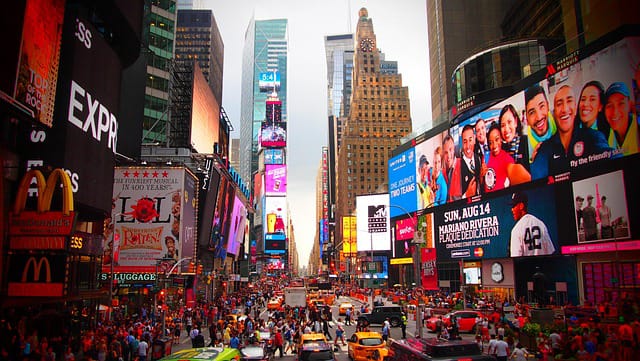
Few places on Earth generate as much instant recognition as Times Square. Located at the crossroads of Broadway and Seventh Avenue in Midtown Manhattan, this bustling intersection has become shorthand for New York City itself and, by extension, for American energy, ambition, and spectacle.
Every year, tens of millions of visitors funnel through its neon-drenched streets, making it one of the most visited tourist attractions on the planet. But what exactly is Times Square famous for? The answer is layered.
It’s a story of towering advertisements, Broadway lights, a century-old New Year’s Eve tradition, and a dramatic urban transformation from red-light district to family-friendly mecca. This guide breaks down everything that makes Times Square a true cultural phenomenon.
What Is Times Square Famous For
1. The Dazzling Billboards and Digital Signage
Perhaps nothing defines Times Square more than its overwhelming wall of light. The area is famous for its massive, illuminated digital billboards some spanning entire building facades that display advertisements, music videos, news tickers, and branded content around the clock.
This isn’t accidental. Since the early 20th century, city zoning laws have actually required large, illuminated signage in the core of Times Square, making it one of the only places in the world where advertisers are mandated to go big and bright.
Major global brands compete for premium billboard space here, and the constantly rotating digital displays have earned the area nicknames like “The Great White Way” and “The Crossroads of the World.”
The sheer scale of the lighting is so intense that Times Square is famously one of the few places in New York City where the night sky is essentially erased by artificial light, creating a permanent glow that can be seen from surrounding neighborhoods.
2. Broadway and the Theater District
Times Square sits at the heart of the Broadway Theater District, home to over 40 professional theaters presenting some of the most celebrated stage productions in the world. Iconic musicals and plays from long-running classics to buzzy new hits draw theatergoers from every corner of the globe.
The area’s theatrical roots actually predate its billboard fame. Times Square became a hub for entertainment in the late 1800s and early 1900s as theaters, vaudeville houses, and later movie palaces sprang up along Broadway.
Today, catching a Broadway show remains one of the top reasons tourists visit the district, and the TKTS discount booth in Duffer Square remains a favorite stop for travelers hoping to snag same-day tickets at reduced prices.
3. The New Year’s Eve Ball Drop
No discussion of Times Square’s fame is complete without mentioning the New Year’s Eve ball drop. Since 1907, crowds have gathered in Times Square to watch the iconic crystal ball descend from a pole atop One Times Square, marking the countdown to midnight and the start of a new year.
The tradition began after the city banned fireworks displays that had previously rung in the new year at the same location. What started as a modest celebration has since grown into a global media event, broadcast to hundreds of millions of viewers worldwide. Each year, roughly a million people brave the cold to watch in person, penned into barricaded sections for hours to secure a view of the drop.
The ball itself has evolved dramatically over the decades from a 700-pound iron-and-wood sphere to today’s version, covered in thousands of Waterford crystal triangles and LED lights capable of displaying millions of colors and patterns.
4. Its Nickname and Naming History
Times Square wasn’t always called Times Square. Before 1904, the area was known as Longacre Square. It was renamed after The New York Times relocated its headquarters to the newly built Times Tower at the square’s southern tip.
The newspaper’s presence and its own New Year’s Eve celebration, which included a rooftop fireworks show helped cement the area’s identity and cultural significance.
Today, the original Times Tower still stands (heavily renovated) as One Times Square, though it’s mostly known now as the site of the ball drop rather than for any tenants inside, since the building’s real estate value comes almost entirely from its advertising space.
5. A Dramatic Urban Transformation
Times Square is also famous for its remarkable reinvention. During the 1970s and 1980s, the area developed a reputation for crime, adult entertainment venues, and urban decay, becoming a symbol of the city’s broader struggles during that era.
Starting in the 1990s, an ambitious redevelopment effort championed by city officials and private investors — transformed Times Square into the polished, family-oriented tourist destination it is today. Adult theaters were replaced by flagship retail stores, chain restaurants, and family entertainment venues.
This turnaround is frequently cited as one of the most successful urban revitalization projects in American history, and it continues to shape conversations about city planning and tourism development worldwide.
6. Street Performers and Costumed Characters
Walk through Times Square on any given day and you’ll encounter an eclectic mix of street performers, musicians, and costumed characters posing for photos with tourists everything from Broadway-style dancers to characters resembling popular superheroes and cartoon figures.
While the city has introduced regulations to manage this activity, it remains one of the quirky, only-in-New-York experiences visitors associate with the area.
7. The Pedestrian Plazas
In 2009, city planners made a bold move: they closed several blocks of Broadway to vehicle traffic and converted them into permanent pedestrian plazas. This decision initially controversial proved to be a major success, reducing pedestrian injuries, improving traffic flow on surrounding streets, and giving visitors a safer, more open space to take in the sights.
Today, the plazas feature seating areas, public art installations, and space for events, making Times Square as much a gathering place as a thoroughfare.
8. A Magnet for Major Media and Events
Beyond its everyday tourist appeal, Times Square regularly hosts major media broadcasts and public events. Television studios overlooking the square, including morning news programs, often film segments with live audiences visible through street-level windows.
The area also serves as a backdrop for concerts, promotional events, and cultural celebrations throughout the year, reinforcing its role as a stage for both planned spectacle and spontaneous street life.
9. Shopping and Flagship Retail
Times Square is home to some of the largest flagship stores from major global brands, many of which use their storefronts as extensions of the area’s advertising culture with elaborate window displays, multi-story retail spaces, and interactive brand experiences. For many tourists, browsing these massive stores is as much a part of the Times Square experience as the billboards themselves.
10. Its Symbolic Role in American Pop Culture
Finally, Times Square is famous simply for what it represents. It has appeared in countless films, television shows, songs, and photographs as visual shorthand for New York City, ambition, and the fast pace of urban American life.
From classic film scenes to modern social media posts, an image of Times Square instantly communicates a sense of place recognized around the world even by people who have never set foot in New York.
FAQs
Is Times Square free to visit?
Yes, walking through Times Square and viewing the billboards, plazas, and street performances is free. Costs come into play for attractions like Broadway shows, museums, or dining in the area.
Why is it called the “Crossroads of the World”?
The nickname reflects Times Square’s role as a major intersection of foot traffic, media, commerce, and tourism, where visitors from virtually every country pass through each year.
What’s the best time to visit Times Square?
Early morning offers a quieter experience with fewer crowds, while evening is best for experiencing the full glow of the billboards. New Year’s Eve draws the largest crowds by far.
How many billboards are in Times Square?
Dozens of large-scale digital and static billboards populate the district, with the highest concentration around the “bowtie” intersection of Broadway and Seventh Avenue.