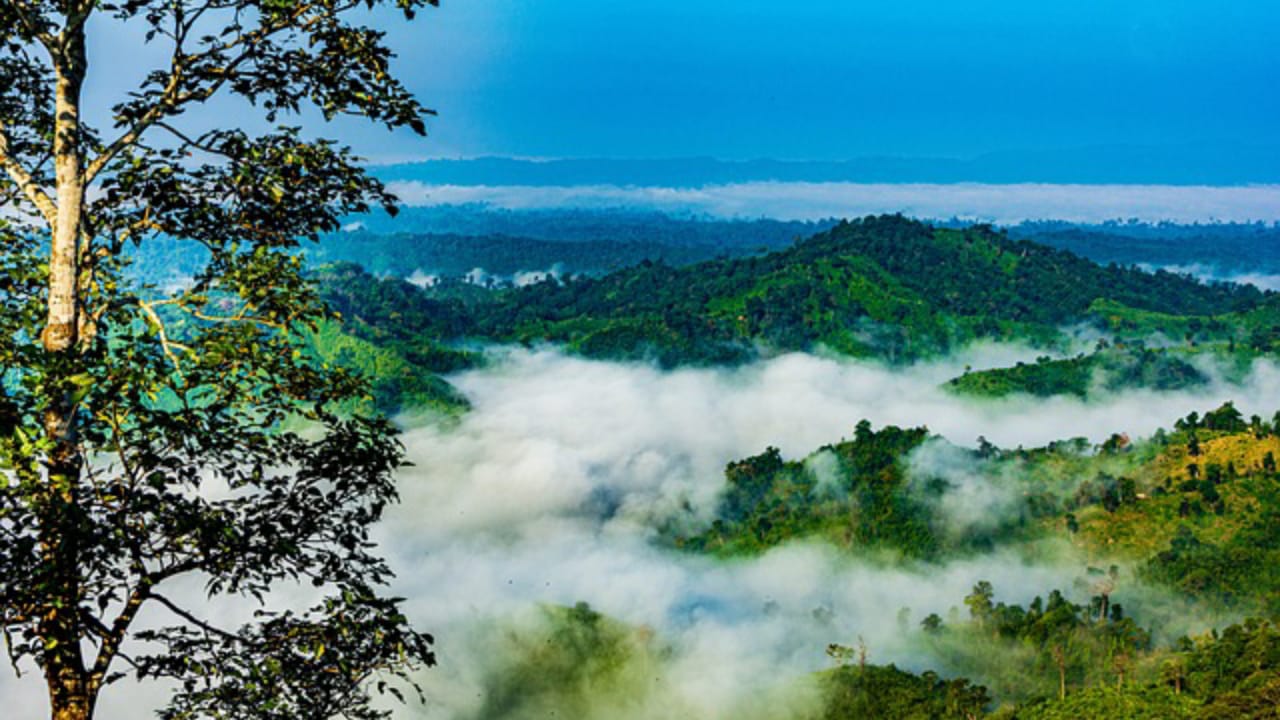
There’s a particular kind of silence that settles over Sajek Valley just before sunrise. The generators haven’t started yet, the jeeps are parked and quiet, and somewhere below the ridge a thick white sea of cloud is rolling slowly between the hills. You are standing above it.
For a country better known for its flat green deltas, crowded rickshaws, and the world’s longest natural sea beach, this is not the Bangladesh most people expect. Yet here it is tucked into the northeastern corner of Rangamati district, right up against the Indian state of Mizoram, a place locals call the “Roof of Rangamati” and travelers have nicknamed the “Darjeeling of Bangladesh.”
Sajek Valley Bangladesh has quietly become the most talked-about domestic destination in the country over the last decade, and for good reason. It offers something almost nowhere else in Bangladesh can: real elevation, real cloud cover, real hill-tribe culture, and views that genuinely stop conversations mid-sentence. If you’re planning a trip and searching for everything from transport routes to where to sleep, what to eat, and how much it will actually cost you, this guide covers it all in one place.
Where Exactly Is Sajek Valley?
Sajek Valley sits at roughly 1,500 feet above sea level, making it one of the highest inhabited areas in Bangladesh. Administratively, it belongs to Baghaichhari upazila in Rangamati district, in the Chittagong Hill Tracts but here’s the twist that confuses a lot of first-time visitors: almost nobody actually travels through Rangamati town to get there.
Because of the hilly, forested terrain and the lack of a direct road connection from Rangamati city, the practical access route runs through Khagrachhari district instead, via a small town called Dighinala.
Sajek is technically the largest “union” (the smallest rural administrative unit in Bangladesh) in the entire country, spanning an enormous stretch of hills, forest, and river valley. Despite that scale, the tourist zone itself is compact centered on two main villages, Ruilui Para and Konglak Para, connected by a single winding road only a couple of kilometers long. Almost every resort, restaurant, and viewpoint you’ll visit sits along or just off this road.
Geographically, the valley is cradled by hills on almost every side, with the Sajek River (locally considered to mark part of the international boundary) tracing the edge of the landscape. On a clear day, if you climb high enough, you can see across into the hills of Mizoram in the distance a genuinely rare experience in a country that is otherwise almost entirely low-lying delta.
A Brief History and the Meaning Behind the Name
Long before Sajek appeared on any traveler’s bucket list, it was simply home to the Lushai, Pangkhua, Tripuri, Chakma, and Marma communities who have lived across these ridges for generations, moving between hillside plots to practice traditional jhum (slash-and-burn) cultivation.
The name “Sajek” itself is believed to derive from the Sajek River that runs along part of the valley’s edge, which in turn takes its name from a local Tripuri or Lushai word tied to the land itself, though as with many place names in the Chittagong Hill Tracts, the exact etymology has been passed down more through oral tradition than written record.
For decades, this remote corner of Rangamati remained largely closed off from mainstream Bangladeshi tourism, partly due to its physical isolation and partly due to the broader political sensitivities of the Chittagong Hill Tracts region, which experienced a prolonged period of insurgency and unrest before a peace accord was signed in the late 1990s.
It was only in the years that followed as roads improved, security stabilized, and word of the “cloud sea above the hills” began spreading that Sajek transformed from a little-known outpost area into one of the most searched travel destinations in the country.
Resorts that didn’t exist a decade ago now number in the dozens, and a valley that once saw a handful of visitors a month now welcomes thousands on a single winter weekend, so it’s worth remembering that Sajek is still, at heart, a small hill community adapting quickly to sudden tourism growth.
Why Everyone Calls It the Queen of Hills
The nickname isn’t just marketing. Sajek earns it through three things working together at once: altitude, cloud behavior, and cultural texture.
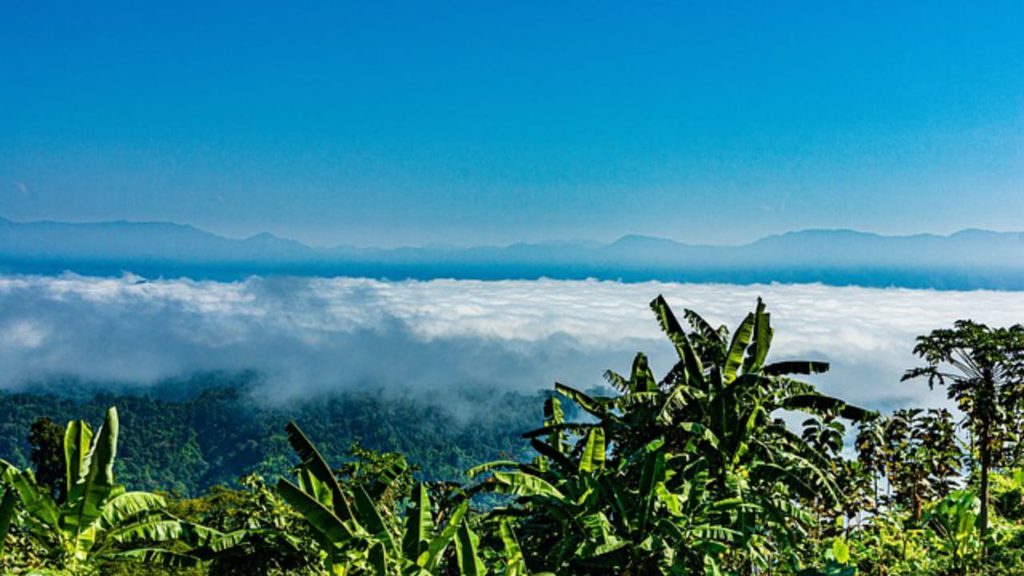
Because the valley sits high enough and close enough to converging air currents from the surrounding hill ranges, it experiences dense, low-lying cloud cover far more often than most of Bangladesh clouds that don’t just sit in the sky but roll directly through the village streets and settle in the valleys below the ridgeline.
Stand at the right viewpoint at the right hour, and you’ll watch an entire sea of white vapor pour between two hills like a slow-motion waterfall. This “cloud ocean” effect, chased by photographers and honeymooners alike, is the single biggest reason Sajek has become a bucket-list stop.
Layered on top of the scenery is the human element. Sajek is home to indigenous communities primarily Chakma, Marma, Tripura (Tripuri), and Lushai peoples whose stilted bamboo houses, traditional dress, distinct cuisine, and separate customs give the valley a cultural atmosphere that feels genuinely different from the Bengali-majority plains most visitors are used to.
Walking through Ruilui Para or Konglak Para, you’ll pass small wooden churches, hillside vegetable plots, and children playing outside homes raised on stilts against the slope a rhythm of life shaped by the terrain in a way that simply doesn’t exist elsewhere in the country.
Best Time to Visit Sajek Valley Bangladesh
Timing your trip well makes an enormous difference to what you’ll actually experience, so it’s worth planning around the seasons rather than just booking whenever is convenient.
Winter (November to February): is widely considered the best window to visit. Skies are clearer, mornings are genuinely cold (temperatures can drop into single digits Celsius before sunrise), and the famous cloud-sea effect is at its most reliable and photogenic. This is also, unsurprisingly, the busiest and most expensive time to go resorts fill up weeks in advance for Fridays and Saturdays, so early booking is essential if you’re traveling during this period.
Monsoon season (June to September): transforms the valley into a completely different place: intensely green, dramatically misty, and far quieter in terms of tourist crowds. The trade-off is real risk. Heavy rain can make the winding hill roads slippery and occasionally leads to temporary road closures or landslide warnings. If you’re comfortable with unpredictability and want a moodier, greener, more atmospheric Sajek with fewer people around, monsoon can actually be rewarding just build flexibility into your schedule and check road conditions before you commit to travel dates.
Spring and early summer (March to May): sit in between warmer, drier than monsoon, with decent visibility, though the sharpest cloud-sea mornings become less frequent as temperatures rise. This is often a good compromise season if you want fewer crowds than winter without the monsoon risk.
Whatever season you choose, the golden rule of Sajek doesn’t change: sunrise is the main event. Nearly every worthwhile itinerary is built around being awake, dressed, and outdoors before the sun comes up, because the cloud effect and soft morning light rarely last past mid-morning once the sun burns through.
How to Reach Sajek Valley
Getting to Sajek requires patience and a bit of planning, since there’s no direct highway or rail connection the journey is part of the adventure, not just a means to an end.
Step One: Get to Khagrachhari or Dighinala
Most journeys start in Dhaka. Several bus operators run direct overnight coaches from Dhaka’s Saidabad or Fakirapool bus terminals to Khagrachhari town, with the journey typically taking around 7 to 9 hours depending on road conditions and traffic through Chittagong. Booking an overnight bus is the most popular strategy, since it lets you sleep through the least scenic stretch of the journey and arrive in Khagrachhari in the early morning, ready to continue straight on to Sajek.
Alternatively, if you’re coming from Chittagong city, the trip to Khagrachhari is considerably shorter a few hours by bus or private car making Chittagong a good staging point if your itinerary already includes Cox’s Bazar or the port city.
From Khagrachhari town, you’ll need to continue to Dighinala, a smaller town about 20 kilometers further along, which functions as the actual launch point for vehicles heading up into the hills toward Sajek.
Step Two: The Jeep Convoy System
This is the part that surprises most first-time visitors. Independent vehicles are not simply allowed to drive up to Sajek whenever they like. Because the road passes through army checkpoints including a checkpoint at Dighinala and another significant one near Baghaihat tourist vehicles typically travel in escorted convoys at fixed departure times, usually in the morning and again around midday, for security reasons tied to the region’s sensitive border location.
At Dighinala, you’ll book a seat (or an entire vehicle if you’re traveling as a group) in one of the open-topped, modified four-wheel-drive vehicles locally known as “Chander Gari” repurposed Jeeps and pickup trucks fitted with bench seating, built specifically to handle the steep, twisting hill roads. These vehicles queue up and depart together as a convoy, escorted for parts of the route, which adds structure but also means you’ll need to work around the convoy schedule rather than your own.
The drive itself, covering roughly 60 to 70 kilometers from Khagrachhari through Dighinala and up into the hills, takes around two to three hours. It passes through genuinely striking scenery: the Kasalong Bridge where two rivers converge, dense hill forest, small roadside tribal settlements, and increasingly dramatic switchbacks as you climb toward the ridge where Ruilui Para sits.
Permits and Registration
Because Sajek lies close to the international border in a historically sensitive part of the Chittagong Hill Tracts, all visitors are required to register their details (usually name, National ID or passport number, and contact information) at army checkpoints along the route.
This is a standard, well-established process rather than a bureaucratic obstacle tourists pass through it in large numbers every single day but it’s worth carrying a photo ID with you at all times during the trip, since you may be asked to show it more than once.
Foreign nationals should be aware that the Chittagong Hill Tracts region has historically required additional permits for international visitors in some circumstances. Rules around this have shifted over the years, so if you’re not a Bangladeshi citizen, it’s worth confirming current requirements with your resort or a local tour operator before you travel, rather than assuming the same rules apply as for domestic tourists.
Top Things to See and Do in Sajek Valley Bangladesh
Once you’ve made it up the hill, the valley itself is compact enough to explore almost entirely on foot, with a handful of standout spots that define most people’s trip.
Konglak Hill
This is the highest point most tourists reach in Sajek and, for many, the single best view in the whole valley. A short but genuinely steep walk from Ruilui Para up to Konglak Para brings you to a ridge where, on a clear day, you can see layers of hills stretching toward the horizon and into Indian territory beyond.
Both sunrise and sunset here are spectacular, and because the climb involves some real effort, it tends to filter out the more casual day-tripper crowd, leaving a slightly calmer atmosphere than the main village center.
The Sajek Helipad
Built originally for official and military use, the helipad in the heart of Ruilui Para has become the valley’s most popular gathering spot, particularly at sunrise and sunset. Its open, unobstructed 360-degree views make it the easiest place to watch the cloud sea roll through without any hiking required, which also means it’s usually the most crowded single spot in Sajek during peak season. Arrive early if you want space to yourself.
Ruilui Para and Konglak Para
These twin villages are less “attractions” in the conventional sense and more the living backdrop of the entire trip. Wandering their narrow lanes gives you a genuine look at Chakma, Marma, and Tripuri daily life wooden and bamboo houses built on stilts to cope with the slope, small hillside churches (many local families in the area are Christian), roadside stalls selling handwoven textiles and local snacks, and terraced vegetable gardens clinging to impossibly steep hillsides.
Hajachora and Sikam Chora Waterfalls
Slightly outside the main tourist strip, these two waterfalls make for a good half-day excursion if you have more than two days in the valley. Reaching them involves a proper hike down (and, more strenuously, back up) a steep hill trail, so they’re best attempted early in the day before the heat sets in, and are not particularly suited to travelers with mobility limitations. The reward is a genuinely secluded spot to cool off, far from the crowds at the helipad.
Stargazing and Night Walks
With minimal light pollution and, on many nights, genuinely clear high-altitude skies, Sajek after dark is a completely different experience from its daytime crowds. Many resorts and travel groups organize informal campfires, and the 2-kilometer village road makes for a pleasant, easy night walk just bring a torch, as street lighting is minimal outside the main resort strip.
Meeting the Indigenous Communities
Beyond simply walking through the villages, several resorts and local guides can arrange more structured cultural interactions traditional dance or music performances in the evening, home-cooked tribal meals, or simply conversations with local families about daily life in the hills.
Approaching this respectfully (asking before photographing people, dressing modestly, and supporting local businesses directly) goes a long way toward making tourism in the region sustainable for the communities who call it home.
Photography Tips for Capturing Sajek at Its Best
Sajek rewards photographers, but the best images rarely come from simply pointing a camera at the horizon during the day. A few adjustments make a real difference.
Shoot in the “blue hour:” The 20 to 30 minutes before sunrise, when the sky has begun to lighten but the sun hasn’t yet crested the hills, is often when the cloud sea looks its most dramatic — dense, backlit, and layered against silhouetted ridgelines. Many visitors make the mistake of arriving right as the sun rises and miss this quieter, moodier window entirely.
Use foreground elements: A shot of empty clouds and hills can feel flat. Framing your photo with a bamboo house, a village pathway, a person in traditional dress (with their permission), or the silhouette of a pine tree gives the image scale and a sense of place that a wide, empty landscape shot often lacks.
Get above the helipad crowd: Because the helipad is the easiest viewpoint to reach, it’s also the most crowded at peak times. Climbing even partway toward Konglak Hill, or exploring a quieter side path near your resort, often yields a cleaner, less crowded frame with a similar or better view.
Protect your gear from moisture: The same humidity and cloud cover that make Sajek photogenic can also fog up lenses and dampen camera bodies quickly. A simple microfiber cloth and a dry bag for transporting equipment during the jeep ride will save you frustration.
Be mindful when photographing people: The indigenous residents of Sajek are not photo props, and many visitors forget this in the rush to capture “authentic” village life. Always ask before photographing someone directly, and consider that a smile and a moment of genuine conversation often leads to a better, more willingly-given photo than a candid shot taken from a distance.
Where to Stay in Sajek Valley
Accommodation in Sajek has expanded rapidly over the past several years, and options now range from basic bamboo cottages to genuinely comfortable resorts with attached bathrooms and hill views.
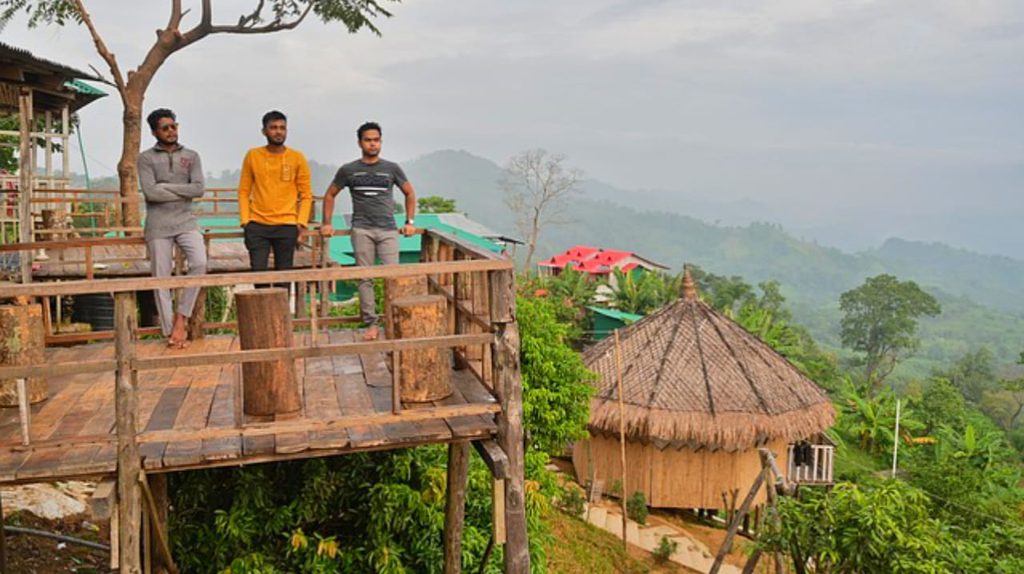
Budget cottages and guesthouses are typically simple bamboo or tin-roofed structures with shared or basic attached bathrooms, offering little beyond a bed and a view but that view is often the whole point, and prices are correspondingly low, making these popular with backpackers and student groups.
Mid-range resorts make up the bulk of what’s available and typically include private attached bathrooms, reliable (if intermittent) electricity, simple furnishings, and often a balcony or shared terrace facing the valley. This tier represents the best value for most travelers, balancing comfort with reasonable pricing.
Higher-end resorts offer more polished rooms, better food service, sometimes hot water and more reliable power backup, and premium positioning directly along the ridge for unobstructed sunrise views. These book out fastest during peak winter weekends and command a noticeable price premium.
A few practical notes that apply across every price tier: electricity in Sajek is often generator-based and may be limited to certain hours, hot water is not guaranteed even at higher-end properties, and mobile network coverage is patchy at best treat any connectivity as a bonus, not a given. Because demand vastly outstrips supply on winter weekends, booking your accommodation at least a week or two in advance (longer around holidays) is strongly recommended rather than optional.
What to Eat in Sajek Valley
Food is one of the more underrated reasons to visit. The signature dish most travelers come specifically to try is bamboo chicken chicken marinated with local spices, stuffed into a length of fresh bamboo along with herbs, and slow-cooked over an open fire until the bamboo itself imparts a subtle, smoky sweetness to the meat. It’s typically ordered in advance, since preparation takes time, so if you know you want it, tell your resort or a local restaurant early in the day.
Beyond bamboo chicken, look out for tribal-style dishes using local greens, bamboo shoots, and fish or pork prepared with distinctly different spicing than mainstream Bengali cuisine a reflection of the Chakma, Marma, and Tripuri culinary traditions that dominate the valley.
Most resorts also serve standard Bengali staples (rice, dal, mixed vegetable curries, and chicken or fish curry) for travelers who prefer more familiar food, so you won’t go hungry even if tribal cuisine isn’t your priority.
Portions and pricing tend to run higher than what you’d pay in Dhaka or Chittagong, simply because virtually everything from rice to cooking gas has to be transported up the hill. Factor that into your food budget rather than being caught off guard.
Suggested Sajek Valley Itineraries
The Classic 2-Night, 3-Day Trip
This is the itinerary most travelers end up following, and it strikes a solid balance between seeing everything essential and not rushing.
Day 1: Depart Dhaka on an overnight bus the previous night, arriving in Khagrachhari early morning. Continue to Dighinala, join the morning jeep convoy, and arrive in Sajek by late morning or early afternoon. Check into your resort, rest, then walk to the helipad for sunset and, if energy allows, an evening cultural program or campfire.
Day 2: Wake well before dawn for sunrise at the helipad or Konglak Hill this is the priority of the entire trip, so don’t oversleep it. After breakfast, hike up to Konglak Para and explore the village, then spend the afternoon visiting Ruilui Para, trying bamboo chicken for lunch, and browsing local handicrafts. In the late afternoon, consider the hike down to Hajachora waterfall if you have the stamina, or simply relax and enjoy a second sunset.
Day 3: One final sunrise, breakfast, then join the return jeep convoy back to Dighinala and onward to Khagrachhari, where you can catch an afternoon or evening bus back to Dhaka.
The Extended 4-Day Trip
If you have more time, adding an extra day allows for the full waterfall hike to both Hajachora and Sikam Chora without rushing, a slower, more immersive exploration of the tribal villages, and crucially, a buffer day in case bad weather disrupts the jeep convoy schedule on your original travel dates a real possibility during monsoon months.
Combining Sajek With Other Hill Tracts Destinations
Because the journey to Sajek already routes through Khagrachhari, some travelers extend their trip to include Alutila Cave and the nearby Risang waterfall near Khagrachhari town, or continue further into the region to Bandarban for a longer Chittagong Hill Tracts circuit. If you’re making the long journey from Dhaka anyway, building in one or two additional stops can make the overall trip feel more worthwhile.
What Does a Trip to Sajek Actually Cost?
Costs vary significantly by season, group size, and comfort level, but here’s a realistic breakdown for planning purposes.
Transport: A round-trip overnight bus ticket from Dhaka to Khagrachhari runs into a moderate range depending on the operator and seat class (non-AC versus AC coaches). The shared or reserved jeep from Dighinala up to Sajek and back adds a further cost per person, which drops considerably if you’re splitting a full vehicle among a larger group rather than booking individual seats.
Accommodation: Budget cottages are the cheapest option per night, mid-range resorts sit comfortably above that, and premium resorts especially on winter weekends can run several times the budget rate. Traveling midweek rather than on Friday or Saturday typically unlocks noticeably lower rates across every tier.
Food: Expect to pay a bit more than typical Dhaka prices for meals, with bamboo chicken priced as a specialty item above regular curry dishes. Budgeting for three meals a day plus snacks is sensible.
Miscellaneous: Entry or “environmental” fees are sometimes collected locally, along with small costs for guides if you hire one for the waterfall hikes, and handicraft purchases if you want to bring something home.
Traveling in a group of four to six people, sharing jeep and room costs, is by far the most economical way to visit — solo travelers will pay noticeably more per person for transport and accommodation, though joining an existing group jeep at Dighinala can help offset that.
Practical Travel Tips for Sajek Valley
Pack warm layers, even in the warmer months: Because of the altitude, early mornings and nights are consistently colder than what you’d expect elsewhere in Bangladesh, particularly if you’re chasing that pre-dawn sunrise. A light jacket or fleece is essential in winter and still useful in shoulder seasons.
Don’t expect reliable mobile signal: Network coverage in Sajek is limited and inconsistent, with some carriers working better than others in different spots. Download offline maps, tell people your rough schedule before you lose signal, and treat the disconnection as part of the experience rather than a problem to solve.
Wear proper footwear: Between the steep village paths, the climb to Konglak Hill, and the descent to the waterfalls, flip-flops or smooth-soled shoes will make the trip harder and riskier than it needs to be. Closed, grippy shoes make a real difference, especially if there’s been recent rain.
Book ahead, always: Whether it’s your bus ticket, your jeep seat, or your resort room, Sajek’s popularity especially on winter weekends means walking in without a reservation is a real gamble. This is doubly true around public holidays and long weekends.
Respect the checkpoints and the process: The registration and convoy system exists for security reasons specific to this border region. Carry ID, follow the jeep convoy timings rather than trying to travel independently outside them, and treat any delays with patience rather than frustration.
Carry cash: ATMs are not reliably available in Sajek itself, so withdraw what you need in Khagrachhari or before you leave Dhaka, and budget for the fact that card payment is rarely an option once you’re up in the valley.
Be a respectful visitor: Ask before photographing local residents, dress modestly (particularly around villages and religious sites), avoid leaving litter on hiking trails, and where possible, spend your money directly with local guesthouses, restaurants, and craft sellers rather than exclusively through outside operators.
FAQs
Do I need a permit to visit Sajek Valley?
Domestic travelers don’t need a special advance permit, but everyone is required to register their identification details at army checkpoints along the route, as part of standard security procedure for this border region. Foreign nationals should confirm current requirements with a local resort or tour operator before traveling, since rules for international visitors to the Chittagong Hill Tracts have shifted over time.
How many days do I need in Sajek?
Two nights and three days is the sweet spot for most travelers, allowing time for at least two sunrises, a visit to Konglak Hill, and a proper walk through the villages without feeling rushed. If you want to add the waterfall hikes without exhausting yourself, three nights is more comfortable.
Is Sajek Valley safe for tourists?
Yes. Despite its border-adjacent location and history of regional unrest, Sajek has operated as a well-established, heavily-visited tourist destination for years, with a visible security presence and organized jeep convoys specifically designed to keep travel safe and orderly. The greater practical risks are road conditions during heavy rain and the physical demands of steep hiking trails, not personal security.
Can I visit Sajek Valley as a solo traveler?
Absolutely, and it’s a common way to visit. Solo travelers typically join a shared jeep with other tourists at Dighinala rather than booking an entire vehicle, which also keeps costs down. Many budget guesthouses cater specifically to solo backpackers and groups looking to split rooms.
What should I absolutely not skip in Sajek?
If you only have time for one thing, make it sunrise from either the helipad or Konglak Hill. Nearly everything else in Sajek is flexible or repeatable, but the cloud-sea sunrise is genuinely weather-dependent and time-sensitive, and it’s the single experience most people travel to Sajek specifically to see.
Is there mobile network and Wi-Fi in Sajek?
Coverage is limited and inconsistent across mobile carriers, and most budget and mid-range accommodations do not offer reliable Wi-Fi. Treat Sajek as a genuine digital detox rather than planning to stay connected throughout your trip.
What’s the best way to travel from Dhaka to Sajek Valley?
The most common route is an overnight bus from Dhaka to Khagrachhari, followed by onward transport to Dighinala and then a shared jeep convoy up to Sajek itself. Traveling overnight by bus saves you a full day compared to daytime travel, since you arrive in Khagrachhari already rested and ready to continue.